Reissue Labels To Avoid and Some Best to Proceed With Caution

Call me crazy (and you wouldn't be the first!) but when I spend $25 or $50 on a 180 gram reissue, I want to know the source used and who did the cutting, plating and pressing. Don't you? But we don't get that vital information as often as we'd like, do we?

We do get it from certain labels, like Mobile Fidelity, ORG, ORG Music, Analogue Productions, Music Matters, IMPEX, Mosaic, Rhino, Pure Pleasure, Speakers Corner, Reference Recordings, more recently Sony/Legacy and probably a few others I can't recall off the top of my head. I'm not good with lists.

Sometimes we get slightly fudged information. LIke the original reissues of the Tom Waits Elektra albums Rhino issued that were stickered "cut from the original analog master tapes" when in fact, they'd been "cut" by Ron McMaster at Capitol from 96/24 files (per Tom's instructions) produced from the original master tapes. These were all defective, with no top end above around 6kHz due to a screw-up somewhere along the line.

The albums were subsequently re-cut by Chris Bellman at Bernie Grundman Mastering, this time using the analog master tapes, and they sound fantastic. The point is, you can't even necessarily believe what you read on the jacket! "Sourced from" does not necessarily mean "cut from."

Other times you get part of the story, the most important part of which is, was the original master tape the source of whatever was used to do the cutting—whether a high resolution (96/24) digital file or a 1:1 analog copy of the master, which is what some labels have to use if the tape's owner refuses to let it out the tape vault door.

If you buy from Sundazed, for instance, you can be assured that the original tape was used as the source, because Sundazed's Bob Irwin, who has worked for Sony's Legacy division for years producing CD reissues, is very focused on using masters. But there's no guaranty the LP was actually cut from the tape because Sundazed doesn't specify who cut and from what.

Often you can see a "WG/NRP" on the inner groove area, which means "Wes Garland at Nashville Record Productions" did the cutting even though the credits say "mastered by Bob Irwin". That could mean Bob took the master tape, did his thing, produced a 96/24 file and had Wes Garland cut from that, or that he went with the tape to NRP and cut from analog (assuming NRP has a preview head equipped playback deck), but sometimes there's nothing written in the Sundazed "deadwax", which leaves buyers with not a clue as to who did the all important lacquer cut and where it was cut, which is equally important: a mastering chain is like a hi-fi system in reverse. If you don't like the hi-fi, you won't like the sound.

The Netherlands based Music on Vinyl label issues some albums cut from analog sources but mostly from high resolution files sourced from masters that they obtain directly from the labels (at least based on my experience). 4 Men With Beards? I have no idea.

But still other times you get nothing, yet you're asked to plunk down big bucks for these reissues. There are certain labels I urge you to avoid. These include Doxy (not Sonny Rollins' label—apparently there's another one using the same name), ZYX from Germany, Vinyl Lovers, Simply Vinyl and Abraxas

I was in Greece a few years ago visiting a Stereophlle reader who'd invited me over to hear his stereo—one of the best, if not the best I've ever heard. A Sarah Vaughn fan, he played me a "greatest hits" album from ZYX that had been culled from Sarah's later Pablo catalog. Pablo was a Norman Granz label (Granz founded Verve among other labels) that used top engineers and the RCA vinyl infrastructure to process its albums and what this guy was playing me sounded wrong.

We later went used record shopping in Athens and I found an original Pablo Sarah Vaughn for a few bucks in near mint condition. At least one track on it was on the ZYX reissue. We compared and the difference was so great, we at first thought the ZYX was a different arrangement and performance. Then we figured it was a different take from the same session. Finally we realized it was the identical take but sounding soooo wrong, it was difficult to identify. I guaranty you, the ZYX was cut either from a CD or some other source that the mastering engineer completely ruined when he cut it.

Vinyl Lovers definitely cuts from CDs. I was at a show in Scandinavia and someone was playing a Vinyl Lovers Rod Stewart LP. I had a track on a CD made from the original pressing and we compared the two and the CD killed the vinyl played back on a very good turntable. Not even close and obviously cut from a commercial CD. You can read a review of a Vinyl Lover's John Cale reissue on this site. It's not pretty.

Simply Vinyl refuses to identify sources. Actually some of them, especially those licensed from EMI, can sound very good and could very well be analog tape sourced, but the company refuses to identify sources. I'd stay away.

Recently a friend brought over a copy of Jeff Buckley's Grace album Simply Vinyl had reissued. I had the original European vinyl. We compared. The original was much better. The SV reissue was bright and hard by comparison.

The bottom line is, be careful. Just because something's been pressed on 180 gram vinyl doesn't mean its going to sound good or that it was sourced from analog.

Share | |
Comments
SET Man's picture
You're not crazy...

Hey! Good that you've bought this subject up. I ask that question every time I buy new LP. I think its only fair to buyer that they disclose the source used to cut the LP. Maybe they should start putting the "SPARS Code" ... (remember this on CD)... on the LP jacket. If the analog master and mastering was used than is should be "AAA" and so on.

briankpoythress's picture
5 weeks running plan This

5 weeks running plan This design is wicked! You most certainly know how to keep a reader amused. Between your wit and your videos, I was almost moved to start my own blog (well, almost...HaHa!) Excellent job. I really loved what you had to say, and more than that, how you presented it. Too cool! best free 7 weeks plans

rain1122's picture
This is such a great resource

This is such a great resource that you are providing and you give it away for free. I love seeing blog that understand the value of providing a quality resource for free.
green coffee extract

Smafdy Assmilk's picture
The same problem exists for audiophile CD reissues.

The same problem exists for audiophile CD reissues also. There has been a long history of decpetive marketing, as we are slowly finding out. I wonder if DCC used an original master tape on more than just a handful of their releases.

I commend Mobile Fidelity for their Silver Series for not trying to pass these releases as being sourced from the original master tapes.

Smafdy Assmilk's picture
.

.

markp's picture
Major labels do it too

Great article Michael.  Thank you for shining light on this topic. 

The past 10 years, as vinyl picked up popularity again, it seemed like an onslaught of companies offering "audiophile 180G" vinyl.  I remember purchasing some, and quickly learning my lesson.  Capitol had some reissues that were wretched (Heart - Dreamboat Annie).  There are so many records with that common "180G" gold on black sticker..when I see that sticker, I assume its straight up transfer of a CD to vinyl by whichever summer intern in the office shows a bit of apptitude. 

The "sourced from" designation pretty much means:

1) it is not cut from the original master

2) we don't know what we cut this LP from.

 eck, any version of an album is "sourced" at some point from the master, regardless of how many copies, remixes of digitizations have occcured.  One could put out a 180G album that was cut from a 30 years old cassette copy of your college roomate's cassette, which was 35th gen copy made at the record company factory...and say the 180G album was "sourced" from the 1st gen master.

Even with the good audiophile companies that Michael listed, one needs to check carefully.  I remember when MFSL reissued several John Lennon LP's about 10 years ago.  They didn't sound right to me.  In an email exchange with MFSL, they admitted the LP's were not cut from the "original masters" but from a remix provided by Yoko Ono (who knows if digital was involved).  So not really "original masters".

If you spend $25-$50 on a reissue, all the info should be printed on the album jacket, or available in plain sight on the reissue companies, and dealers, websites, including source tape, mastering chain (absence of digital), mastering engineer (s), manufacturing plant.  If all the information is not available, there is probably a reason.  Trust your ears. 

The Hoffman/Gray re-issues from Analogue Productions and Music Matters are spectacular, and a benchmark for how an audiophile re-issue should be made and marketed.


vinyldaze's picture
Boots And Blues

A truly great article and responses. And there there are those boots with those 180 gram gold and black stickers used by gray area companies like Scorpio. I was quite excited when I saw many of the classic blues titles from Yazoo being reissued. I bought one, a Blind Willie McTell. The source was some kind of digitally sourced, noise reduced flat sonic wash with all the life and dynamics sucked out. Yazoo appears to have nothing to do with these as their ability to coax fantastic sound out of old 78's set the gold standard on vinyl back in the 70's. A couple of obviously legit reissues II recently bought are two outstanding Johnny Winter reissues, Second Winter and Johnny Winter And Live from Friday Music that are the best I have ever heard these recordings by a mile. Yet they state quite clearly on the back that they were pressed at RTI and mastered by Kevin Gray and Joe Reagoso from the original Columbia Tapes. They sound fantastic to me, but note they do not say original analog masters. This is not a case of semantics and again leaves one to wonder. If they were taken directly from the original two track analog masters, I believe they would have said so. 

Michael Fremer's picture
Scorpio

Yes I should have mentioned them as "musts to avoid." The actually "lifted" the black and gold sticker Sundazed first created. Sundazed's mistake was to not put its name on them!

deckeda's picture
Ad hoc sunshine

Readers of Audiostream.com know the subject of "what's in a name?" has been recently discussed regarding "HD" downloads and of other digital files (and even including analog formats). Lack of provenance and of relying on familiar "Good Housekeeping"-style labels are pervasive.

I'm reminded that not until sometime in the '70s did amplifiers advertise comparable power and distortion specs based on common criteria and that it didn't happen for car audio until the '90s. Although none of that describes sound quality it's still a help on some level knowing what's what.

Perhaps one day the reissue and "HD" music businesses will reach a level of public conscieness that similar ad hoc (voluntary, yet accurate and agreed-upon) standard vocabulary --- and its uses --- will come about.

JC1957's picture
This goes way back to the

This goes way back to the original Mobile Fidelity LP's from the 70's and 80's. A lot of The Beatles 1/2 speeds were NOT done with original EMI master tapes. They used Capitol 3 & 4th generation copies, Parlophone eq'd dubs etc. A look a the photos of the tape boxes that appered in the box set were very revealing.
Michael Fremer's picture
Mo-Fi Beatles not from masters?

Can you be more specific here? You have made a very serious charge. I know that since there was no "Magical Mystery Tour" LP for the U.K. (it was a double EP containing only side one of the American LP) and that side two of the Mo-Fi LP was the same "horrid electronically reprocessed for stereo" used by Capitol, that that record was sourced from Capitol, but what others used "3rd and 4th generation copies"?<p>
Please be more specific about your charge! BTW: the Mobile Fidelity <i> MMT</i> CASSETTE has side two in real stereo, like the German MMT LP!

JC1957's picture
Mo-Fi Beatles not from masters

Magical Mystery Tour was the specific title I had in mind when I orignally posted this. Before Mobile Fidelity did The Beatles box in 1982, there had already been 3 Beatles releases. MMT, White Album and Abbey Road. These were all sourced from Capitol submasters and not EMI originals. How many generations down they were is open to debate but MMT was definitely 4th generation. Once MFSL was able to license the whole shabang for the box set they were granted access to vault tapes from EMI England. Some of these tapes were originals, but some weren't. If you have the box set the LP's have the photos of the EMI tape boxes. Some say dub tape, some say corrected copy tape etc. I'm going by mostly memory here since I've long parted with mine. It could have been a great Beatles collection but some one at MFSL back then was making bad judgement calls in regards to the eq used. But that's another story. 

Michael Fremer's picture
Mo-Fi Beatles EQ

I agree with you there! The EQ was "car stereo valley" all the way: boosted bass and treble, sucked out midrange. Very sad. I played the box version of <i>Sgt. Pepper....</i> for Beatles recording engineer Geoff Emmerick at a mastering session where I got to hear the master tape that Geoff had flown over from the U.K. for a planned 30th Anniversary CD edition. <p>

Geoff called it "rubbish" and demanded a take it off the turntable! He heard the HF boost and was outraged. Then I played him the red vinyl Japanese Odeon mono pressing and he declared that "spot on."

JC1957's picture
Mo-Fi Beatles EQ

The Mo-Fi UHQR of Sgt. Pepper sucked too. Same crappy mastering only on thicker vinyl.

deckeda's picture
Best I've heard

Heard 24/96 rips of the UHQR Pepper on three different high quality systems and found it enjoyable. I also really like the Japanese red mono vinyl, but mostly for the different mix. But the latter doesn't sound better IMO. Vocals in particular seem as if burlap was placed in front of the mic ...

Whether or not the former is rubbish is open for some debate, considering the multilayered approach to the recording wasn't a purist, minimalist effort by any stretch of the imagination.

Back then I bought the MFSL Magical Mystery Tour, unfortunately. It was my first MFSL and nearly my last. Every time I played it (which of course wasn't often) I had to tell myself, "This is supposed to sound good. This is supposed to sound good. This is ... horrible." To this day I think it's my brightest-sounding LP. The UHQR Pepper ain't in that same league at all.

The German Horzu pressing of Magical Mystery Tour is of course incredible compared to all the rest.

conjotter's picture
Caveat emptor

Hi Michael ... Excellent article.

The only way to teach these companies that won't clearly state the source of a recording is to not buy their records. I have sent emails to Capital and 4 Men with Beards about the source of certain LPs and they never responded. And some post partial information, like on some John Coltrane reissues that have a sticker that says "Sourced by Rhino, distributed by Scorpio."

Then there are all those cheap Blue Note reissues. Heard a $12 copy of Pete La Roca's Basra in one shop on a basic system that sounded pretty flat, and a few months later I was in a store where they were spinning the 1995 reissue, and it sounded great. Why the difference? Probably different sources. I'll wait for the Music Matters reissue later this year. Sure bet.

Now when I shop and I'm not sure about a title I'll ask the vendor to hold the record behind the counter for a day or two so I can do some research on sites like this.

Let the buyer beware.


Martin's picture
Really good article

This is a really good article and makes a very good point.

Transparency in what you buy in music is not good. Apart from the ones mentioned, it gets really difficult to work out what sources are. Sometimes you buy something, put it on the platter and get confronted with 2 dimensional, harsh crap where you were expecting something decent.

It would be worth putting an area on Analog Planet devoted to this. Put on album title, record label or company, and what the sources were for the record. Say;

1. Album title, 2. Label/record company, 3. sources. 4. who mastered it.

Make it updatable by anyone. Ie., fully open. Anyone can go in, open a new record, and put in the info. And anyone can go in and update information. To my knowledge, there is no such resource anywhere on the web. Most record labels don't seem keen on the idea of any kind of transparency. Unsurprisingly, if you can pass off 44.1/16k as a full analogue chain and sell it as such, why tell people?

A few examples:

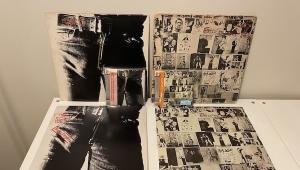
Rolling Stones - 60's catalog reissues; 2.8Mhz, DSD. great sounding
Rolling Stones - 70s and 80s; 48/24K; compressed. Not particularly good
Exile on main street - 2010 reissue; 48/24. Compressed and terrible sounding
Nirvana, Nevermind, Simply Vinyl. Digital something, and not good.
Bob Dylan Bootleg Series 8, Tell tale signs; 44.1/16k digital. The whole set.
Bryan Ferry, Dylanesque, 96/24. Great sounding, transparent, clear and full.
Rolling Stones, get your ya yas out reissue box set; 96/24. Great sounding, good dynamics.
Leonard Cohen - the 4 men with Beards reissues - "Apparently" all Hi-Rez digital
Pink Floyd, Dark Side of the Moon and The Wall recent reissues, both 96/24k
The Doors, Box set from a few years ago, 192/24k digital.
Rolling Stones, "Rarities 1971 - 2005". Digital, most likely 48/24, but Adam Ayant didn't want to say. 
 Rolling Stones, "Stripped" double LP. Digital, most likely 48/24k. No-one seems to know.
Bob Dylan, "Modern Times", digital, resolution unknown. Same with "together through life".

 Then the labels mentioned above, steer clear of anything from Doxy, it is virtually guaranteed to be 44.1/16. Simply Vinyl is pure chance, you never know what you get. Sundazed always sounds good.

Michael Fremer's picture
Martin's comment

Your descriptions of those releases above is SPOT ON, IMO. And I'm glad you are not "digiphobic" and call them as they sound. The DECCA Stones box from DSD sounds fantastic....

floweringtoilet's picture
Dylan

Digital or not, those Modern Times and Together Through Life sound much better on LP than CD, particularly Modern Times. The CD is totally compressed while the LP has lots of dynamic range and better tonal balance.


Good list though.

jesuswept's picture
I suspect Doxy is one of

I suspect Doxy is one of those labels that's sprung up in Europe to release music that's now in the public domain under EU law, which is pretty much anything pre 1961 or so, from what I understand.  

Martin's picture
Doxy reissues

That's the way it works. I think Doxy is an Italian label. They are taking advantage of the EU law that puts stuff beyond a certain age in the public domain. Their stuff so far as I know is just CDs pressed to vinyl. It is unfortunate. I see their stuff sold here in real, reputable record stores like Jecklin and other places. People buy it under the impression it's analogue. There are a few others like that here too.

Doxy have done a series of Muddy Waters box sets on vinyl for example. Great track selection, pretty questionable sound from various sources.

EU law used to be sometimes quite advantageous, for umm, unofficial releases. I have two very good sounding compilation LPs from "The Swingin' Pig" from the early '80s with a selection of Beatles, Stones and Hendrix tunes. Heaven only knows how they got here and in the surprisingly good sound quality. There are others too. The quality on these releases has been steadily improving over the last few years.

Watch out when the Beatles, Stones and others get into the public domain here.

krell's picture
Thanks...

Great article, and critical subject matter. As a newb vinyl listener (largely influenced my MF articles in Stereophile, thanks!) this is fairly disconcerting. We buy the hardware and software in the hope we're avoiding the digital nasties but it would appear there's much more to this than would appear. Any info' on labels/titles is appreciated.... Thanks!

Billy the Kid's picture
Having only just started to

Having only just started to re-build my vinyl record collection, advice like this is invaluable! While I do try to chiefly hunt down original pressings of my favorite albums, the occasional re-release is unavoidable for the unobtainable. Of course, the CBS Mastersound LP of Dylan's Blood On The Tracks is a great example of this. Still, you would be hard-pressed to trump a well-kept, well-cleaned original. Great read Mikey, thanks!

floweringtoilet's picture
Good stuff

This is a really good article, and hopefully, along with consumer pressure, it will lead to greater transparency from reissue labels.

One concern I have is that some vinyl enthusiasts will automatically reject any reissue that has been "contaminated" by digital in any way whatsoever, which might be part of the reason labels are sometimes not forthcoming with information. This is unfortunate because, as you note, LPs cut from hi-rez digital can sound fantastic.

There are a lot of factors that go into whether an LP sounds good or not, and whether digital was involved is only one of them. I have plenty of LPs from the 50s, 60s and 70s that were cut 100% analog every step of the way (obviously) and still sound horrible. Try finding a really good sounding Stones record on the London label. It's not easy! Many of them were cut at places like Bell Sound that used dupes of dupes for cutting, and they sound awful. I'd take the DSD sourced vinyl over those any day as they are way closer to the masters (unboxed Decca UK pressings are a different matter, most of those sound great if you can find them in good condition).

But I know people that will refuse on principle to buy any vinyl that they know to have had its purity of analog essence contaminated by digital. That's their right of course, but I swear it's almost like a disease.....okay, I'm probably ranting about this in the wrong place.

None of this is to excuse those reissue labels that have no interest in sound quality and simply cut LPs from commercially available CD sources. And in the end, I believe we would be better served by greater transparency about sources and mastering because the current atmosphere of mistrust and suspicion not helpful.

the matching mole's picture
Say "No!" to Get Back records

Nice article, Mikey. I'd like to throw in my two cents: Avoid anything released by the Italian reissue label Get Back records. Terrible sound, terrible QC. One of their LPs I bought had a blob of glue in the middle of side one, and this was a $40 Comus LP. Never again. angry

JBo's picture
The good old AAD designation

Hey we need to bring back those goofy AAD designations that used to be on CDs, where it was implied that DDD was somehow the ideal, but now we need them for vinyl -- AAA implying pure analog recording, mixing, and mastering!

I completely agree with Mickey that it's dicey at best with remasters if the info is limited.  So this means I concentrate nearly all my spending on mint used LPs which is sort of a shame for the record companies and artists, I'd like to buy new vinyl but it's like a 50/50 proposition that it will be mastered and cut correctly unless, of'course, I source it from MoFi or the others Mickey mentions.   

I'd encourage the companies to provide much more information for sure.

Also, how about somebody starts a company to release 00's music that is remastered without the massive compression (provided it's not squashed for posterity in the mixing stage already) -- I know Arcade Fire and The National have put out some great releases, but just imagine how awesome that stuff would be if MoFi remastered it with 50% more dynamic range.   Just a thought...


MacKat's picture
...

I have had horrible luck with new issues. I use a V15 VMR on a variety of turntables, and MoFi has been pretty noisy. I just got a Carole King simply vinyl, cleaned with that $4,000 record cleaner Mikey talked about at T.H.E. Show Newport, and It's so crackly, back it goes. I would expect it to be GOUGED for that many crackles. I guess I have to stick with mainly used vinyl. At least I'm not as dissapointed when it is a dud.

Michael Fremer's picture
Carole King

Classic Records' version of <i>Tapestry</i> was fantastic.

Martin's picture
A few more comments

There is amazing variation, the "Exile" reissue sounds like a shrill, lifeless compressed mess.

Patricia Barbers "Café Blue" is a 44.1/16k recording, but the LP is very listenable.

Bob Dylans "Modern Times" LP is much better than the CD, real dynamic range where the CD sounds squashed. Same for "together through life".

The T-Rex "Electric Warrior" reissue is also "apparently" Hi Resolution digital, though I haven't heard it.

The Leonard Cohen live stuff recently released on vinyl is a 48/24k recording upsampled to 96/24k. It sounds quite respectable.

Leonard Cohens "Old Ideas" is digital, resolution unknown, but quite nice sounding. Leonard Cohens "10 new songs" also digital. resolution unknown. In my opinion, 10 new songs suffered a bit from some wierd Pro-tools sounding stuff. "Old Ideas" sounds better.

The Friday Music Elvis reissues are analog and great sounding.

Simply Vinyl has done some Elvis reissues and other LPs. The ones I have heard are uniformly crap. I have some Elvis gold CDs that sound better.

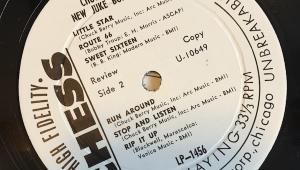
A number (most?) of the "Chess master" reissues from the mid '80s are actually analog, although it says "digitally mastered by..." on the back. They sound great. I recommend Muddy Waters sings Big Bill Broonzy. The Chess Masters reissue, it was done all analog by Steve Hoffman.

Michael Fremer's picture
Good Sounding LPs

My sources told me back then that Bob's people brought both ProTools files and an analog master tape to the mastering sessions for <i>Modern Times</i> and Bob went with the digital files. So there might be a tape that could be used for a reissue!<p>

The <i>Old Ideas</i> vinyl sounds remarkably superior to the CD also included in the jacket. <p>

As for <i>Electric Warrior</i> if you can find a U.K. Fly Records (HiFly 6) pressing mastered by George "Porky" Peckham, you will s..t  yourself!