Album Reviews

Sort By: Post DateTitle Publish Date
Michael Fremer  |  May 01, 2005

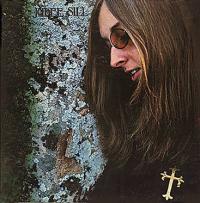
"Keep Your Jesus Out of My Face,” is a bumper sticker I'm contemplating having printed so I can stick it on my car's rear end, and tell people who are offended where they can stick it. That's just how I feel about religion, and Jesus, and Yahweh, and Zeus and Poseidon, and Mary, and the rest of the endless myths that hobble and delude mankind into thinking the latest iteration is the truth, the way, the best, my way, or the highway, or whatever. More evil has been committed in the name of religion than any other institution invented by mankind and nothing you're going to tell me is going to turn me around.

Malachi Lui  |  Oct 24, 2021
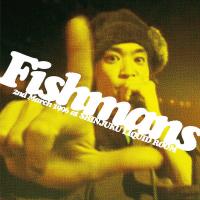
The cover of Fishmans’ “new” live LP Wakainagaramo Rekishi Ari (“Young, But With History”) might mislead you: after all, the drummer is wearing his own merch, the bassist’s baseball cap is far from stylish, and the eccentrically dressed frontman appears disconnected from reality, completely lost in his own music. And unless you live in Japan, you won’t see Fishmans albums in record stores, nor find them on “greatest albums” lists. So, what’s all the hype about?

Michael Fremer  |  Apr 03, 2022
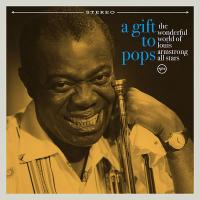
When the CD of this release arrived months ago, I looked at it and figured it was an Armstrong compilation and so put it aside. Nothing on the "jewel" case gave any indication that it was anything but and there was no accompanying press blurb.

Michael Fremer  |  Apr 01, 2008

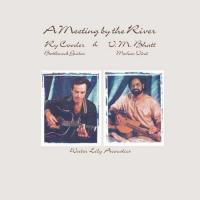
Like West Meets East (Angel/EMI 36418 LP) the famous Ravi Shankar/Yehudi Menuhin collaboration from 1966, this 1992 get together between the guitarist/musicologist Ry Cooder and Vishwa Mohan Bhatt, a classically trained Indian musician you may have unknowingly seen playing the Mohan Viña (an instrument he devised) in the DVD “A Concert For George,” attempts to mesh Eastern and Western musical sensibilities.

Michael Fremer  |  Aug 02, 2015
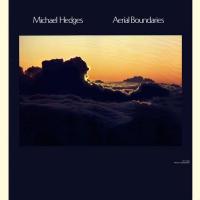
This Michael Hedges album shook up the guitar playing world in 1984 the way Leo Kottke's 6 and 12 String Guitars had in 1969.

Michael Fremer  |  Sep 05, 2015
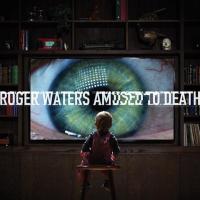
Grand scale examinations of the human condition tend to be preachy, didactic and obvious. The more interesting observations tend to be small scale and personal—in other words, how individuals deal with human foibles and circumstances beyond individual control generally are more compelling and interesting.

Michael Fremer  |  Aug 26, 2019
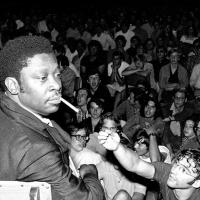
This extraordinary blues festival staged on an athletic field at the University of Michigan, Friday through Sunday August 1-3 in-between the moon landing and Woodstock, was almost lost to time—except to the 10,000 or so mostly white high school and college kids lucky enough to have the good fortune (and taste) to attend.

Nathan Zeller  |  Mar 20, 2022
The ‘60s fostered a music-driven cultural revolution nobody anticipated. From John Coltrane’s Giant Steps to The Beatles’ Sgt. Pepper’s Lonely Hearts Club Band, history’s most iconic albums saw artists leaving timeless and influential musical blueprints. However, calling the ‘60s “influential” shows only a limited understanding; rivalries were fierce, and competition defined the decade. Neither The Beach Boys nor Brian Wilson could escape the competitive climate.

Michael Fremer  |  Mar 18, 2014
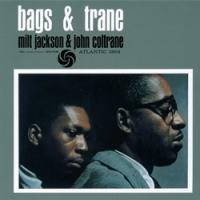
True Coltrane wasn't yet producing "sheets of sound"—limiting himself maybe to just "pillowcases of sound", but he was still hot to Milt Jackson's cool so this was an interesting experiment—one that succeeded beautifully.

Michael Fremer  |  Mar 06, 2015
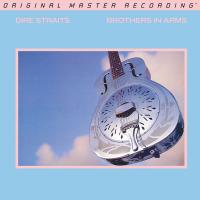
Born out of desperation (hence the name), with the release of its eponymous debut album containing "Sultans of Swing", Dire Straits was an instant commercial success. Cynics at the time said the tune made Dylan safe for average folks. The album was eventually certified double platinum.

Michael Fremer  |  Mar 14, 2020
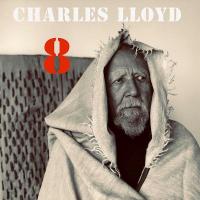
Charles Lloyd turns 82 tomorrow (March 15th). Two years ago, to celebrate his 80th, Dorothy Darr, his wife/manager and herself an artist, threw a year-long party for him and as a present made him work.

Lloyd and his group toured, with each stop a celebration. On his birthday the entourage pulled into his hometown of Santa Barbara, California and performed at the 150 year old Lobero Theater.

The annotation notes that Lloyd has played there more often than any other venue and more often than any other performer, so it was a true homecoming celebration with “kindred spirits” on-stage and in the audience.

Michael Fremer  |  Aug 04, 2014
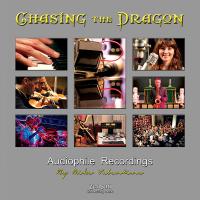
Recording engineer Mike Valentine produced and recorded an old-fashioned audiophile demo disc using 50 year old Neumann tube microphones and a high resolution Nagra digital recorder all connected together with ZenSati cables from Denmark. One track was recorded using a 1/2" Studer analog deck running at 30 IPS.

Nathan Zeller  |  Mar 30, 2021
Lana Del Rey is living proof that what’s old will come around, and what’s new isn’t always better. AnalogPlanet readers and writers alike are quite familiar with this sentiment. Nothing beats the magic of the vinyl record. As most music consumers jump between formats, I often ask myself, “Why move past something that works so well?” Lana Del Rey, an enthusiast of all things vintage, asks the same question, only with music.

Joseph W. Washek  |  Sep 14, 2021
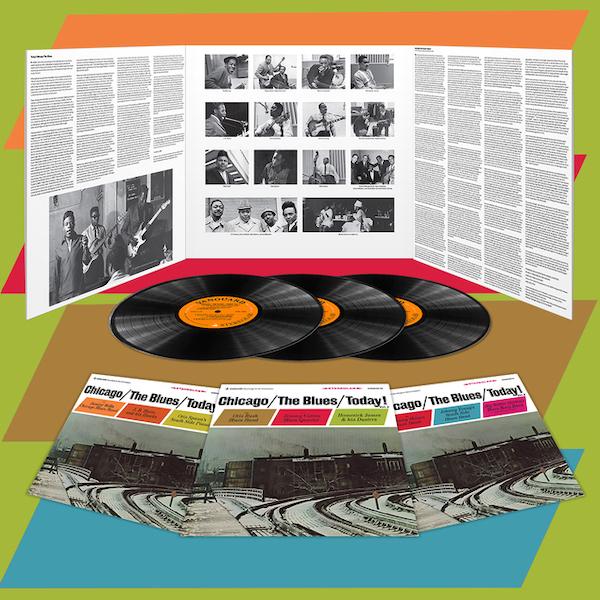
In December 1965, Sam Charters (1929-2015) went to Chicago to record Blues musicians who were playing in the clubs of the Black neighborhoods on the south and west sides. Charters, a white man, had written "The Country Blues" published in 1959. It was the first book about rural blues and while it contained many factual inaccuracies, it was entertaining romantic storytelling and helped foster the interest of young White folk fans in acoustic Blues. The glaring failing of "The Country Blues" was Charters’ insistence that “real blues” was dead, that Lightnin’ Hopkins was the last living blues singer (!), that postwar electric Blues was diluted, crude, loud, monotonous and that, “The blues have almost been pushed out of the picture and the singers who have survived at all have had to change their style until they sound enough like rock and roll performers to pass with the teenage audience.” Opinionated, though he may have been, Charters remained open minded and observant and within a few years, realized that the music being played in the small bars in the Black neighborhoods of Chicago was an urban, modernized version of the rural southern blues he admired so much and served the same social purpose for its audience. 

Malachi Lui  |  Jun 04, 2022
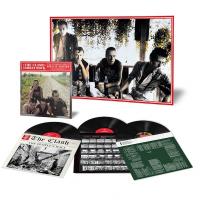
By 1981, The Clash was in shambles. Seeking more direction following their 1980 triple album Sandinista!, co-frontman Joe Strummer and bassist Paul Simonon rehired the band's notoriously difficult original manager, Bernie Rhodes, to the dismay of other co-frontman Mick Jones. Jones sought to continue the band's expansive forays into dub, reggae, and hip-hop, while Strummer wanted something more streamlined. Yet despite all of that, plus drummer Topper Headon's spiraling heroin and cocaine addiction, The Clash toured and managed to record new material at The People's Hall in the Republic of Frestonia (a small area in West London populated by squatters hoping to secede from the UK) as well as Electric Lady Studios in New York City.

Pages

X