Album Reviews

Sort By: Post DateTitle Publish Date
Mark Smotroff  |  Mar 08, 2024

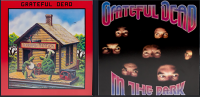
Plangent Processes is again at the center of a pair of new Grateful Dead reissues that were released by Rhino back in January: a) July 1977’s Top 30 hit LP Terrapin Station and July 1987’s Top 10 smash In the Dark — and now we’re finally getting around to reviewing them here together. Read Mark Smotroff’s review to see if either or both of these new LP editions of Terrapin Station and In the Dark — supervised and produced by noted Dead archivist David Lemieux, and mastered for vinyl by David Glasser — belong in your collection. . .

Michael Fremer  |  Jan 03, 2017
There was a period in '60s record history when you could buy "by the label" and pretty much be assured of a great listen. It was true of Elektra and later, after it got off its "high horse," Columbia, which for a while wouldn't touch rock.

Mark Smotroff  |  Jan 09, 2025

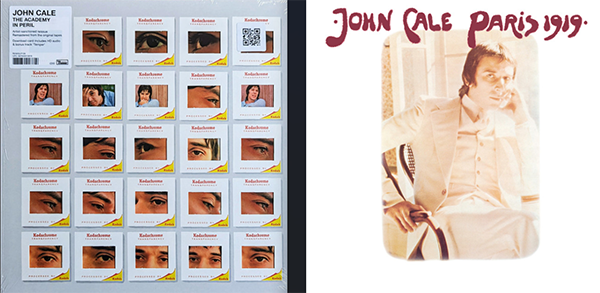
Fifty-plus years ago, John Cale effectively drew a line in the sand between his past with The Velvet Underground and his future. Two of Cale’s seminal solo releases from that era — 1972’s The Academy in Peril and 1973’s Paris 1919, both long been out of print on vinyl here in the States — are the subjects of a great new LP reissue series from England’s Domino label, expanded and approved by the artist himself. Read Mark Smotroff’s review to see if either/both of these remastered vinyl editions deserve multiple spins on your turntable. . .

Mike Mettler  |  Apr 15, 2026

Let’s not beat around the bush: Queen are absolute kings when it comes to putting together historical box sets. Current case in point is what they’ve done for March 1974’s Queen II, which was just released by Hollywood in a legitimately lavish 5CD/2LP Collector’s Edition on March 27, 2026. Read AP editor Mike Mettler’s review to see why the 180g 2LP twist helps put Queen II over the top. . .

Michael Fremer  |  Sep 01, 2010

Chris Darrow may not be a name familiar to you, nor might Kaleidoscope, the ‘60s psych/folk band on Epic of which he was part. That band passed me by back then. Maybe I didn’t like the cover art, or thought Epic wasn’t in the same solid A&R league as was Elektra for instance, so I didn’t want to chance it. I never heard them on the radio and Epic probably did a crappy job promoting them.

Michael Fremer  |  Sep 01, 2007

The Clientele’s Alasdair Maclean has been seduced by the precious 60’s west coast soft pop of Curt Boettcher, The Association, Brian Wilson, Boyce-Hart, Papa John Philips and even Arthur Lee, though like his fellow seductee Sean O’Hagan of High Llamas, he hails from the UK.

Michael Fremer  |  Jul 02, 2019
First off, UMe touts this reissue as "...newly remastered from the original 1949 analog tapes for the first time since 1957." That's nonsense: Bernie Grundman cut this from the original analog tapes for Classic Records back in the 2000s. And I believe the RVG CD did as well (correct me if I'm wrong). Facts matter.

Mark Smotroff, Mike Mettler  |  Feb 20, 2026

At the tail end of last year, we reviewed the inaugural release in UMe’s most excellent new Vinylphyle reissue series — The Velvet Underground & Nico’s 1967 self-titled debut LP — and this week, we’re going to dig into two more offerings from this most excellent series’ first run of releases: a) Bob Marley & The Wailers’ June 1977 global breakthrough LP Exodus, and b) The Band’s underappreciated yet iconic November 1975 original-lineup studio swan song, Northern Lights – Southern Cross. Read Mark Smotroff’s two-fer review to see why both of these Vinylphyle LPs deserve your immediate attention. . .

Mark Smotroff  |  Oct 11, 2023

The new Geffen/UMe 1LP edition of Steely Dan’s seminal September 1977 album, Aja, sounds pretty darn good, all things considered, given that it bears a key difference from the other entries in this reissue series to date. Read Mark Smotroff’s review to see what that difference is, and if this new edition of Aja is right for you either way. . .

Michael Fremer  |  Nov 30, 2016
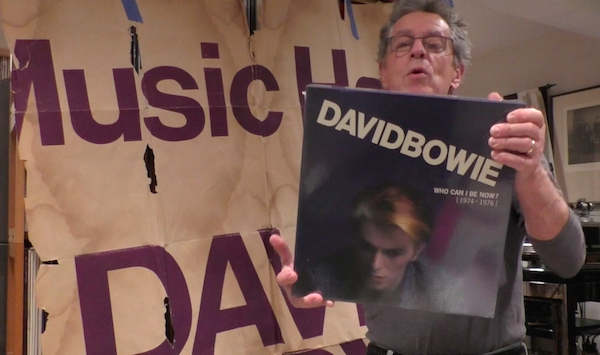
The second David Bowie box set covers but two years—1974-1976—but for David Bowie that timespan leaped across a few musical universes.

Michael Fremer  |  Aug 01, 2005

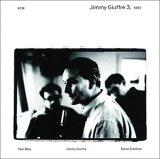
“Jazz” and “clarinet” usually equals Dixieland in the minds of many jazz fans, which may explain, in part, why jazz clarinetist Jimmy Guiffre, a most imaginative, and free-spirited musician failed to achieve the acclaim he deserved-not that there's anything wrong with Dixieland.

Michael Fremer  |  Jul 28, 2020
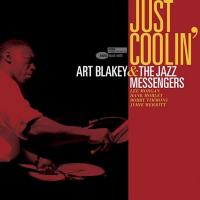
This previously unreleased March 9th 1959 session recorded at Rudy Van Gelder’s Hackensack home studio is a “must have” for Blue Note “completists”, especially for those with an affinity for car and plane crash videos. If you are just getting into the rich Blue Note catalog, your money is best spent elsewhere as this session, despite the stellar group, often sounds listless and forced. Grooves get glossed over in favor of speed.

Michael Fremer  |  Jun 01, 2010

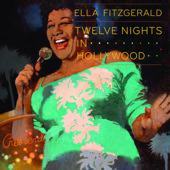
Producer and concert promoter Norman Granz signed Ella Fitzgerald to his Verve label back in 1956 and thus began a series of stellar studio albums, orchestrated songbooks and live set releases, many of which have been reissued on both CD and deluxe vinyl.

Michael Fremer  |  Oct 01, 2007

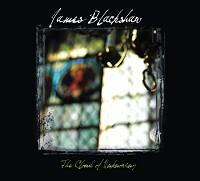
For those of you who know the pleasures of guitarist John Fahey’s Takoma recordings (Fahey was a rabid audiophile, BTW), or Robbie Basho’s, or even Sandy Bull’s extraordinary experiments in guitar-based world music fusion on Vanguard, James Blackshaw may already be on your radar screen, as may some of the other contemporary guitar experimenters who fly equally low beneath the mainstream musical radar screen, but until this LP, I’d not encountered the 24 year old Blackshaw who’s been recording and performing since 2003.

Michael Fremer  |  Dec 01, 2010

The CTI record label started by producer Creed Taylor in 1968 didn’t immediately get the respect it deserved from jazz snobs who found its musical output as glitzy as its glossy cover art. It was the "smooth” jazz label of its day. By the musical terms of the next decade CTI’s original musical vibe was almost “free jazz” compared to the next decade's elevator music slop labeled as “smooth jazz.” It was smooth alright, but jazz?

Pages

X