Album Reviews

Sort By: Post DateTitle Publish Date
Malachi Lui  |  Aug 10, 2018
(Mr. Lui's new Rega P3 has yet arrive following the family's west coast move so he was allowed to review the deluxe CD edition—Ed.)

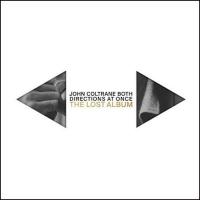
One of the events covered most by the music press in the last few months has been that a “lost” John Coltrane album has been found and finally released. The original session tape vanished when Impulse moved from New York City to Los Angeles, the label having dumped many tapes of unreleased material in the process. The music was thought to be lost forever, but the family of Trane’s first wife, Naima, found the “take home” session copy in 2004. The story of its discovery is sure to captivate many fans, making it the perfect marketing tool for this new archival release.

Malachi Lui  |  May 01, 2022
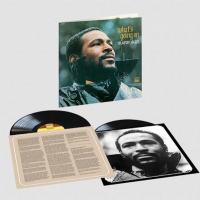
There’s plenty already said about the musical content of Marvin Gaye’s 1971 classic What’s Going On so I’ll avoid redundancy and just say that its scope—from the sociopolitically-minded lyrics to the carefully assembled song cycle structure and luscious musical arrangements—pushed the boundaries of what a Motown release could be, and truly stands the test of time. It’s an endlessly relevant record (decide yourself if that says more about the album’s excellence or society’s failures), and also one of the most exhaustively reissued: in the past 20 years, we’ve seen Universal’s 30th anniversary 2CD featuring the original Detroit mix, more alternate mixes, and a Kennedy Center live recording from 1972; Mobile Fidelity’s SACD and 33rpm single LP releases; UMG’s 40th anniversary “super deluxe” edition adding further session material and alternate versions; quite a few run-of-the-mill digitally-sourced vinyl reissues of the core album, done at United for the US and GZ for Europe; an Abbey Road half-speed 4LP mirroring the 2001 2CD; and MoFi’s 45rpm double LP UltraDisc One Step cut from tape. That’s not including the “Vinyl Lovers” Russian reissues of dubious legal origin cut and pressed at GZ, the 192kHz/24bit hi-res download, a Blu-ray Audio release (remember that format?), and the Japanese SACDs, CDs, and MQA-UHQCDs featuring a flat transfer of the original master tapes (yes, really!).
Michael Fremer  |  Dec 01, 2004

Englishman Dolby hit double paydirt with a catchy synth-novelty song and an accompanying video just as the pop-synth and music video/ MTV phenomena broke. However, “She Blinded Me With Science” was not his first song, nor does it really reflect what the guy's about. His first album, The Golden Age of Wireless (Harvest ST-12203), was originally issued without “She Blinded Me…”. When the song and video became popular, the album was reconfigured and reissued. Dolby was an instant celeb, and faded just as quickly, though his album Aliens Ate My Buick (EMI Manhattan E-148075) remains a cult fave for both music and sound. Come to think of it The Flat Earth was pretty good as well.

Michael Fremer  |  May 01, 2008

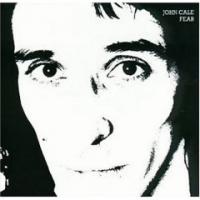
John Cale's guitar-fueled, angry yet nostalgic first Island release from 1974 is easily his finest solo effort in my book. It's certainly his most consistently well written and performed record.

Michael Fremer  |  Apr 01, 2004

Recorded live in the studio in four days, this collaborative effort produced by singer/songwriter Joe Henry attempts to revive the career of one of the great, though under-appreciated ‘60s soul singers, who has spent the past few decades in church and in relative pop-music obscurity. Back in the 1960’s in the heyday of soul, Burke, who has always straddled the secular/sanctified line, had a series of big hits on Atlantic, including “Cry to Me,” and “Everybody Needs Somebody To Love,” (co-written by Burke and producer Bert Berns) both of which were covered by The Rolling Stones.

Michael Fremer  |  Nov 01, 2007

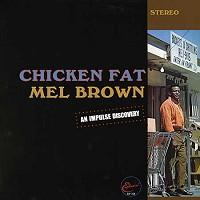
Funky, bluesy electric guitarist Mel Brown, now 78, is still at it. He was 27 back in 1967 when Impulse released this showcase for his super-clarified style of electric funk/jazz blues guitar.

Michael Fremer  |  Oct 09, 2012
What happens when you gather thirty one jazz musicians including MIles Davis, John Coltrane, Herbie Mann, Phil Woods, Bill Evans, Paul Chambers, Ben Webster, Hank Jones, Art Farmer, Donald Byrd, Milt Hinton and many other jazz greats (including a baritone sax role for Teo Macero) in Columbia's iconic 30th Street Studio?
Michael Fremer  |  Jan 03, 2018
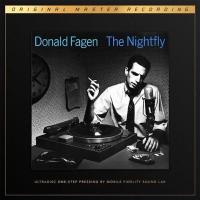
Before getting to the audiofool controversy surrounding the release of a 3M digital recording on expensive vinyl, there's the music. You're smacked in the face on the side openers "I.G.Y." and "New Frontier" (on the original single LP) by the exuberance and sunlit optimism of the "certain fantasies" entertained by "a young man growing up in the remote suburbs" back when science was venerated and not denigrated as it is today in certain circles as a "liberal plot".

Michael Fremer  |  Jun 01, 2008

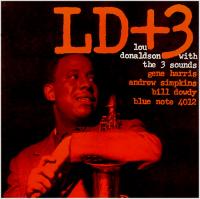
Lou Donaldson playfully skids into a few bars of David Rose’s “Holiday For Strings” mid-solo during a cover of the Kelmar/Ruby standard “Three Little Words,” indulging himself in a bit of shtick popular back when jazz could be lighthearted, studious and physical. Sonny Rollins was and is a deft practitioner of the off-handed musical quote as are and were many of the other jazz greats of a bygone era. It’s rarely done today. Jazz is more serious and cerebral, unless it gets goofy as the drummer Matt Wilson sometimes can get.

Michael Fremer  |  Jul 24, 2013
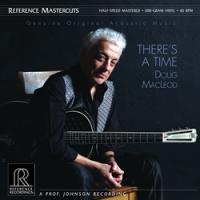
Back in 1995 in The Tracking Angle's second issue I wrote of acoustic folk/blues artist Doug MacLeod's performances on his Audioquest LP Come to Find (AQ 1027): "You'll hear a lifetime's accumulation of feelings, experiences and influences in his fingers, in his voice and in his songs...."

MacLeod was 46 at the time. Eighteen years or so later MacLeod is still at it, as he's been since he picked up bass and guitar as a child. He's issued 19 studio albums some live ones and even an instructional DVD. The years have only enhanced and enriched MacLeod's technical and communicative abilities. He's an even more fluid and nuanced guitarist and singer than he was back in 1995.

Michael Fremer  |  Aug 26, 2012
Mrs. Willke does not perform the first version of "#9" on the second album of the two LP set How To Teach Children The Wonder of Sex. However, both she and Dr. Willke make a lot of sense on the second album of this two LP set.

Malachi Lui  |  May 05, 2020
Drake is now a walking corporation. Actually, he’s an entire industry. As he enters his career’s second decade, he’s invincible in a way unseen since Michael Jackson (to whom Drake frequently compares himself). He escapes every scandal unscathed: a secret kid with a porn star, accusations of sexual harassment, cultural appropriation, and using ghostwriters; Pusha T’s brutal diss track, and questions regarding contact with teen celebrities don’t harm the artist born Aubrey Graham. Just one of the above kills or greatly diminishes most stars’ relevance; Drake is so culturally omnipresent that he won’t go away anytime soon. Whenever he drops a somewhat mediocre lead single, I say “he’s struggling for relevance now, his reign is almost over.” And? Said single becomes an inescapable hit. The full-length project drops, and everyone walking the earth stops dead in their tracks to stream it. His music is meant to sound emotionally genuine, yet nowadays Drake and his OVO team carefully calculate his every word.

Michael Fremer  |  Sep 01, 2005

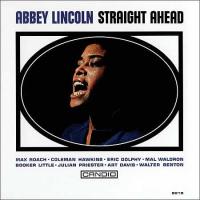
Abbey Lincoln:
In the upside down year of 1961 (not until 6009 will that happen again), the Kennedy era began, Washington D.C. residents finally got the right to vote in presidential elections thanks to the 23rd amendment to the constitution, and the civil rights movement was in its most activist period, with sit-ins staged throughout the south at public places and freedom riders traveling on buses to force the de-segregation of bus terminals as mandated by federal law.

 |  Jan 18, 2003
This Otis Rush love fest, produced by Mike Bloomfield and Nick Gravenites at Fame in Muscle Shoals, Alabama, was payback for the generosity and help Rush provided the youngsters back in Chicago during their \\"formative\\" years. Led by The Paul Butterfield Blues Band, the white suburban audience that formed the core of the \\"counter-culture\\" had discovered the blues. Butterfield had backed Dylan at Newport in 1965, causing a big stir, and soon thereafter Mike Bloomfield and drummer Sam Lay were in the studio with Dylan to record Highway 61 Revisited.

This Otis Rush love fest, produced by Mike Bloomfield and Nick Gravenites at Fame in Muscle Shoals, Alabama, was payback for the generosity and help Rush provided the youngsters back in Chicago during their "formative" years. Led by The Paul Butterfield Blues Band, the white suburban audience that formed the core of the "counter-culture" had discovered the blues. Butterfield had backed Dylan at Newport in 1965, causing a big stir, and soon thereafter Mike Bloomfield and drummer Sam Lay were in the studio with Dylan to record Highway 61 Revisited.

By the time this record was made, in 1969, two years had passed since Gravenites had formed The Electric Flag, a horn-drenched, blues-rock-psychedelic "American music" band that included Bloomfield. The group recorded the soundtrack to the psychedelic film The Trip, followed by Long Time Comin'. Bloomfield quit shortly thereafter.

Meanwhile, the long-play album revolution was peaking, and even if The Rolling Stones, these guys, and some others had revived the blues and brought the electrified Chicago spur of it to a white audience, how much of that audience had actually heard it played by the original masters?

Rush, who'd essentially been a singles artist (on Cobra) and had had his greatest success in the mid to late 1950s, had never made an album. Using their newfound leverage, Gravenites and Bloomfield got Rush signed to Cotillion, a small subsidiary of Atlantic, and brought their hero down to Fame to record his first album. By then the Muscle Shoals studio had become a familiar venue for Atlantic Records.

Since Rush had been under the tutelage of Willie Dixon, who wrote, produced, arranged, and played bass on most of Rush's great singles (including his most famous, "I Can't Quit You Baby"), Bloomfield and Gravenites provided many of the tunes here. Neither played, though--instead they put Rush in front of the famous Muscle Shoals session team, which included a young Duane Allman before he'd formed his own group. Also on board was keyboardist Mark Naftalin, who'd been in the Butterfield band. But the main sound here is horn-drenched Dixie--closer to Stax-Volt than to Chess or the "West Side Sound," which makes sense since the producers were obviously trying to get Rush some well-deserved commercial success using a sound that was then white-hot.

The star here is Rush's fluid guitar playing and his mellifluous voice, which shines above some of the pedestrian "pick-up band" arrangements and less-than-stellar song choices. Gravenites and Bloomfield had their hearts in the right place, but skilled A&R men they were not. At least they weren't at the time of this session, though it must be said that they penned the set's highlight, "Reap What You Sow" (which includes the album title in its lyrics).

Rush does contribute two tunes, "Love Will Never Die" and "It Takes Time," both of which have an urban retro feel. Don't expect to hear Duane Allman's upper-register fretboard squeals on this record, though. This was Rush's album, and the other guitarists stay respectfully in the background. The final tune, "Can't Wait No Longer," with its "black chick" background vocals and pulsing horns, shows where Rush might have taken his sound had the album been commercially successful. It smokes.

Sonically, this recording is barely competent. Whether by design or accident, Rush's voice on side one sounds distorted, echoey, and distant--as if the producers or the engineer were trying to mimic the raw sound of the Cobra sessions, which were recorded under less-than-ideal conditions but which nevertheless contributed to a unique and very commercial sound. Some tracks sound better than others, but it all sounds like four-track recordings mixed hard-left/-right and center. I'm making it sound worse than it really is so you won't be disappointed (the faults lie in the recording, not the mastering, which is fine). Crank it up and you'll enjoy this slice of musical history. Meanwhile, if you want to hear Rush's Cobra singles, check out The Essential Otis Rush, The Classic Cobra Recordings 1956-1958 (Fuel Records/Varése Sarabande 302 061 077 2).

Michael Fremer  |  Aug 01, 2011

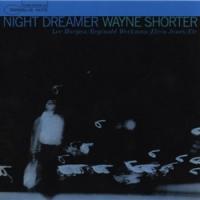
Tenor saxophonist Wayne Shorter's Blue Note debut features the stellar rhythm section of McCoy Tyner, Elvin Jones and Reggie Workman plus Lee Morgan on trumpet. Not a bad way to start a new label debut!

Pages

X