


Dan Hawkins on How The Darkness Flout and Burn Through Rock Tropes and Tribulations on Their Smokin’ Hot New Dreams on Toast LP
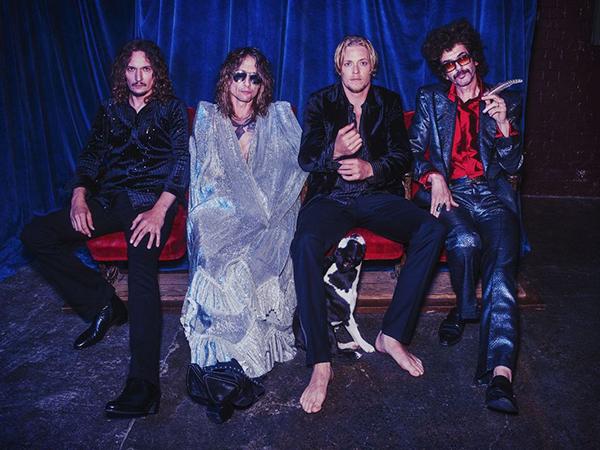
For a British band with such a potentially foreboding name as The Darkness, their music is anything but grim. Most likely, you first became aware of this hard-rockin’ group by way of the infectiously upbeat hit single “I Believe in a Thing Called Love,” from their July 2003 debut LP on Atlantic, Permission to Land. (Footnote 1) Since then, The Darkness have shown incredible staying power over the ensuing two decades, releasing albums that celebrate what I’m calling a “tongue in chic” (spelling intended) wink/nudge approach to rock conventionalism by meeting all of it head on with layered riffs, clever arrangements, and operatic vocals galore. Mott the Stardust Rex, you could even call ’em. (Or something like that.)
The Darkness know their strengths, and just how to harness them and expand upon them — and it’s the kind of balls-out good-time music that’s best heard on vinyl, right where it belongs. As an example of what to expect from the band’s latest LP, Dreams on Toast, check out the intentionally way-over-the-top video for “Rock and Roll Party Cowboy” via its YouTube clip below — one helluva in-your-face song that references Leo Tolstoy one moment, and Jack Daniels the next.
What is it that The Darkness really want us to get out of their music, one might ask. “Ultimately, the feeling I get from my favorite songs of ours is that they just make me feel good in the same way that The Beatles and Cat Stevens do,” Darkness producer/guitarist Dan Hawkins told me recently on Zoom. That’s as good a descriptor as any for how you’ll feel while spinning the band’s latest LP, the aforementioned Dreams on Toast, which was released via Cooking Vinyl back on March 28, 2025. I actually wanted to wait until The Darkness got out on the road on this side of the Pond before covering their new album in this column — and you can find said tour dates here, if you’re interested in seeing them (and you damn well should be!) In my glitter-glam book, the Dreams on Toast LP rates a solid 8.5 for Music, and an equally solid 8 for Sound.
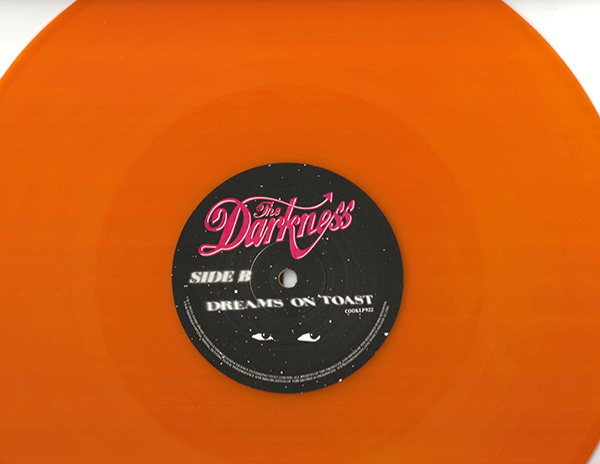
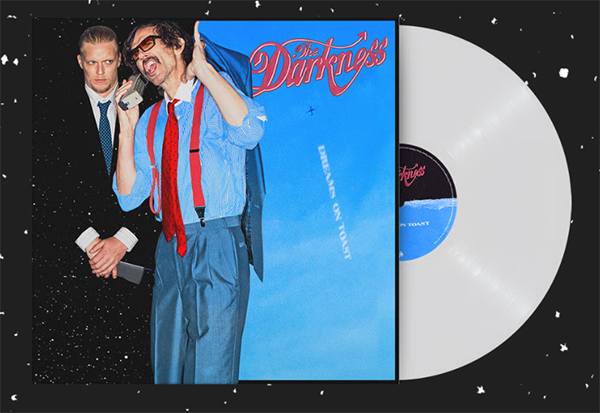
As for the stats, the Dreams on Toast vinyl was pressed at Packaged Sounds in Poland, and it’s available in a myriad of color vinyl options. They include (deep breath!) white; orange (the color of the version I have, as seen above); clear with black splatter; blue, red, white and blue sunburst; red and blue split; red white and blue stripe; and clear with blue and pink splatter, plus a holiday-oriented version with different, Christmas-themed cover art. The white vinyl edition has an SRP of $29.98, and the color options tend to start at $32.98. Some of them are available via The Darkness’ official site store here; the white version is also available via Music Direct here (that said, it may already be sold out at MD as of this posting, but you can request to be notified by email when it’s back in stock); and the others have been earmarked as limited editions for various online outlets, indie shops, and other brick-and-mortar retailers, so you may have to look around out there if you happen to have a particular color/combo preference.
I should also add that there are five cassette options for Dreams on Toast, one per each bandmember plus a special “friend” of theirs, and they go for $12.50 each. (These too can all be found at the band’s official site store.)
On a recent Zoom call across the Pond to his home studio — where he was duly surrounded by vintage tape machines, stereo gear, and vinyl galore, just like yours truly — Hawkins, 48, and I discussed what he doesn’t want to hear on test pressings, why “flow” is critical to vinyl sequencing, and what albums he and his older brother, Darkness lead singer Justin Hawkins, bought and shared together when they were growing up. Our next long player / Oooooh it’s coming out soon / I’ll be honest, I’m under the moon. . .
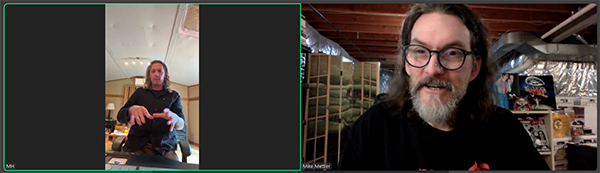
Mike Mettler: Hey Dan! First thing I have to tell you is that I like having the Toast record on orange vinyl, which is just a beautiful thing to behold. And it plays great too! Though I guess we should actually call that color orange marmalade, if we’re gonna keep the toast theme going here. . .
Dan Hawkins: (laughs) Yeah, definitely! (continues chuckling)
Mettler: You also have white vinyl and splatter vinyl options, along with quite a few others. Did you guys choose the specific colors yourselves, or were they brought to you in some other way? How’d you decide what colors to go with?
Hawkins: We were given loads to choose from, and we picked them out. We had them pressed at a different place than we did with the last record. (Footnote 2)
Mettler: When you got the Toast test pressings to check out, were there any notes you had when you listened to them? Anything like, “Hey, turn this level up here,” or “The vocal needs to be up more here,” or “The acoustic stuff we did on Side B needs to be different,” or anything else like that?
Hawkins: No, not really, no. I mean, as long as the tone is right. It’s more of a case of I’m listening acutely to the different versions of mastering, and the way the mastering has been handled. Obviously, when I’m mixing an album, I’ll get the mastering back, and I’ll approve that. And then, at the end, it will be compiled and mastered — and there’ll be a mastering for vinyl. That’s the thing I check. Sometimes, I’ll change — but very rarely.
Actually, one of my complaints is, sometimes, I don’t want to hear too much bottom end in vinyl. I don’t want people trying to translate something that makes sense on a digital format onto vinyl. I don’t care about that, really.
Mettler: Yeah, that makes sense. I also I like that you’ve done the five/five split here on Toast and have gone with about 16ish minutes per side, which I think is smart since you don’t have to compromise anything in the mix. I love how “Rock and Roll Party Cowboy” opens Side A with a super-wide soundstage, especially how the guitars are split nice and wide. By the time we get to “Don’t Need Sunshine” at the end of the side [it’s Track 5], you have the room for that one to be a little more delicate and expressive. I figure sequencing had to be foremost in your mind as to how you wanted each side to unfold as you got closer to the hole, right?
Hawkins: I think that’s something we default to because that’s the way we’ve always heard records. Like, there’s a reason for that flow, isn’t there? As you say, as you get closer to the hole, you don’t wanna put anything with too much bottom end there. You don’t want the big-sounding stuff to be closer to the hole, essentially.
Mettler: If Closer to the Hole isn’t the title of the next Darkness studio record, I mean — come on! Now that it’s sitting there, you gotta use it. (both laugh) I also like you having “Weekend in Rome” appearing at the end of Side B [as Track 5], where you’ve got Stephen Dorff’s cool “verbalizations,” as we’ll call them — plus, you’ve got those string elements in there too. Tell me how that one came together, because I don’t see any way that “Rome” could have been in any other position than the last track, for many reasons.
Hawkins: (chuckles) Yeah. At one point, we did have it swapped, I think, at the end of Side A, but it didn’t seem quite right. It was like a, “Well, how do you follow that?” sort of thing.
I also wanted to make a real, real play for the perceived volume shift once the orchestra comes in, which kind of meant that the whole beginning of that song needed to be very quiet and intimate — and it would have almost been too much, I’d say, for being halfway through an album. But at the end of an album? It fits.
Mettler: I totally get it. I mean, “A Day in the Life” couldn’t have started [The Beatles’ June 1967 masterpiece] Sgt. Pepper album. That just had to be at the very end of it, with all the quiet, and then all the buildups. It wouldn’t have worked anywhere else on that record, you know?
Hawkins: That’s very true. Very true. The whole vinyl thing, and the sequencing, is what we’re thinking about while we’re still recording the album. Sometimes it informs how we approach recording things.
Mettler: Cool. And then “Hot on My Tail” [Side A, Track 3] is a perfect middle-of-the-side track to me. If people don’t know some of the — well, I’m gonna call them the “aural Easter eggs” of what that song may or may not sound like to people. It reminds me of some of the things you did with producer Roy Thomas Baker on your One Way Ticket to Hell. . . and Back album [released via Atlantic in November 2005], not to mention another “royal” band he produced albums for that we all know and love.
Hawkins: (laughs) Yeah, basically, that one’s Queen as f---! (laughs heartily)
Mettler: Yeah, yeah. There you go. See, there’s another album title you can use. (laughter continues) But to be able to do it right, you have to have that sound captured exactly right but still sound like you, with allusions to things like, “this is sort of a Freddie [Mercury] vibe” and “this is how Roy and those guys caught it in the studio.” Did you have to redo anything on that one, or was it just in your DNA to nail it like you guys did?
Hawkins: Well, this whole album was one of those ones where — we tend to flip-flop it. One album will be almost completely live, raw, knocked out very quickly, and written in a rehearsal room with amps and a PA. And then we have the albums where we write entirely on acoustic, and then we walk through the door on Day 1 of the recording session, and we take it from there. There’s a huge amount of experimentation sometimes, and it’s absolutely exhausting. Whenever I finish one of those types of records, I’m like, “I’m never doing it again. I’m never gonna produce a record like that again!” (chuckles) And then the next one comes along, and I can’t help myself.

Hawkins: But Toast was one of those ones with building all those vocal soundscapes — I mean, my God, we were just going for 17, 18 hours a day for weeks, and then presenting something to the band. Justin [Hawkins, The Darkness’ lead singer and Dan’s older brother] and I would be working through the day and night for like 3 or 4 days. The other guys would come in and we’d present them with it, and they’d go, “Nah.” (laughs) And then we’d just try a different approach. It’s just arduous. A huge amount of work goes into these things.
Mettler: Oh, I know! This reminds me of something we were talking about earlier with [Queen’s] “Bohemian Rhapsody” [their all-time epic, multi-layered single from November 1975’s A Night at the Opera on EMI], or Fleetwood Mac’s [February 1977 gargantuan hit album on Warner Bros.] Rumours — songs and albums that took many months to get right, almost to the point where the basic or final tracks could have been one edit pass away from being totally lost.
Hawkins: That was quite a common thing, wasn’t it? Especially with Rumours — it always seems to be the greatest albums. Every single time it’s played back, you’re degrading it to some extent. I think people don’t realize how many times you listen back to these songs. When you’re making them, they’re being played day and night for months and months and months, you know? But it’s a lot easier to do things like that now than it was then, as far as huge multitrack vocals go.
I still use the same approach. I use the computer like a tape machine, really. I don’t take any shortcuts. I don’t ever use any effects to make it sound the way I want it to sound, because I’ve been taught how to do it by people like Roy [Thomas Baker], for real — so that’s how you do it.
Mettler: Such a good point. “Cold Hearted Woman” [Side B, Track 3] is another good example of a song that really affects you in a certain way that wouldn’t work with the “artificial sweeteners,” if you will. There you are, playing banjo and fiddle and all sorts of stuff on there with your “Americana vibe,” so to speak. (both laugh)
Hawkins: Yeah, I mean, there’s all sorts of stuff going on there. In having a go at it — the rules are, in The Darkness, that you follow the song where it wants to go. You don’t pull it into what you wanna do with it, you know? If something comes in and it’s written in a certain style, then that’s how we’re gonna do it. And, ultimately, it ends up sounding like you anyway, in one way or another. You just hunt that down, rather than trying to take that melody and lyric in that song [i.e., “Cold Hearted Woman”] and go, “So, how do we make this rock?” No, that’s not how it works.
Mettler: Right, it’s gotta be what it is. Now if I remember it correctly, when we first talked back in 2015, you told me The Beatles’ [seminal August 1966 LP on Parlophone/Capitol] Revolver was one of your first and favorite records.
Hawkins: Yeah, absolutely, yeah — and I’ve still got the original vinyl of that one here with me. There’s my vinyl collection down there. [points to one locale of his LPs]
Mettler: Nice! I don’t think we talked about this before, but what would you consider to be the first record you bought yourself? It’s the one I call “The Talisman Record,” the thing you bought with your own money as a kid, or something that’s like, “This is mine. I got this one.” I imagine you and your brother may have been sharing records, but was there something that was like “the one” for you?
Hawkins: Yeah. Well, as far as actual actually buying them, bear in mind we are kind of like ’80s kids in a way. I think, at one point, we went into a newsagent shop, where they used to have cassettes. Justin and I bought The Final Countdown by Europe, and Huey Lewis and The News — not Sports, but I think it was the next one, Fore!, because it had “The Power of Love” on it. We were probably about eight or nine years old — maybe around that age; maybe not even. But we’ve never been able to work out who chose which one to buy, because we just basically went back and forth with them the whole time. And now, all this time has gone, and, well, we’ve forgotten who actually bought what — but those two were a couple of quite important records. I mean, the Huey Lewis one — oh my God; it’s just hit after hit. (Footnote 3)
Mettler: Those are two classic records, and I love them both. And I don’t care what the critics say about them either, because good music is good music! (both laugh) Are you able to buy any new LPs nowadays, or are you just too busy working to buy records?
Hawkins: Oh, well — you know what? I do love that, ironically, when I’m “at work” on tour, I get more time — and one of my favorite things is leafing through albums in record stores. There’s always a good one in every city in the world. I like going through them and flicking through them. Sometimes you’ll find a record that you already own — and it reminds you to listen to it when you get home.
Mettler: Yeah, that’s true. Of course, sometimes I go ahead and buy that second or third copy of it anyway, but that’s a story for another time. (both laugh) Well, our time is almost up, so what I like to do to finish things up here is, I’m gonna throw us 50 years into the future, where we’re in the year 2075. And, as I like to joke with people, I say unless there’s some weird science going on, you and I may not physically be around then.
Hawkins: Well, our brains might still be activated, though. (both laugh)
Mettler: Right, right. We’ll be in brain jars talking to each other in mono, because who knows how we’ll even be listening to stuff in those days, anyway? (more laughter) So, in that future time, when somebody types in “The Darkness” or “Dan Hawkins” into a listening device to hear what you were doing, what do you want a future listener to get out of the music that you’ve made?
Hawkins: Oh my God! (chuckles again) Hmmm. (slight pause) That’s a really difficult question. I would say probably I would just want it to lighten their mood. I mean, given the fact that they’re probably in a jar — and if their bodies do exist at all, they’ll be withered and in a milky, gloopy sort of thing. (smiles)
Ultimately, I’d like people to feel good. When our songs are going right and I think we’re doing what we should be doing, they don’t give me a feeling of anger or a feeling of frustration — and also not a feeling of sadness, or the expulsion of that. It just makes me feel good. I love “feel good” music, so hopefully our music will do the same.
Author bio: Mike Mettler is the editor of Analog Planet in addition to being the music editor of our sister site Sound & Vision, and he’s also a contributing music editor to one of our other sister sites, Stereophile, in addition to being the regular Vinyl Icons column scribe for Hi-Fi News. Plus, he’s quite partial to vintage 1967 Mustang fastbacks, but that’s yet another story for a different time and place.

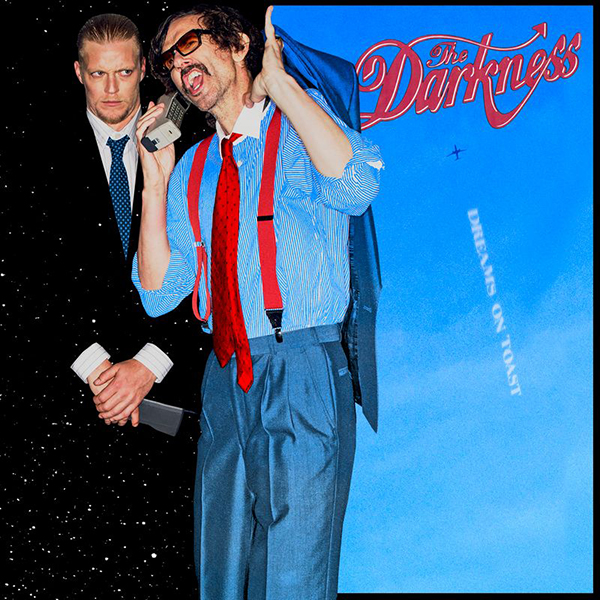
THE DARKNESS
DREAMS ON TOAST
1LP (Cooking Vinyl)
Side A
1. Rock And Roll Party Cowboy
2. I Hate Myself
3. Hot On My Tail
4. Mortal Dread
5. Don’t Need Sunshine
Side B
1. The Longest Kiss
2. The Battle For Gadget Land
3. Cold Hearted Woman
4. Walking Through Fire
5. Weekend In Rome
Footnote 1: If you haven’t yet heard The Darkness’ debut album Permission to Land on vinyl, you owe it to yourself to seek out the 20th anniversary 5LP Super Deluxe Box edition of it that’s dubbed Permission to Land . . . Again, which was released via Atlantic in October 2023. Besides the core album — which also rates an 8.5 for Music, and an 8 for Sound — you get four extra LPs chock full of demos, singles, B-sides, and a pair of live-in-2003 gigs.
Footnote 2: The Darkness’ previous studio LP, November 2021’s Motorheart, which is also on Cooking Vinyl, came out in a few different color options as well, but that album’s lacquers were cut at 24 Mastering in The Netherlands.
Footnote 3: Europe’s The Final Countdown LP was released on Epic in May 1986. Huey Lewis and The News’ Sports was released on Chrysalis in September 1983, and Fore! was released on Chrysalis in August 1986. “The Power of Love,” a No. 1 single in the summer of 1985, appears as a “bonus” track on the international vinyl editions of Fore! in the middle of Side 2 as Track 3, but it’s not on the equivalent U.S. LP or original of-era CD. “The Power of Love” does appear, of course, on July 1985’s Back to the Future (Music From The Motion Picture Soundtrack) LP on MCA from whence it originated, as well as on various HL&TN greatest hits CDs and on their Collected 2LP set that was initially released via Music on Vinyl/Universal in September 2017 (LP1, Side Two, Track 2).













 |
Equipment Reviews | |
The Gruvy Awards | |
Blogs Analog Tips | Columns Music | |
Show Reports | |
News Resources |
 © 2026 AnalogPlanet
AVTech Media Americas Inc.
All rights reserved