


UMe Set to Debut New AAA Vinylphyle Series With Four 180g 1LP Titles From Bob Marley, The Band, The Velvet Underground & Nico, and Nat King Cole on November 14
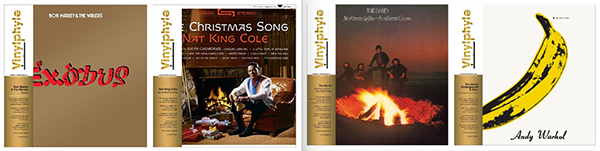
My fellow analog audiophiles, take note — we are now all members in good standing in a newly spelled subset called vinylphyles. Vinylphyles, of course, have the same, er, obsessive-about-SQ-on-wax laser-focus as we do — and we can credit UMe for coming up with that double-y sobriquet, which also happens to serve as the name of their exciting new reissue series that’s set to debut at the end of next week.
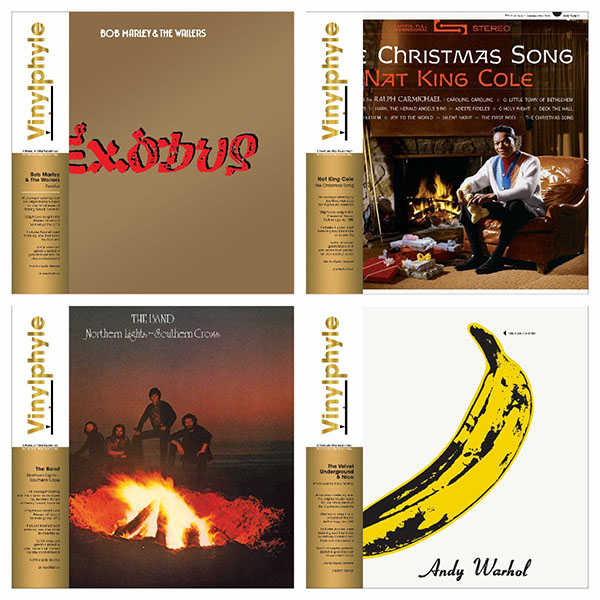
UMe’s new audiophile vinyl reissue series is said to be, quote, “dedicated to presenting essential albums across multiple genres with uncompromising sound quality and packaging.” Also billed as “a premium vinyl experience for people who love vinyl,” the Vinylphyle Series will debut on November 14, 2025, with four landmark titles: 1) Bob Marley & The Wailers’ 1977 opus Exodus; 2) The Band’s magical 1975 release Northern Lights – Southern Cross, which will also be celebrating its 50th anniversary this year; 3) The Velvet Underground & Nico’s self-titled 1967 Verve debut The Velvet Underground & Nico; and 4) Nat King Cole’s perennial 1962 holiday favorite, The Christmas Song.
All four of these LPs will be available exclusively at uDiscover Music and via the respective artists’ official online stores (where applicable). They each sport a respective SRP of $39.98, and you can preorder them individually or collectively right here.
To see more of what the Vinylphyle Series is all about, check out the official YouTube clip below.
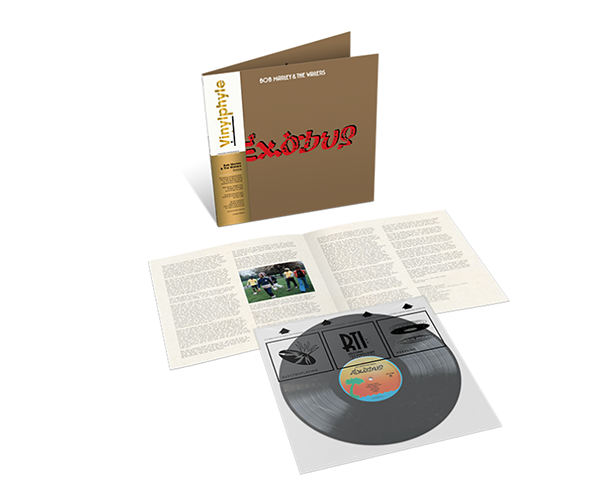
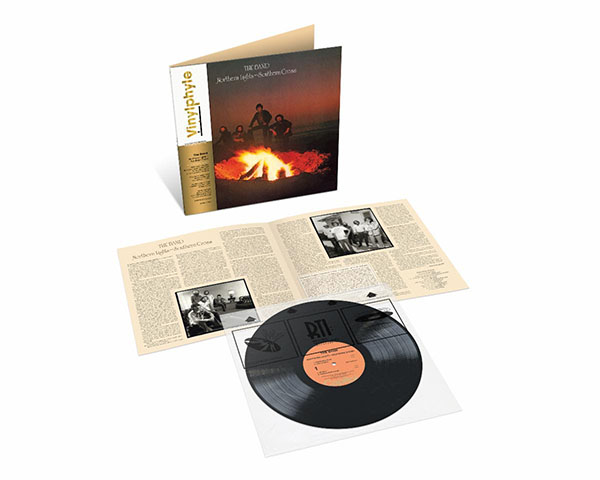
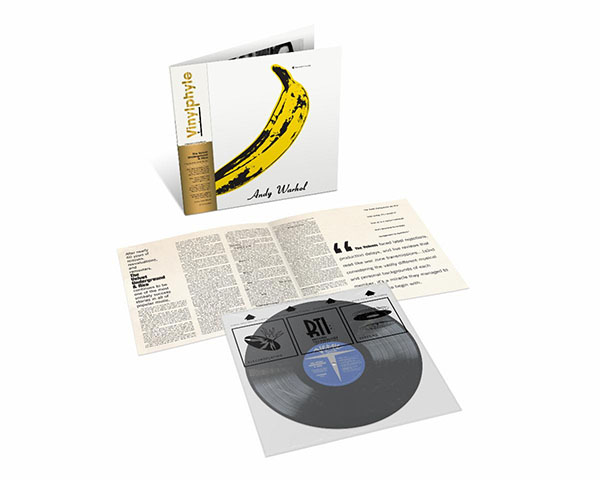
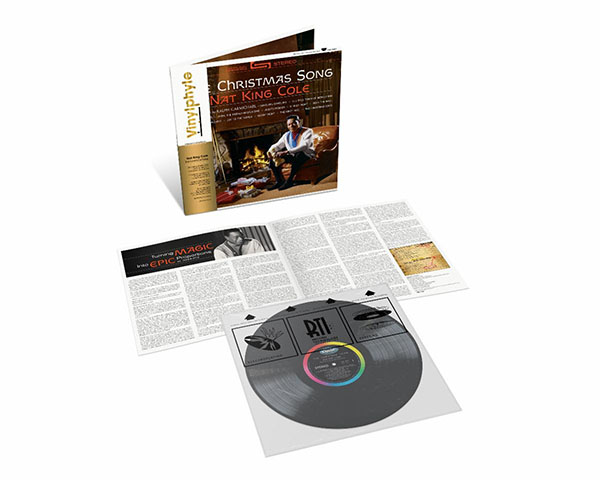
More stats now. Each Vinylphyle LP release will feature all-analog mastering from original sources as done by “an elite group of today’s top vinyl cutting engineers.” To that end, these first four titles have been mastered by Joe Nino-Hernes of Sterling Sound from the original analog master tapes. The LPs will be pressed at Record Technology, Inc. (a.k.a. RTI) on 180g black vinyl. Similar in presentation and execution to Blue Note’s acclaimed Tone Poet series, the production and packaging of these LPs, quote, “seek to honor the stature of these recordings” — and thus, they will come with tip-on wrapped gatefold jackets in satin matte finish and printed on clay-coated board, along with archival audiophile-grade poly inner sleeves and a four-panel insert featuring new liner notes by notable music journalists, personalities, and knowledgeable fans alike.
“We are excited to launch our Vinylphyle Series to provide best-in-class, audiophile-quality pressings of some of the most legendary and timeless records,” said President & CEO of UMe Bruce Resnikoff in a press statement. “This series is built on uncompromising quality, and all albums have all been meticulously mastered by renowned mastering engineers from analog and packaged with the utmost care and attention to detail. This new series allows both longtime record enthusiasts to hear some of their favorite albums sounding better than ever — and for those just discovering vinyl to experience the warmth and richness that only vinyl can deliver and to become Vinylphyles.” The UMe powers that be also confirm with us that, following this launch, the Vinylphyle Series will continue with two releases per month, “spanning genres and eras” accordingly.
Let’s now go through those first four Vinylphyle Series entries album-by-album, with the balance of the commentary having been provided by way of UMe’s most excellent press notes — notes that are a few good steps above many of the vinyl-centric PR items I receive on a daily basis, I must say — along with the usual MM additive commentary sprinkled in here and there along the way.
BOB MARLEY & THE WAILERS
EXODUS
Originally released in June 1977 on Island, Exodus stands as Bob Marley & The Wailers’ most internationally celebrated statement — an album forged in exile, having been recorded in London after an assassination attempt in Jamaica forced Marley from his home. Across its ten tracks, Exodus bridged two halves of Marley’s vision: the militant and the spiritual, the revolutionary and the devotional. The LP’s first side is marked by songs of resilience and struggle — “Natural Mystic,” “So Much Things to Say,” “Guiltiness,” “The Heathen,” and the title track, with its mantra-like chorus of movement and deliverance. Side 2 shifts into a most luminous register, in turn featuring some of Marley’s most enduring love songs and anthems — “Jamming,” “Waiting in Vain,” “Turn Your Lights Down Low,” “Three Little Birds,” and “One Love / People Get Ready.” The balance between fire and warmth gave Exodus a scope that resonated far beyond reggae’s core audience, cementing Marley as a global voice of conscience and celebration.
Earlier this year, Analogue Productions reissued a most excellent UHQR 200g 45rpm 2LP edition of Exodus (AUHQR 0016-45), which was mastered from the original tapes by Ryan K. Smith at Sterling Sound and pressed at QRP. It’s a version that, on my own ratings scale, garners a 10.5 for the Music and a full 11 for the Sound, so the impending Vinylphyle edition has quite a high benchmark to attain.
Exodus was recorded primarily at Island’s Basing Street Studios with the classic Wailers lineup in tow — Aston “Family Man” Barrett anchoring on bass, his brother Carlton Barrett on drums, Tyrone Downie on keyboards, Junior Marvin on guitar, Alvin “Seeco” Patterson on percussion, and backing vocals from the I Threes — Rita Marley, Judy Mowatt, and Marcia Griffiths. Marley himself played rhythm guitar and provided the voice at the center of it all: urgent, tender, prophetic. The sessions marked the arrival of Marvin as lead guitarist, his fluid lines adding dimension to The Wailers’ already formidable sound. Chris Blackwell once again produced, giving the record a clarity and sweep that brought Marley’s themes of exile, faith, and survival into sharp focus for international listeners.
In retrospect, Exodus can be heard as both culmination and turning point. It captured Marley at the height of his powers, weaving together spiritual yearning, political urgency, and melodic grace in a way that spoke across boundaries. At the same time, it opened the final act of the artist’s career, which sadly ended with his death in 1981 at the age of 36. The songs from Exodus have endured as the backbone of Marley’s legacy, continually reinterpreted in tributes, compilations, and concerts worldwide. More than four decades later, it remains a record of vision and resilience — the sound of an artist translating exile into testimony, and personal struggle into global song.
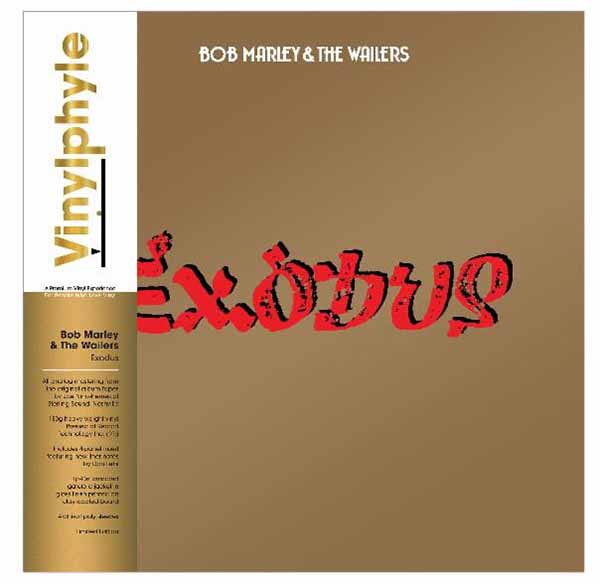
BOB MARLEY & THE WAILERS
EXODUS
180g 1LP (Island/UMe)
Side 1
1. Natural Mystic
2. So Much Things To Say
3. Guiltiness
4. The Heathen
5. Exodus
Side 2
1. Jamming
2. Waiting In Vain
3. Turn Your Lights Down Low
4. Three Little Birds
5. One Love / People Get Ready
THE BAND
NORTHERN LIGHTS – SOUTHERN CROSS
Originally released in November 1975 on Capitol, Northern Lights – Southern Cross was the first album recorded at Canadian-American icons The Band’s own Shangri-La studio in Malibu, California, and their first to feature all-new material since September 1971’s Cahoots. It marked a return to form after years of touring, live recordings, and various interim projects — a moment when the group recommitted to the craft of songwriting and ensemble interplay that had made them singular in rock. The record balances nostalgia and restlessness, weaving American history and personal memory into music that reflected both their internal fractures and their enduring collective identity.
The album was anchored by the songwriting of Robbie Robertson, who composed all eight of its tracks, but its force came from the interpretive power of his bandmates: Levon Helm on drums and vocals, Rick Danko on bass and vocals, Richard Manuel on piano and vocals, and Garth Hudson on organ, accordion, and synthesizers. The opening track, “Forbidden Fruit,” sets the tone with sly commentary on temptation and consequence, while “Ophelia,” animated by Helm’s drawl and Hudson’s jubilant horn charts, became a live staple. Danko’s reading of “It Makes No Difference” stands as one of the most moving performances of his career, while the closing “Rag and Bones” layers Robertson’s imagery with Hudson’s haunting tonal colors.
Self-produced by The Band, the NL – SC sessions made distinctive use of then-new technology — particularly Hudson’s ARP synthesizer — without sacrificing the group’s organic interplay. Songs like “Acadian Driftwood,” with its poignant retelling of the Acadian expulsion, expanded their narrative scope into overlooked corners of North American history, while “Ring Your Bell” and “Jupiter Hollow” explored fresh rhythmic and textural terrain. This blend of modern sonics and deep-rooted storytelling gave Northern Lights – Southern Cross a singular place in their catalog, distinct from the sepia-toned Americana of July 1968’s all-time-iconic debut Music from Big Pink and September 1969’s The Band.
Northern Lights – Southern Cross — which, from my POV, garners an 8.5 for Music (though some of its tracks swerve upward to 9 and 9.5), and 8 for Sound on the most recent 2015 Capitol/UMe LP reissue of it that I have in hand (B0022715-01), so I very much look forward to hearing this new edition — carries the sound of a group pouring everything they had left into the studio. Each voice is still unmistakable, every contribution indispensable, and together they crafted a record that stands as both a summation and a farewell — a bittersweet reminder of a transnational partnership that changed the shape of popular music.
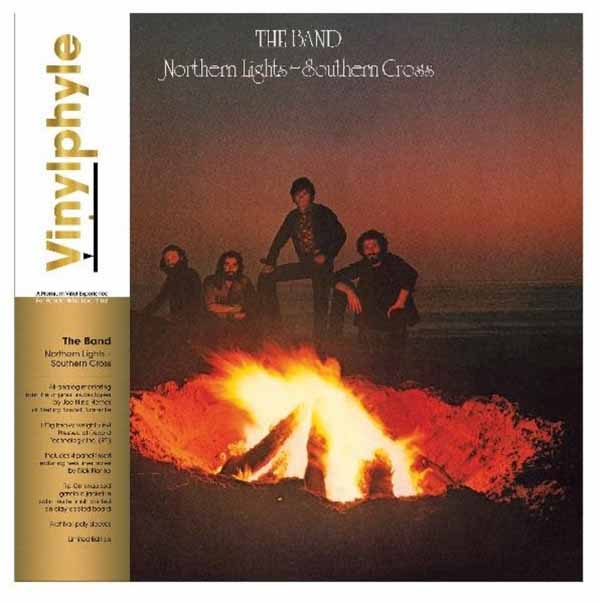
THE BAND
NORTHERN LIGHTS – SOUTHERN CROSS
180g 1LP (Capitol/UMe)
Side 1
1. Forbidden Fruit
2. Hobo Jungle
3. Ophelia
4. Acadian Driftwood
Side 2
1. Ring Your Bell
2. It Makes No Difference
3. Jupiter Hollow
4. Rag And Bones
THE VELVET UNDERGROUND & NICO
THE VELVET UNDERGROUND & NICO
The Velvet Underground & Nico was originally released in March 1967 on Verve, and it has since become one of the most influential debut albums in the history of the rock idiom. Conceived in collaboration with Andy Warhol — who served as its nominal producer and was the one who designed the LP’s now-iconic peelable banana cover, which has been replicated in this new edition (“Peel slowly and see”) — the album introduced guitarist/vocalist Lou Reed, electric violist/bassist John Cale, guitarist/vocalist Sterling Morrison, and drummer Maureen Tucker, and the enigmatic German singer Nico.
Recorded at Scepter Studios in New York and T.T.G. in Hollywood with producer Tom Wilson, the record fused Reed’s street-level storytelling with Cale’s avant-garde sensibility, Morrison’s wiry yet grounded guitar lines, and Tucker’s minimalist drumming that often resembled the pulse of a heartbeat. Nico’s aura of cold elegance gave the album its spectral presence, while Reed’s lyrics on addiction, desire, and disaffection pushed rock songwriting into dangerous new territory.
At its core, the album is both abrasive and tender — balancing noise and melody in ways that felt radical for its time. Songs like “I’m Waiting for the Man,” “Heroin,” “Run Run Run,” and “Venus in Furs” rejected commercial polish for raw intensity, while the dreamy opener “Sunday Morning” and the Nico-sung troika of “Femme Fatale, “I’ll Be Your Mirror,” and “All Tomorrow’s Parties” revealed Reed’s gift for fragile balladry. The tension between these extremes defined the record’s character, offering a sonic and thematic map of New York in the late 1960s — a city of glamour and decay, artifice and honesty, and beauty and brutality.
The Velvet Underground & Nico has long been one of my all-time favorite albums, though my original 1967 stereo Verve LP (V6-5008) unfortunately has the banana peeled off the cover, with its pink-hued underneath reveal in full view — but I just had to have an original, so there ya go. I’ve subsequently obtained a number of its LP reissues that vary in SQ, but the Music will always rate an 11 with me. My VU&N LPs range in Sound from 6 to 8.5 at best, so I’m indeed quite eager to hear how this new edition fares.
Though largely overlooked upon release, The Velvet Underground & Nico grew in stature as the years passed, becoming a blueprint for entire movements from experimental, avant-garde rock to punk to post-punk to indie rock. Seen through the lens of its release, The Velvet Underground & Nico is not only the band’s opening statement but a map of paths each bandmember would subsequently follow — a document of artistic risk, of noise and beauty held in precarious balance, and one where every member proved indispensable.
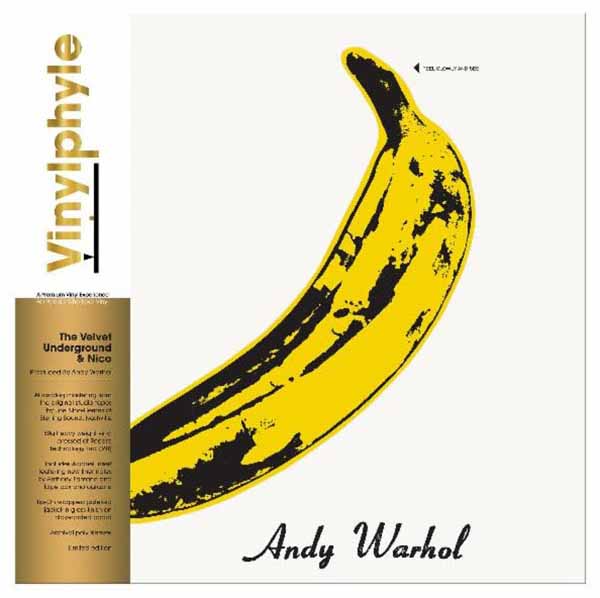
THE VELVET UNDERGROUND & NICO
THE VELVET UNDERGROUND & NICO
180g 1LP (Verve/UMe)
Side 1
1. Sunday Morning
2. I’m Waiting For The Man
3. Femme Fatale
4. Venus In Furs
5. Run Run Run
6. All Tomorrow’s Parties
Side 2
1. Heroin
2. There She Goes Again
3. I’ll Be Your Mirror
4. The Black Angel’s Death Song
5. European Son (To Delmore Schwartz)
NAT KING COLE
THE CHRISTMAS SONG
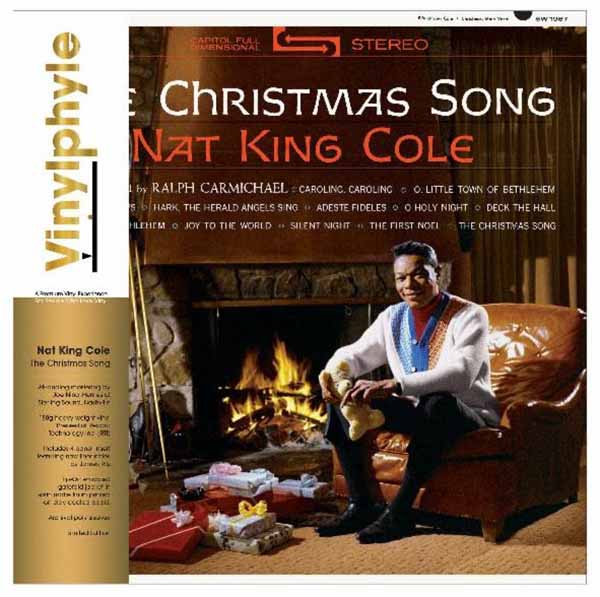
Nat King Cole’s The Christmas Song, featuring its ubiquitous namesake title track, has become one of the most popular holiday albums in the Christmas canon — a collection that permanently linked Cole’s velvet baritone to the season itself. Originally released in 1960 on Capitol as The Magic of Christmas, the album was reissued in 1962 as The Christmas Song, replacing “God Rest Ye Merry Gentlemen” with that indelible title cut. Though Cole had been recording since the 1930s and had long since crossed from jazz pianist to mainstream balladeer, it was his association with Christmas music that secured his voice an enduring place in households worldwide. “The Christmas Song” itself, written by Mel Tormé and Robert Wells, had been cut by Cole multiple times before 1960 — first in 1946 with the original King Cole Trio, then in fuller orchestrations across the next decade — but it was the 1961 stereo re-recording with Ralph Carmichael’s orchestra that became the standard, endlessly replayed on radio and reissued across formats.
The record gathers not just “The Christmas Song” but an array of traditional carols and secular standards, all rendered with Cole’s characteristic poise. Backed by arrangements from Carmichael and lush orchestral settings that frame his voice in strings and choir, Cole moves through “O Holy Night,” “Silent Night,” “Deck the Hall,” and “O Come All Ye Faithful,” alongside lighter favorites like “I Saw Three Ships” and “Caroling, Caroling.” What set his interpretations apart was a union of warmth and refinement — a sound that evoked both intimacy and grandeur, equally suited to hearthside listening and mass broadcast. By the early 1960s, Cole was one of the most recognizable entertainers in the world, with crossover hits, a pioneering television program, and international tours. This album distilled that stature into seasonal permanence.
In the decades since, The Christmas Song has come to define not only Cole’s career but also the very soundscape of the holiday season. The title track became the first holiday recording inducted into the Grammy Hall of Fame, and its ubiquity on seasonal charts has ensured Cole’s posthumous presence every December. The album has been repackaged and expanded many times, but the 1960 configuration remains its essence — a concise, elegant program that binds together sacred and secular with an effortless grace. Indeed, the Music is a pure holiday delight, and it easily garners a cool 9 on my feel-good ratings scale. The Sound on my well-worn 1972 reissue (SW-1967) is an 8 at best, so I’m again looking forward to spinning the seasonal charms of The Christmas Song anew on vinyl.
Viewed within Cole’s larger body of work, The Christmas Song came late in a career that had already spanned jazz innovation, pop chart dominance, and the breaking of racial barriers in American entertainment. This album distilled Cole’s hard-won achievements into a single, enduring artifact. It became a posthumous gift as well. Although Cole sadly passed on in 1965 at the relatively young age of 45, each holiday season finds his voice returned to us, as if undiminished by time. The best-selling Christmas album of the ’60s and subsequently certified 6x platinum, The Christmas Song stands not just as a seasonal classic but as a summation of Cole’s artistry — a blend of elegance, accessibility, and humanity that remains unmatched.
NAT KING COLE
THE CHRISTMAS SONG
180g 1LP (Capitol/UMe)
Side 1
1. The Christmas Song (Merry Christmas To You)
2. Deck The Hall
3. Adeste Fideles (O Come All Ye Faithful)
4. O Tannenbaum
5. O Little Town Of Bethlehem
6. I Saw Three Ships
7. O Holy Night
Side 2
1. Hark! The Herald Angels Sing
2. A Cradle in Bethlehem
3. Away in a Manger
4. Joy to the World
5. The First Noel
6. Caroling, Caroling
7. Silent Night
Author bio: Mike Mettler is the editor of Analog Planet in addition to being the music editor of our sister site Sound & Vision, and he’s also a contributing music editor to one of our other sister sites, Stereophile, in addition to being the regular Vinyl Icons column scribe for Hi-Fi News. Plus, he’s quite partial to vintage 1967 Mustang fastbacks, but that’s yet another story for a different time and place.
















 |
Equipment Reviews | |
The Gruvy Awards | |
Blogs Analog Tips | Columns Music | |
Show Reports | |
News Resources |
 © 2026 AnalogPlanet
AVTech Media Americas Inc.
All rights reserved