


Lou Gramm, Genuine Juke Box Hero, Discusses His New Solo LP Released and What He Thinks Foreigner’s Best Song on Vinyl Is

I’m sure most of us can recall the first time we heard the golden throat of Rochester, New York’s finest, Lou Gramm, sing a song that has now long since embedded into our collective consciousness. Most likely it would be something he sang as the lead vocalist of Foreigner, whether it be “Feels Like the First Time,” “Cold as Ice,” “Double Vision,” “Head Games,” “I Want to Know What Love Is,” or any one of the veteran band’s countless chart-scorchers from their late 1970s-to-mid 1980s heyday. Mine? That would most certainly be the hard-stomping, fist-pumping “Feels Like the First Time,” the lead track from the British/American band’s March 1977 debut LP on Atlantic, Foreigner, which I first heard being played on WDVE, Pittsburgh’s leading FM station that I listened to religiously back in the day.
Foreigner’s longtime bassist, producer, and legacy caretaker Jeff Pilson recalls one of his own first times. “I was driving in my car when ‘Urgent’ came on, and I actually had to pull over because I was like, ‘What the hell is this?’ As soon as Lou’s voice came in, I knew it was Foreigner,” Pilson told me over Zoom in November 2025 about one of the hit singles from Foreigner’s July 1981 LP on Atlantic, 4, which is 45 years young this year. “It was just entrancing — and then it got to the chorus. I was like, ‘Wow. Left turn. Did not expect that at all.’ I was just gobsmacked. I mean, it really had an effect on me. I was already a Foreigner fan because I’ve always thought ‘Feels Like the First Time’ is one of the greatest heavy but melodic rock songs ever. You don’t get any better than that chorus. It was like, ‘Who would ever think to write this?’ It was like a calling from the future.” (Testify, brother!)
The prime Foreigner partnership between Gramm and his key writing partner in the band, founding guitarist/producer Mick Jones, is well-documented elsewhere (and I’ve done some of that documenting myself, in fact). Gramm has long since gone on to his well-deserved Rock & Roll Hall of Fame inductee membership — and he will also be joining the current incarnation of Foreigner on the road here and there throughout the summer, and beyond. Go here for all the 50th Anniversary Tour and Double Trouble Vision Tour dates, and more information about all that entails.)
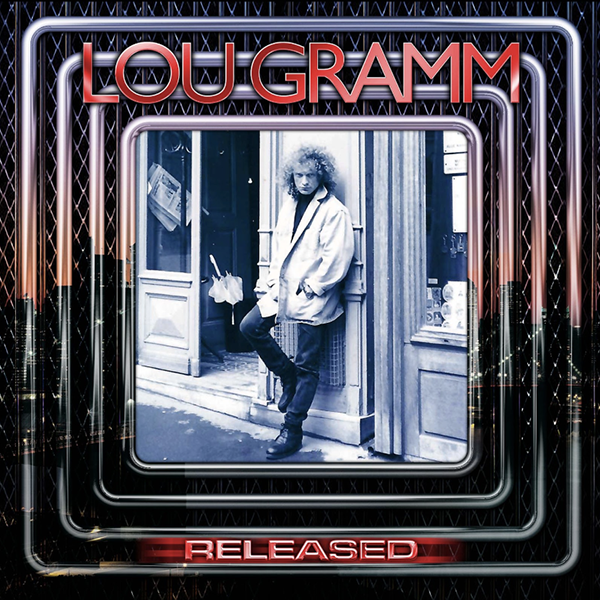
Gramm also finally got the chance to resurrect a batch of songs he left on the cutting-room floor during his initial, and quite successful, solo-artist release windows of the late 1980s. Simply titled Released, this new 10-track collection was, well, released on limited-edition ruby-red vinyl via Friday Music/Rhino on March 27, 2026. Featuring the talents of the likes of guitarist/bassist Bruce Turgon (whom Gramm worked with before Foreigner; more on that later), guitarist Vivian Campbell, bassist Tony Franklin, and his brother Ben Gramm on drums, Released sounds exactly as it should, capturing the euphoria of a time when all things seemed possible from a rock & roll takes-over-the-world standpoint.
Released was produced by Lou Gramm and mastered for vinyl by Friday Music’s major domo Joe Reagoso, and my ratings for the LP are 8 for the Music (some tracks are clearly 8.5), and 8 for the Sound (ditto re some of it being 8.5). It’s prime Lou, just as he intended, and it’s something he and his team were finally able to bring to proper analog fruition.
Being a limited edition, Released isn’t easy to come by at the moment — but it is out there, and you can purchase it right now from Acoustic Sounds here for an SRP of $38.98—which I heartily recommend. It is currently sold out at Music Direct, where it goes for a penny more at $38.99, but you can sign up to be notified directly about a restock if you don’t go the Acoustic Sounds route.
During a recent Zoom call, Gramm, 76, and I discussed the making of Released, the art and science of sequencing album sides, and which Foreigner song he feels sounds best on vinyl, and why. You drink in the fountain of youth / I ain’t new, I’m no beginner. . .
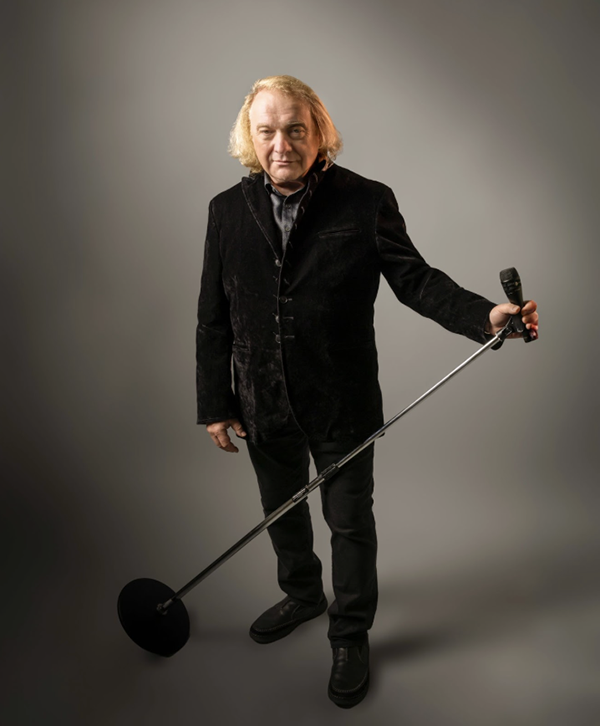
Mike Mettler: How early did you know that singing was important to you? Like, “This is something I have to do”?
Lou Gramm: I sang in the elementary school choir when I was seven years old, and continued to sing in the junior high school choir. I didn’t sing in senior high school choir, though — by then, I was playing drums.
Mettler: Do you feel like by being in the choir, you could figure out things like, “I can sing harmony. I can sing lead. I can sing this part. I can fit into these spaces” as a singer?
Gramm: It totally gave me the groundwork for what I eventually did later because I was a drummer at first, and I would sing the lead vocals behind a set of drums. Being in the choir allowed me to do the harmonies in a way that I liked them. I tried to do The Beatles harmonies — 1-3-5 or something, they’re called.
Mettler: When you were growing up, what was the first record you personally bought that you were like, “This is my record”? This is the thing I like to call “The Talisman Record.”
Gramm: (no hesitation) “Louie Lou-eye,” by the Kingsmen.
Mettler: Oh, nice — and pronounced correctly too! Very good. (chuckles) [“Louie Louie” is, of course, the Kingsmen’s version of an all-time garage-rock classic that was released as a 45 in 1963 first on Jerden, and, a few months later, on Wand.] Do you still have any of your old records, by the way?
Gramm: They’re buried in boxes, but I’ve got all of ’em. I don’t know if they would even play for me, because I don’t have the sleeves on them anymore. They’re just piled onto each other, and probably all scratched up.
Mettler: A lot of our old 45s are like that. I have my parents’ original Elvis Presley 45s, among others of theirs they gave me. They’re all “well-loved” — but at least I have them, you know what I mean? If you don’t mind me asking, was Elvis important to you as a singer? Did you feel like he did something that you’d never heard before?
Gramm: Absolutely, yes. I was also a Buddy Holly fan, but the whole era was unbelievable.
Mettler: Agreed! What was it about Elvis as a singer that struck you? What was it about his delivery that was unique, to your ear?
Gramm: Well, he had that “twang” about him, but he actually was a very good singer. I read that he was in a church choir in his early years. I think that a lot of his inflections when he sang were like that. And even The Jordanaires [Elvis’ early background singers] were almost like a choir sound behind him, you know?
Mettler: Yeah, yeah. Just think — you could have sung with a choir behind you on a song at some point in your career. If I only could think of the name of what that song could have been. . . [See the above YouTube clip for the answer to that.]
Gramm: (laughs) Yes! You know, I saw the Elvis special on TV when he was in his late 20s. It was just him and The Jordanaires on an empty stage, and they were actually live. There were no overdubs or anything, and they were incredible. He sang so good, I’m telling you.
Mettler: Yeah, he sure did! Okay, I want to transition into Released here, which I’m pleased has been released specifically on vinyl — and it’s on red vinyl, at that. You’ve had this material “brewing” since the ’80s. Was it recorded to tape? Did you find the original tapes, or how did you access them?
Gramm: Well, they were actually extra song ideas for my first two solo albums [January 1987’s Ready or Not and October 1989’s Long Hard Look, both on Atlantic]. And even those ideas — I was cultivating them, but we ran out of time to meet our release dates. So those, and a couple other songs that were also good, we went with those songs instead. I thought to myself, “Well, I’ll get back to this at some point.” And then 40 years went by.
I put on the reel-to-reels, and I was just stunned at how interesting and how good the possibilities for those songs would be — and began finishing them right away. Some of them maybe needed a last verse, a guitar lead, and a good mix.
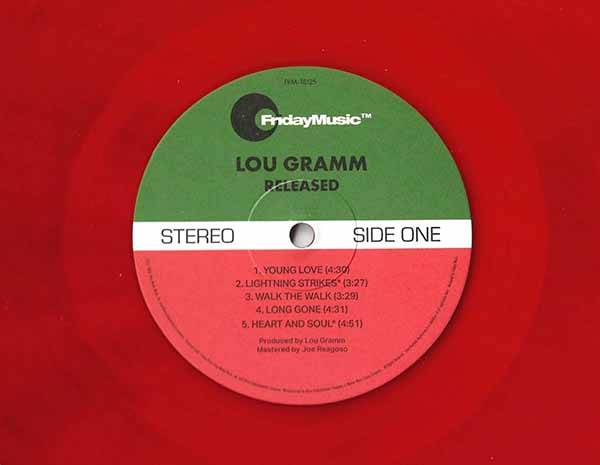
Mettler: I pre-ordered the ruby-red vinyl because I wanted to drop the needle on Released, not just play it digitally. In your mind, was it like, “This album has to be on vinyl. We have to put this out as a record”? What is it about vinyl that makes it a better listening experience?
Gramm: For me, we always have to put out vinyl, yeah. It’s not as pristine-clear as digital, but this music was analog-recorded — and vinyl just captures that rock feel, you know? You hear the little tiny imperfections that just go by very naturally.
Mettler: Did you get a test pressing to check out? Did you have any QC notes on it?
Gramm: I found that there were a couple of harmonies in the choruses that kind of overshadowed the lead vocals, but we were able to go back and adjust the levels. It was no problem.
Mettler: Ok, good. And in terms of sequencing, it’s a five-and-five song split per side. How did you figure out the order of events?
Gramm: Well, it took some time. I always enjoyed doing that stuff. I remember when it was exclusively vinyl, that, for the big sellers, you wanted to have the last song on the first side be a big one so that it made you want to turn the record over.
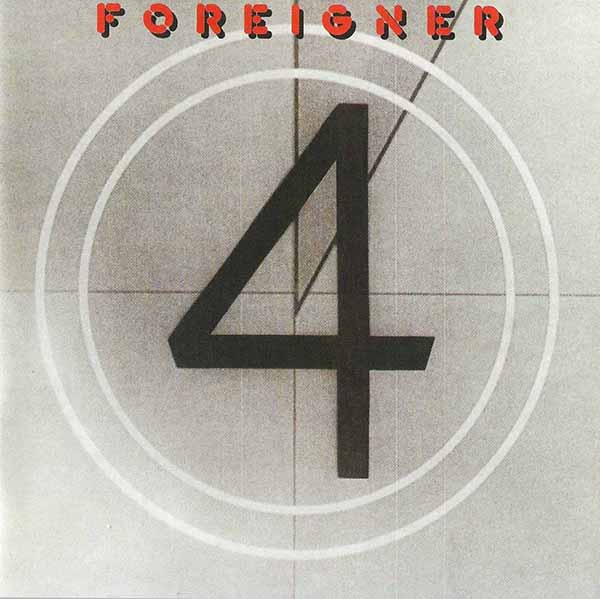
Mettler: Well, I’ve always liked the anticipation of “what’s next?” whenever you flip an LP — and that’s certainly the case when you flip over this 4 album that I just happen to have sitting here [Foreigner’s above-noted monster hit July 1981 album that has the previously mentioned “Urgent” start Side Two]. The sequencing on 4 is very interesting to me, because the first track on Side One is actually “Night Life,” and I think a lot of people feel like “Juke Box Hero” is the lead track — but it’s not. [It’s Track 2.] “Night Life” really gets you into the record, I think. Were you involved in that decision, or were you and Mick [Jones] making choices together like, “This one needs to be first because we want people to get into the record, and then we hit them with a linchpin track”?
Gramm: Oh yeah. There’s a whole method to it — and, yeah, we thought about it. We tried different orders, and stuff like that. The first track obviously has to be right in your face, and then the last track on the first side has to make you want to turn it over, like I said. It’s all that stuff, like where to place the ballad.
Mettler: And beware of where the bass content is too.
Gramm: (nods) Because then it would be distorting, right?
Mettler: Yes. Now, the last time we had talked [in October 2020], I asked you what one of your favorite vocal performances was from the Foreigner era on vinyl, and you told me it was “Juke Box Hero.” How come?
Gramm: I think that song epitomizes what I’m capable of, and it certainly runs the gamut in rock & roll dynamics. Listening to it on vinyl has not only a charm to it, but a certain reality that I doubt digital can capture. Even a little bit of distortion from vinyl lends a sense of reality to the song, and to the performers. If it doesn’t wince or crack, it can’t be entirely real.
Mettler: You also said that you liked how you had done “Juke Box Hero” in the register you’d taken on that track. Could you now walk me through why that performance is, in your mind, the best thing for what the song needed?
Gramm: Well, I think when we started writing the song, the key was a little lower, and it was good. The verses were emotional, but not screaming. When we got to the B section of the choruses, the level of the vocal — the notes, and everything — went substantially higher. I would be recording the vocals and Mick [Jones] says, “That’s good, Lou. Can you do it a whole key up?” I say, “Geez, Mick — really?” So I did that, and it was more challenging — but that sounded real good. He then says, “Can you even go up half a step?” I say, “Mick, this isn’t even the highest part of the song! But, yes, I can do it.” I did it, and he goes, “That’s what I want.” Which was fine — until you get to the end where it’s (mimes highest possible register), “Juke-box here-ohhhhh!” (smiles)
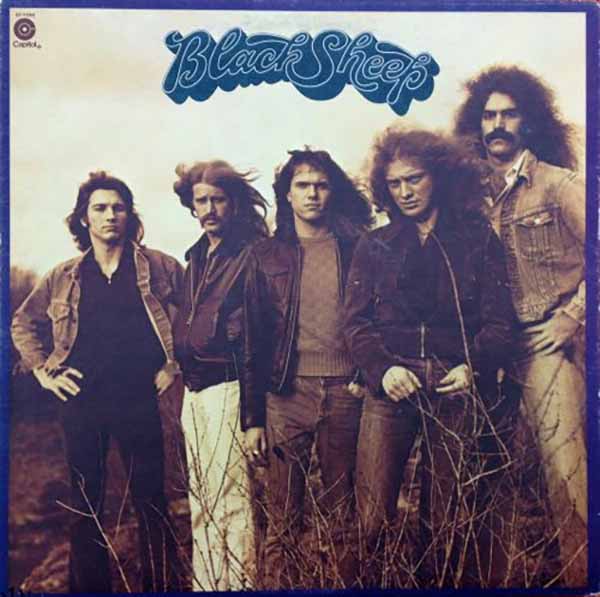
Mettler: Well, you really made it all pay off. Something else I’d like to mention is that somebody needs to reissue those Black Sheep records that I have original super-old copies of. Is this something you’ve thought about? I’m guessing somebody else has the rights for those albums. [Black Sheep was Gramm’s band prior to his joining Foreigner, featuring the aforementioned Bruce Turgon on bass, and Lou then going by his full last name, Grammatico. Both of that band’s albums — Black Sheep and Encouraging Words — were released on Capitol in 1975.]
Gramm: Yes. The rights have been sold and resold before, even before I got in Foreigner. Bud Prager, who was our manager at the time, took me into his office and he said, “I just got a call from two guys who own the rights to your Black Sheep albums.” And I said, “Really?” Because I had lost track of where they went to. I know the rights were sold, and it had changed hands a few times. They told our manager that they had the rights to the songs. They were the third group of people who had the rights, and they were looking to sell them.
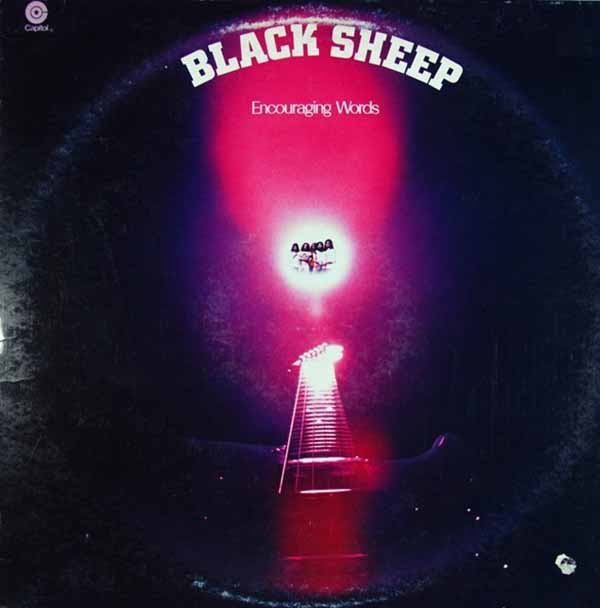
And they thought, because our first Foreigner album was coming out [in March 1977], would we consider buying the rights to the Black Sheep albums from them? I asked our manager what they wanted for them and he said, “$500,000.” And I said, “What planet are they on?” (both laugh) I did think there was a value to them, but we didn’t even know if the Foreigner record was gonna make it. It could have been a bad decision to buy them for that amount.
Mettler: Yeah, you’d literally be “Payin’ Yer Dues,” to borrow a song title from that time. [It’s the first track on Side 1 of Black Sheep.]
Gramm: Yes, that’s right! So, our manager told the people that we weren’t interested. And then, when the first Foreigner album took off, those guys who offered it to us sold it to somebody else for $150,000. It’s changed hands about 10 times over the course of the life of Foreigner.
Mettler: Ahh, man. Is it on your docket of like, “I really want these two records to be reissued properly”?
Gramm: I would, but I don’t even know who has the masters now.
Mettler: Alright, well, we’ll put it out there, because I would love to see if that could happen. Get the rights, and then get them remastered and reissued on vinyl where they belong. I think we gotta do that.
Gramm: Okay, I’m with you!
Mettler: Good. Good. Getting back to Released, the first song on Side Two, “Long Hard Look,” was also the name of one of your solo records [released in 1989]. I’m guessing that was one of the songs you held off of that album and decided to come back to for this one. Was it in the final running originally, and then it got pulled? What was the choice there?
Gramm: Yeah, it was in the final running, but it wasn’t complete enough to make the cut. And I just thought to myself, “I’m not gonna force this song to be finished and just put it on there and not make a good impression. Let’s just leave it off, and see what happens in the future.”
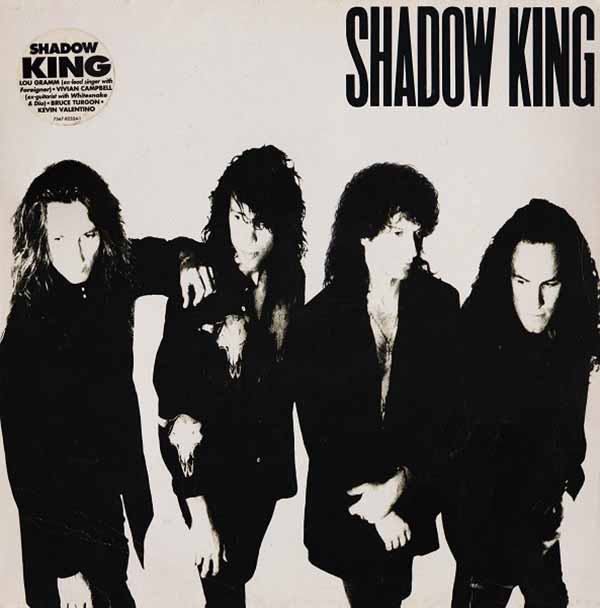
Mettler: Well, it finally came out the right way. And, of course, people in the know will understand that song’s lyrical reference to Shadow King, which happened to be another group you were in — and somebody who was in Shadow King is playing on this album too, is that right? [Shadow King released their lone self-titled album on Atlantic in 1991.]
Gramm: Yes. We’ve got [guitarist] Vivian Campbell playing some great stuff on the first single, “Young Love” — and he’s tearing it up, isn’t he? Shadow King was a great album. I feel like it kind of got overlooked. I loved that album. But I think my career is at that point now where people might want to go back and see my earlier days with Black Sheep and my days with Shadow King, and stuff like that. It’s part of my history.
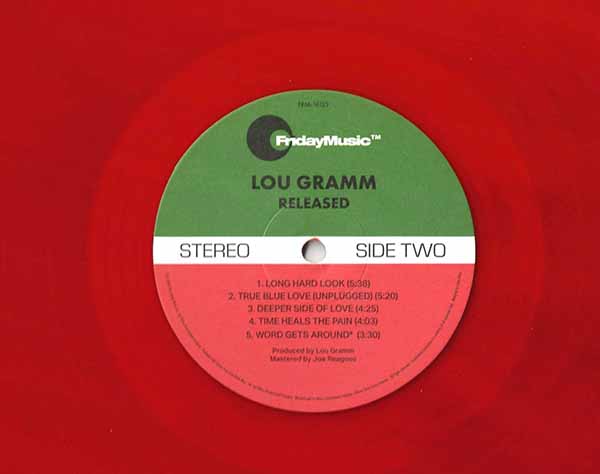
Mettler: Very much so. I also thought it was an interesting choice to have “True Blue Love (Unplugged),” which is another solo track you reworked [from Long Hard Look], on Side Two [as Track 2]. Is it fair to say this one has a more emotional feel to it, or just has another weight to it?
Gramm: It’s a little slower. It’s stripped down. It’s just basically the bass, drums, and a synthesizer/organ, with a little bit of piano in there and everything. It was the mood that I wished the original one had.
Mettler: Got it. Well, I know we gotta go, so I have one more question to wrap things up. I’m gonna throw us 50 years into the future, so it’s now 2076. And, as I like to say, unless there’s some weird science going on, you and I may not physically be on the planet at that point — although, I don’t know, Lou; you might be. Or maybe not.
Gramm: Definitely no. (both laugh)
Mettler: Okay. So, in that timeframe, however people listen to music then and they type in “Black Sheep,” “Foreigner,” “Shadow King,” or “Lou Gramm” into a listening device, what do you want a future listener to get out of the music that you’ve made throughout your lifetime?
Gramm: Just that, definitely, it was hard rock with a strong melody, and lyrics that inspired. And that everything I did from Point A to Point B to Point Z is different from one another.
Author bio: Mike Mettler is the editor of Analog Planet in addition to being the Sound Chaser columnist and contributing music editor to one of our other sister sites, Stereophile, in addition to being the regular Vinyl Icons column scribe (and occasional Opinion columnist) for Hi-Fi News and author of numerous box set liner notes. Plus, he’s quite partial to vintage 1967 Mustang fastbacks, but that’s yet another story for a different time and place.

LOU GRAMM
RELEASED
1LP (Friday Music/Rhino)
Side One
1. Young Love
2. Lightning Strikes
3. Walk The Walk
4. Long Gone
5. Heart And Soul
Side Two
1. Long Hard Look
2. True Blue Love (Unplugged)
3. Deeper Side Of Love
4. Time Heals The Pain
5. Word Gets Around












 |
Equipment Reviews | |
The Gruvy Awards | |
Blogs Analog Tips | Columns Music | |
Show Reports | |
News Resources |
 © 2026 AnalogPlanet
AVTech Media Americas Inc.
All rights reserved