


Abbey Road 50th Anniversary Remix Full Review! Part 2
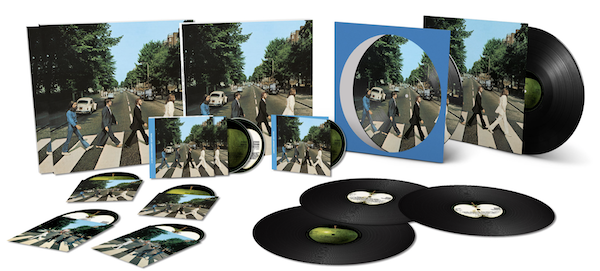
I’m not going to give you a “play by play” of all of the obvious placement mix revisions I noted. You can discover those for yourself (or if you buy the Deluxe CD/Blu-ray set with book, you’ll get an excellent track by track “play by play”). I’ll just note two in particular: it’s nice to have George sing “Here Comes the Sun” “standing” between the speakers rather than being shunted off to the right speaker. It’s equally pleasing to hear the harmonies spread on the stage rather than being locked into the right speaker. That doesn’t make esthetic sense so was obviously originally done due to a “bounce down” that couldn’t be revised until now.
It’s equally great if not even more excellent to get the guitar solos on “The End” spread for the first time across the stereo stage instead of being bunched in the center. On the remix Paul’s guitar is on the left, George’s is on the right and John’s is in the middle.
Like the mix on The Beatles, Martin went for and achieved a more consistent “in the pocket” well-balanced, you might say “technocratic” and orderly mix than was the original, which was a bolder, more “in your face” and inconsistent mix featuring bigger images on a wider, more spacious soundstage that left a lot of space between images and events.
Listening carefully to the original you can hear the placement of ‘satellite submixes’ that were impossible to seamlessly integrate into the whole. The reissue is far more coherent.
There’s much greater bass weight on the reissue but the top end has less (and I think desirable) “crunch”, especially to the snare drums.
I hope Ume doesn’t shut me down for this but here’s Ringo’s solo first from the new remix and then from the original U.K. pressing. Now remember I’ve been playing this record for FIFTY YEARS!!!!!! You will hear that the top end snare is all there! And there’s more of than there is on the reissue. So much for records “wearing out”!
Also here’s a type of spectral image of the original pressing and then the reissue:
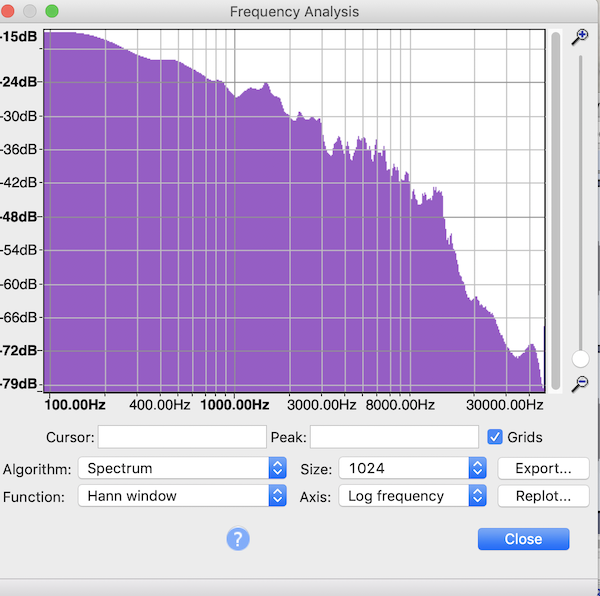
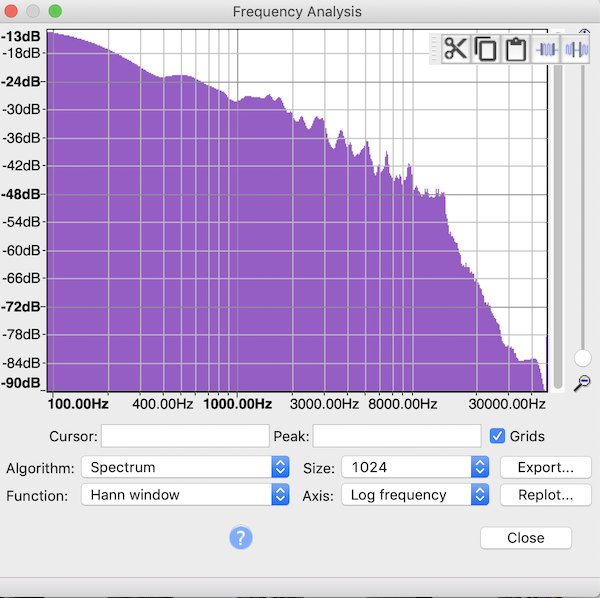
They are very close but you can see the “peaky” nature of the original that gives it the “crunch”. What’s going on there at 30kHz? That’s above my pay grade. I’ll leave that to others. However you can see that “records wear out after a few plays” is just so much B.S.!
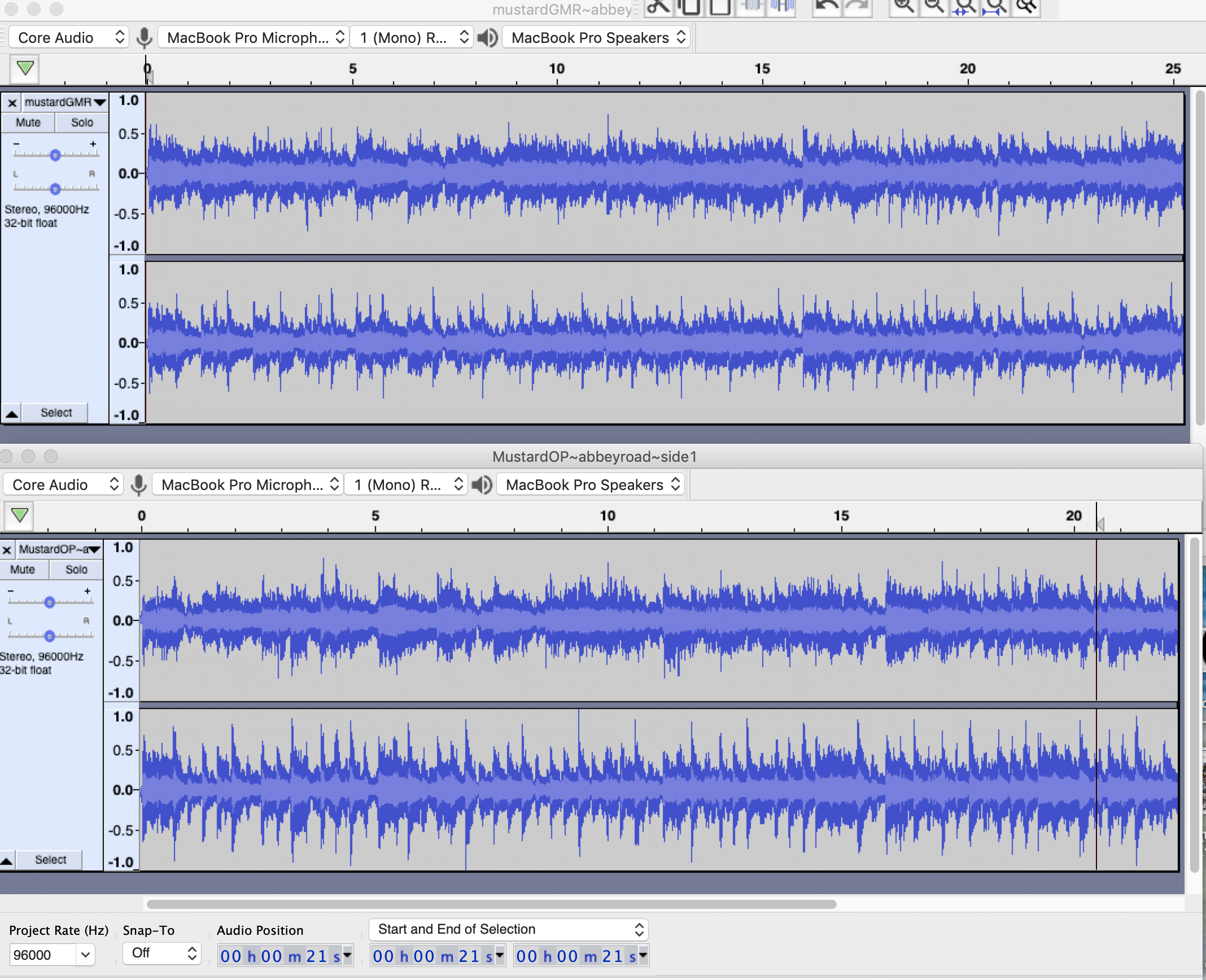
The point I want to make with all of this is that the spectral balance of the original pressing and the reissue are more similar than they are different though the original has more top end air and crunch, while the reissue has greater bottom end weight. I can understand why Ringo would prefer the tom sound on the reissue but he might be somewhat disappointed by the polite snare’s lack of “crunch” and “pop”. I kind of was. However at the same time it’s measurably clear that Mr. Martin applied only minimal “global compression” to the mix, as did Miles Showell, in his ½ speed master.—if he applied any at all.
It’s in My/Your DNA
If you’ve been listening to a good pressing of the original mix for decades and switch to this one you need to make a sonic adjustment to something that’s at this point almost locked into your sonic DNA. The original was cut far hotter and is therefore louder so to get the reissue “going” and make a meaningful comparison you’ll need to crank it up somewhat and be prepared for a “listening into” rather than a “coming at you” experience.
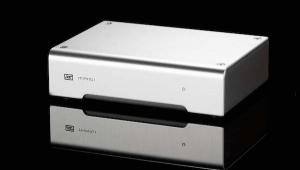
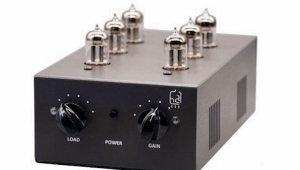
When the boxes arrived I was having a phono preamp installed and we dropped everything to listen. The immediate reaction was (and these are the words one guy used) “What happened?”
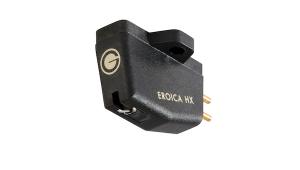
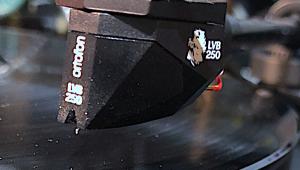
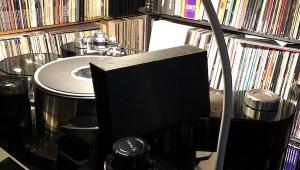
It took more than a few plays and even a reduction in tracking force on the Ortofon Anna D from 2.4 to 2.2 grams get the top end to sing and the bottom end to not be too heavy and sluggish.
When I first played the CD version in the deluxe box there was more top than on the record, but not the kind I like, and more crunch but of the “sizzle” variety. Once I’d gotten it all sorted out I was up until 1:00AM last night giving each one final play.
My conclusion about the vinyl reissue is this: aside from a few minor mysteries including why the top end cymbal sound in particular was so reserved (nor soft or dull!) throughout (the bonus album top was all there) and why, despite the more robust bottom end, Ringo’s kick drum hits on “Sun King” were both attenuated in level and lacking in the original’s distinctive “pop”. These “in the DNA” events probably stuck out more to me than to those who haven’t spend 50 years listening to this record!
Mr. Martin has again produced a worthy reissue of a classic Beatles album that improves upon the original in some ways, while diminishing it in others—especially in terms of raw, aggressive excitement and some of the original’s airy, atmospheric mystery (that’s the only way I can describe it). Yes, the crickets are from a sound effects library, but on the original you are transported outdoors. Not so on the reissue. Is that important? No. It’s just something I noticed because I’ve been noticing for 50 years the “outdoors” (even if it’s a delusion).
The reissue’s even balance and coherent spatial organization will impress even the most skeptical listener though it may take more than a few plays to “get” it. Once acclimated even lucky owners of the original U.K. pressing should find this reissue a worthwhile and enjoyable addition to their collection of Beatles vinyl.
The Bonus Tracks Rule!
The deluxe 3 LP vinyl box set includes two LPs of live takes from the sessions as well as home demos, Lennon’s “The Ballad of John and Yoko” and McCartney’s “Goodbye” home demo that became a Mary Hopkin hit that I didn’t know (so sue me). Hearing these songs performed live minus studio overdubs and embellishments is a genuine thrill and enhancement to the pleasures of listening to the finished record. Like the “Esher Demos” from The Beatles, these 2 LPs are not the kind of “play once” curiousity that often gets packaged with “the goods”. These are part of “the goods” that you will surely play repeatedly and maybe even sing along with when the space for vocals opens up.
The Deluxe 3 CD, one Blu-ray, Perfect Bound Book Edition
While the vinyl box includes a useful fold over “one-sheet” that describes in reasonable detail the outtakes and other bonus material, the deluxe CD/BD box set includes a “no expense spared” 12”x12” hard covered book every Beatles fan and Abbey Road aficionado will want to have. If I sound like a Ume salesperson, deal with it. The four discs (3 CDs, one Blu-ray) are included in pockets die cut into the inside front and back jacket.
I did listen to the CDs (which in addition to the CD resolution mix include the same outtakes and bonus material as what’s on the LPs) and I played the Blu-ray on my home theatre system. It includes the 96/24 full resolution files that I’ll have to get a computer BD drive to extract, as well as DTS-HD and Dolby Atmos surround mixes. Call me old fashioned, or go ahead and just call me old, these didn’t do much for me compared to the plain old stereo remix. But that’s just me.
The book includes “The Route to Abbey Road”, Kevin Howlett’s essential essay accompanied by photos you will want to see, adds historical perspective plus a wealth of interesting and useful information about the album, The Beatles and those final months. That’s followed by a super-detailed Track by Track description that adds so much worthwhile information your head is likely to explode, with yet more incredible photos and finally an “And In the End” essay that puts a satisfying capper on the entire “life in the day” of The Beatles.
As with the group’s break up, when you’ve completed reading the book and looking at the pictures you’ll feel somewhat lost and perhaps feel sorry it’s come to an end but happy to have been along for the ride and even happier that you can rinse and repeat as often as you wish.
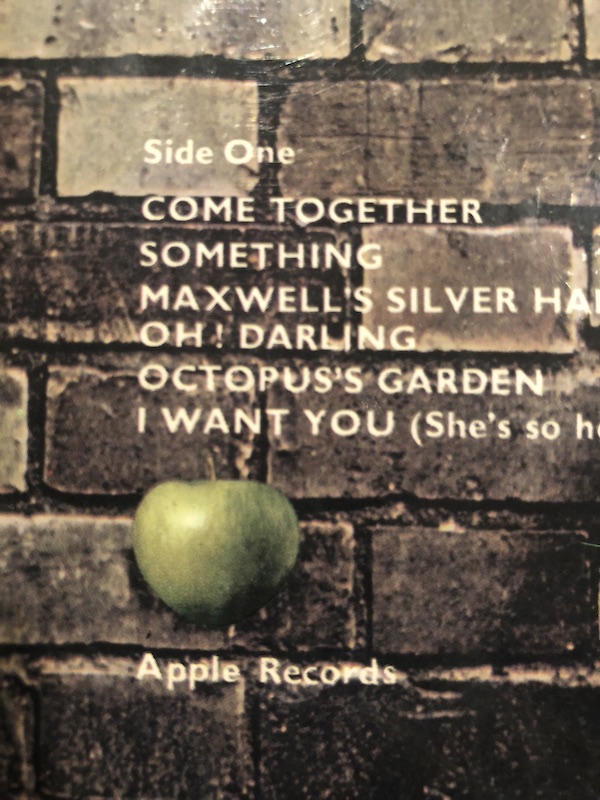
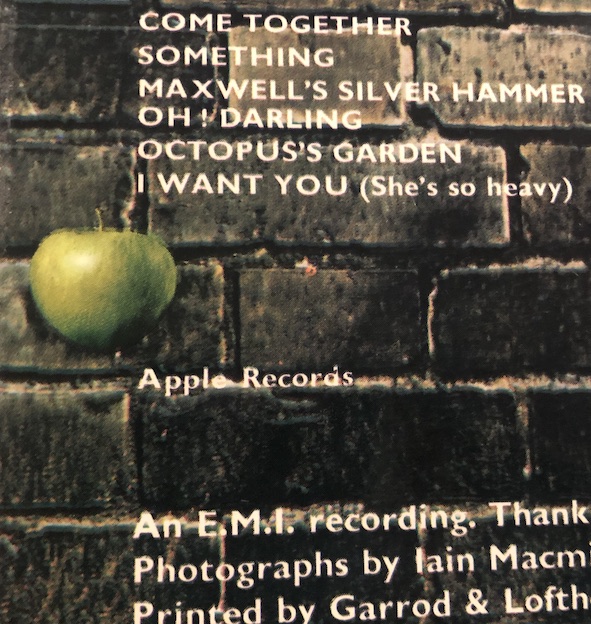
Nothing in the book explains how this happened or who moved it, so that mystery remains unsolved. There’s always more.

 | |||||||||
|

| ||||||||




























|
Equipment Reviews | |
The Gruvy Awards | |
Blogs Analog Tips | Columns Music | |
Show Reports | |
News Resources |
 © 2026 AnalogPlanet
AVTech Media Americas Inc.
All rights reserved