


Kid A Mnesia: Kid A and Amnesiac Together At Last Part 2
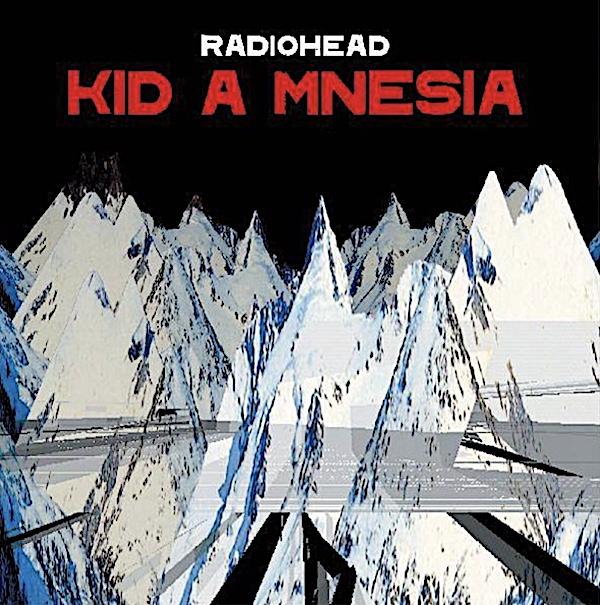
1) After a period of writing block, Yorke and Godrich alone wrote and recorded “Everything in its Right Place.” Only following its completion was it then shown to the band, providing a production template for what was to come. It is, by any definition of the term, “Avant-garde”. It uses a modal passage taken from Franz Liszt’s “Ballad No. 2 in B Minor” written in 1853.
2) The song “Kid A” is one of the most psychedelic experimental arbitrary pop songs in the group’s entire catalog. Nuff’ said!
3) “National Anthem” debuts Jonny’s Ondes Martenot— a very early electronic instrument that involved sliding a string across a wire, akin to the theremin. The multi-instrumentalist composer felt that due to its analog manual vibrato the Ondes Martenot was the most vocally expressive electronic instrument. Octave jumping on the instrument is challenging so most of the melodic lines are fairly linear and relatively close together.
4) REM’s Michael Stipe gave Thom advice on how to handle the growing pressures of touring, interviews, and rock stardom by giving him the mantra “I’m not here, this isn’t happening,” the key vocal passage in “How to Disappear Completely.” TY has stated this is the song by which he’d most like to be remembered.
5) “Treefingers” consists of Ed O’Brien’s slowed down guitar loops, sampled and reformed by Thom to give it structure. It doesn’t sound like a guitar, which is outstanding!
6) “Optimistic” was the single. It’s the closest thing to a guitar rocker on the whole record. When it bursts into the verse riff, JG strums so hard his guitar goes out of tune in a very visceral and authentic way.
7) “In Limbo” is in limbo - rhythmically and harmonically.
8) “Idioteque”’s synth sample uses the inversions from Wagner’s “Tristan chord” taken from his opera “Tristan und Isolde,” in which the composer employs a very specific chord that’s considered to be the beginning of atonal music. Jonny Greenwood knew about it and utilized a sample of the Tristan Chord from the 1973 piece “Mild und Leise” by Paul Lansky, with tremendous effect. In the words of modernist American composer Robert Erickson, “The Tristan chord is, among other things, an identifiable sound, an entity beyond its functional qualities in a tonal organization.”
9) Thom plays a Fender Rhodes in the 5/4 time “Morning Bell”, re-orchestrated versions of which appear multiple times on these records.
10) “Motion Picture Soundtrack” ends with harps and heavenly sounds and the line “I will see you in the next life…” a nod toward the concept album that takes us into Amnesiac’s first lines “After years of waiting / nothing came / as your life flashed before your eyes / you realize / I’m a reasonable man get off my case / get off my case.” The hints are certainly there and can’t be ignored…
For die hard Radiohead fans Kid A MNESIA is a welcome addition to the group’s previous deluxe album releases. Though the audio is sourced from previously used digital masters the half-speed mastering has produced a noticeable sonic improvement. Arguably, this set is the definitive one to own, despite the defect noted on Kid A’s first side. The band’s failure so far to address this defect on what may be its defining song, tarnishes the release and gives it a “cash grab” caché.
While the hardcore will appreciate KID A MNESIA it’s overkill for casual fans who already own the previously released CD and/or vinyl versions of these truly visionary albums.
Nicholas Coleman is an internationally renowned Oleologist living and working in New York City. He is the co-founder of Grove and Vine a company that bottles and champions the finest olive oil producers in the world, available by subscription on the site. He firmly believes in the virtues of home cookery and the power of outstanding music.
 | |||||||||
|

| ||||||||

















|
Equipment Reviews | |
The Gruvy Awards | |
Blogs Analog Tips | Columns Music | |
Show Reports | |
News Resources |
 © 2026 AnalogPlanet
AVTech Media Americas Inc.
All rights reserved