


"The Beatles" Re-mixed by Giles Martin: Any Good? Page 2
Apple Corps/UMe will release on November 9th a number of configurations of the newly remixed The Beatles as outlined in the AnalogPlanet story written directly after the recent event at Power Station at BerkleeNYC studios. Please click on that link for the details.
To restate the obvious, the Esher demos is like the first “Unplugged” album and it clearly demonstrates that at least at the time it was recorded, the 3 Beatles were getting along famously and working together as a musical unit. It’s a thoroughly enjoyable listen.
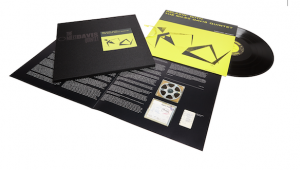
The 4 LP box packaging has its good and less than good aspects. The gatefold jackets are not “top-loaders” nor are they “fold overs” nor are they numbered, but The Beatles is embossed. The inner sleeves are, like the original’s black, but with added inner protective rice paper or another vinyl protecting material. The full sized poster and 4 individual head shots are included as well and all are well-reproduced as are the inner gatefold’s black and white images.
However, while some on-line sites claim a “stapled 12”x12” booket” is included, one is not. Instead there’s a folded over 24”x12” heavy board “one-sheet” containing pictures of each Beatle playing their instrument and short essays by Paul McCartney (emphasizing the album’s group nature), Giles Martin (an introduction with some historical background information), and Beatles biographer Kevin Howlett’s album essay on the inner gatefold and Esher Demos essay on the outer gatefold along with four more photos.
Miles Showell 1/2 speed mastered the 4LP set at Abbey Road from the high resolution files and it was pressed at Optimal. All 4 LPs in the sealed set I received were perfectly pressed. QRP pressed the double LP set minus the Esher Demos (not auditioned).
There’s also a 3 CD set containing the same program as the 4 LP box set and for those who must have it all, there’s a numbered deluxe box containing 6 CDs containing what’s on the 3 CDs plus 3 CDs of studio jams, alternate takes and rehearsals taken from the album and associated singles. The Blu-ray disc contains a new transfer of the original mono mix and new 5.1 and the new stereo mix at 96k/24 bit resolution.
In addition the deluxe box includes a 164 page hardcover book that includes track-by-track details, and pictures of the band, tape boxes, recording sheets, and print ads. The book is a "must have" for hard-core fans and it's a shame a 4 LP box set with that book was not made available. Perhaps the book can be sold separately?
You Are Here To Read About the Mix!
This album is in my DNA and probably yours. Without knowing why (until now) certain tracks sound better than others. Some of you who are more “into the weeds” probably know why “Dear Prudence” sounds particularly good on the original and reissue because it was recorded at Trident on an 8-track machine. Most of the album was recorded on 4-track machines. When Ken Scott found out there was an 8-track machine at Abbey Road, he moved it into the studio without authorization so it could be used for much of the rest of the album. Some of those 8 track recordings also stand out, but some don't, probably because they were secondarily bounced to 8 tracks.
Originally, UMe/Apple Corps wanted reviews held until release date of November 9th but as of the day this review was posted (October 23rd), that restriction was lifted. So to get this review posted as quickly as possible, the planned microscopic examination of this mix versus the original got scrapped.
If you want to read about the original mix in detail I also suggest Mark Lewisohn's "The Beatles Recording Sessions/The Official Abbey Road Studio Session Notes 1962-1970 (Harmony Books). Also please see the fascinating website The White Album Project, which produced a sprawling look at the album from every possible angle including a track by track analysis of differences between the mono and stereo mixes and other mix related minutiae.
Lewisohn's book, for instance, notes on page 162 that Chris Thomas was given the job of "waggling the oscillator" on the "While My Guitar Gently Weeps" mixes because Eric Clapton didn't want the solo to sound so archetypically Claptonesque. So to get it to sound more "Beatlesque", Thomas produced a "flanging" effect by wobbling the oscillator. Did the remix attempt to duplicate that? That's something I'd hoped to find time to check but there wasn't time when the okay to publish arrived in an email.
More generally and on the very positive side, there were no major mixing surprises when I compared my two original U.K. pressings with this remix. However, both of those sound far superior to an American original and especially to the one included in the 1980’s Mobile Fidelity box set. This is not The Beatles reimagined as much as it’s The Beatles clarified and neatly buffed without softening the purposefully hard edges of a recording as “live’ and unprocessed as The Beatles had recorded in some time.
Most importantly, Mr. Martin left mostly intact what was familiar and comfortable to long time listeners. If anything, the vocals sound richer, more velvety and more coherently believable than on the original.
Martin did not slam the record either. It’s arguably more dynamic than the original and is free of the original’s somewhat austere tonal balance without sliding into softness. The mix respects the differences heard on the original. Some tracks sound somewhat distant and some are “in your face”. That is true here as well.
There was less for Martin to do than on the Sgt. Pepper’s…. remix since the basic tracks were laid down live with vocals and overdubs were later added.
I never had issues with the original mixes as much as I did with the somewhat hard and occasionally harsh tonal balance (though as my system improved so did my opinion of the original mix).
This is a good place to state this: I’ve played this same original pressing since November of 1968 I don’t know how many times, but a lot and the top end is all there and it’s mostly very quiet with no noise and no distortion caused by grooves having been “eaten”.
Records do not “wear out” if properly cared for and correctly played back! End of sermon.
There were only a few notably jarring moments playing back the vinyl edition of the reissue, one being it sounds as if Martin was able to somehow lower on “Blackbird” Paul McCartney’s foot tapping. Not sure if that was done with amplitude or EQ (probably EQ) but it definitely sounds less pronounced.
Yoko on “….Bungalow Bill” was also panned right instead of left. Probably just a mistake. It’s funny: when I first got the original record my system wasn’t sufficiently resolved to identify the singer as Yoko but once improved, well there she was!
Also noticed that on Lennon’s sweet lullaby closer “Good Night”, Ringo’s vocal seem somewhat buried in the strings, whereas it’s more upfront on the original. I prefer the original there.
Yes, as on Sgt. Pepper’s…. bass is far more pronounced, but it’s not because Paul insisted it be boosted. It’s on the tape I’m sure and it was attenuated on the original so the stylus wouldn’t jump out of the grooves on the kiddie phonographs of the day (the same was true of the mono originals versus the AAA reissues. I know that’s true because I heard this album’s mono tapes at Abbey Road). If your system is well-balanced you’ll appreciate the difference. If your system suffers lower mid-bass bloat, you may insist the equalization was poor.
These records were not “slammed”. In fact it could be argued that the original is louder. No doubt some overall compression was applied, as it should be to any rock record that’s intended to rock.
All of this said, the reissue does not sound like the original U.K. pressing nor was it intended to. Yet it remains true to the original’s intent, in part because there was less Mr. Martin could do to change it.
The new mix does sound more “modern” because modern techniques and gear were used, and the final source was a modern digital storage system, but this reissue does not sound “digital” as the pejorative use of the term has come to be used.
You’ll definitely be able to hear further into the reissue mix because it has greater transparency. And you can crank it up farther because it’s less harsh and somewhat smoother but not to where it’s soft. I know some would also like to hear the original tape re-mastered but that's not likely.
As for the Esher Demos, they are truly wondrous. John brought 15 songs, Paul 7 and George 5. You are in the Kinfauns Bungalow as they strum, bang and shake and you’ll love every minute of it—on vinyl. When I played the CD version (on a dCS Rossini, which is among the best CD players you’ll hear) all of that magic disappeared. I was hearing a plastic-sounding recording. Was it different EQ? Was it the downrez from 96/24 to 16/44.1? I don’t know and I don’t care. Am I prejudiced against CDs? Damn straight I am! Based on what I hear and nothing else. I’ve not had time to evaluate the Blu-ray sound and the other material on the extra CDs but I’ll report back as soon as possible.
My conclusion about this remix is that if you have an original British pressing that you love, you will still love that. If you have an open mind you will also love this re-mix. You might be surprised which one you choose when you want to revisit this album. Yes, The Beatles has been “Martinized” but you won’t be left thinking you’ve been taken to the cleaners! (unboxing video to come).

 | |||||||||
|

| ||||||||




















|
Equipment Reviews | |
The Gruvy Awards | |
Blogs Analog Tips | Columns Music | |
Show Reports | |
News Resources |
 © 2026 AnalogPlanet
AVTech Media Americas Inc.
All rights reserved