


Double-Cart Review Special: Ortofon MC X30 & MC X10 MC Cartridges
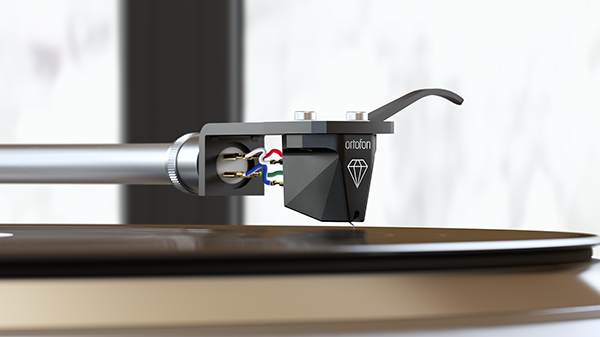
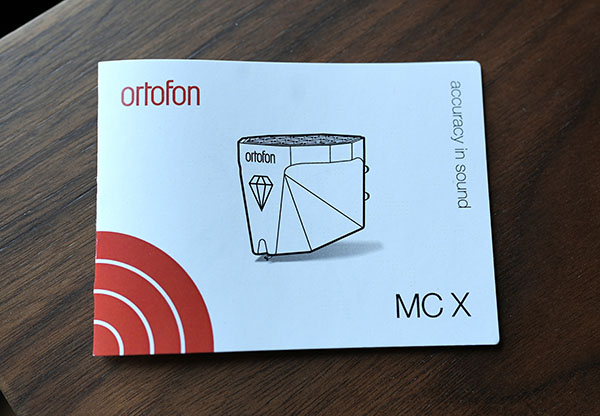
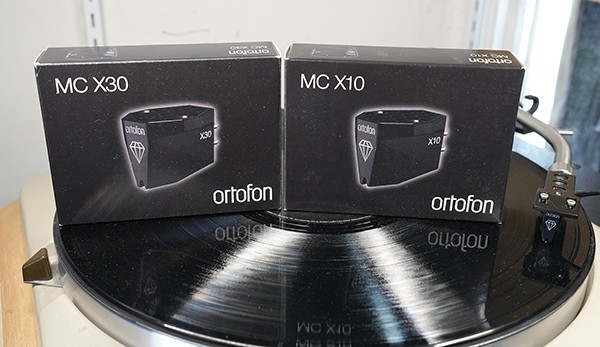
We first heard these new cartridge wares at High End Munich 2025, where Ortofon’s Louis Diorio had them spinning in a tight, well-dialed-in system. The Ortofon MC X30 ($780) and MC X10 ($330) cartridges aren’t just new SKUs padding out the catalog, however, as Ortofon claims improved performance at both price points.
Now, if you read the official technical copy on both of these new moving coil (MC) carts, you’ll notice their nearly identical boilerplate language — which in turn had me digging for what actually separates a $780 MC cartridge from a $330 one. Turns out it comes down mostly to the stylus tip. The X30 employs a nude fine-line diamond, which digs deep into the groove to pull out information lesser tips leave behind. But the X10 isn’t slumming it — it’s running an excellent elliptical diamond. Not the flagship shape, mind you, but still nothing to scoff at. Let’s dive in to find out more about these two new MC X Series MC cartridge offerings.
Specs & Features
The specs indeed tell the story: the Ortofon MC X30 has a stylus tip radius of r/R 8/40μm, while the MC X10 comes in at r/R 8/18μm. Geeky stuff, I know, but this is the Moneyball game, right here. What does it all mean? Well, that lowercase “r” value is the contact radius against the groove wall, and the uppercase “R” is the larger vertical profile. The X30’s elongated, fine-line profile means more surface area hugging the groove walls, which translates to extended high-frequency tracking and information. The X10’s standard elliptical shape still captures the highs thanks to that tight r/8 radius, but its smaller footprint means more pressure gets concentrated in a smaller contact patch.
Both cartridges track at a comfortable 2g, loading at 50ohms. Nothing exotic there, and that’s a little low compared to many other MC carts where 100ohms is often the starting point. Where things get interesting is with the internal wiring. Both the MC X30 and MC X10 share Ortofon’s Pure Silver Coil System, which the company says delivers “unmatched precision” and detail retrieval without smearing the signal. There’s a cleanliness to silver windings that copper just can’t touch, yet it must be executed with finesse and skill to avoid fatiguing earworms.
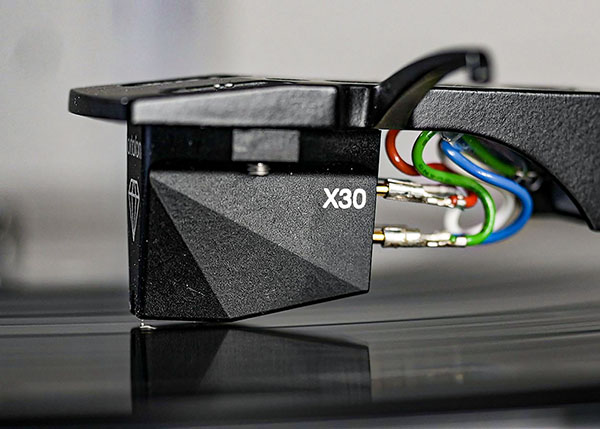
Both of these Ortofon carts also share a new magnet system — a one-piece pole cylinder mated to a rear yoke, designed to squeeze maximum efficiency out of that magnetic circuit. Paired with the silver coils, it’s said to aid in that clean signal path.
Ortofon make their own rubber dampers in-house for the MC X Series. Dampers keep the cantilever’s motion controlled, damp down vibrations, and let the coil move exactly as it was intended. That helps separate “fast” from “jittery.”
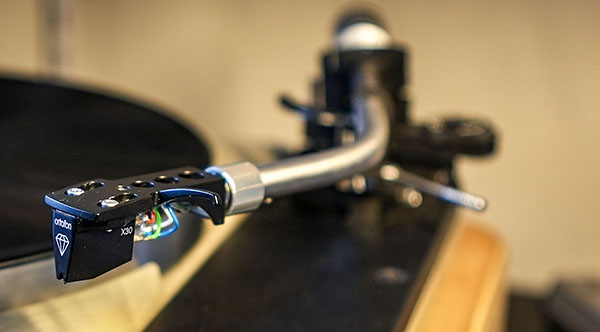
The cartridge body itself is a honeycomb-structured stainless-steel frame, made using Metal Injection Molding, which is said to aid in mechanical rigidity without adding excess mass. After molding and sintering (the process of compacting and forming a solid mass of material by pressure or heat), Ortofon finishes it with a “physical vapor deposition” coating, which protects the surface and keeps things looking sharp.
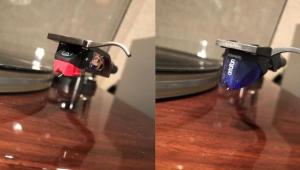
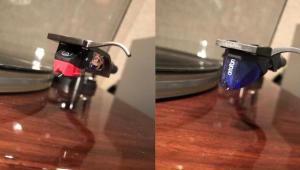
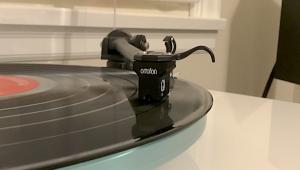
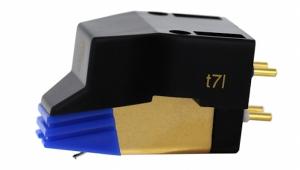
From across the room, the MC X Series carts look sleek and pointed like happy faces from an Alien movie, with the kind of finishing touches that remind you that someone actually took notice before it left the factory, including a small stylus brush and purpose made screwdriver. It all adds up to classic Ortofon quality for real-world wallets.
Setup & Gear
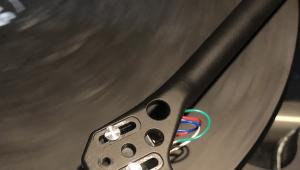
My system for this review included my Thorens TD 124 turntable (with Retrotone platter upgrade) fitted with a Korf TA-SF9R tonearm and sporting a SPEC+ AP-UD1 turntable mat, in addition to a Holo Audio Serene preamp, AirTight ATM-1E power amp, Consonance Compact Monitor loudspeakers, and cable from AudioQuest and Shindo.
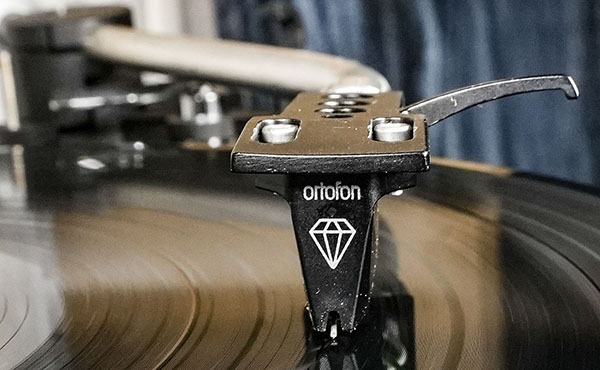
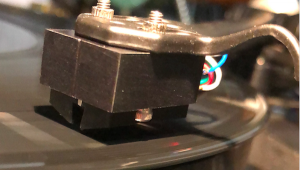
With their screw-in collars, both the MC X30 and MC X10 carts were easy to setup. Finally, my Riverstone Audio gauge and Feickert Universal Protractor dialed in the necessary VTF and cart alignment.
Listening Sessions
While working on this review, I was also listening to the new 2026 Vinylphyle edition of The Band’s July 1968 masterpiece debut LP, Music From Big Pink (Capitol/UMe 199957336406). Recorded all-analog back in 1968, the sound of this new Vinylphyle edition of Big Pink is punchy, visceral, deep, and surging with detail. The MC X30 cart captured it all from the crazy depth of Garth Hudson’s harrowing organ mastery, Levon Helm’s just-right touch on the drums, keyboardist Richard Manuel and bassist Rick Danko’s alternating lead vocals (Levon’s too), and the stinging guitar of Robbie Robertson — all of it set within a deep soundstage that lets each Band player breathe with precise imaging.
The MC X30 played with strong transient attack, fine midrange punch, and bass pliancy that was both warm and weighty. During my listening sessions, I wrote, “the music leaps off the grooves like a spirit confession — drums booming and dropping like drunken slugs to the stomach, transients sharp and immediate, decay short and palpable. Hammond B3 organ offers richness, relief, and spectral sound effects, its harmonics blooming with tube-driven, Leslie-cabinet generosity, while vocal harmonies intertwine like prison inmates holding onto faith — each voice clean, free of smear, and tonally deep.” (I continue to stand by those notes.)
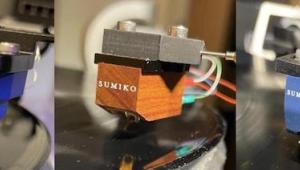
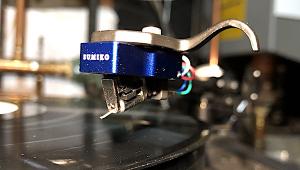
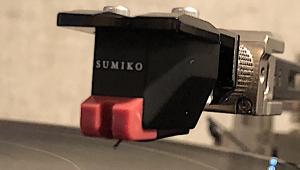
Spinning back-to-back against the Sumiko Oriole that’s currently on my review bench for another AP review to come, the Ortofon MC X30 held its own with authority — no small feat against a cart costing a little more than twice as much. The Oriole ($1,699) still claims the prize in the treble, its top end spun from something like gossamer thread: silken, rich, round, and blooming outward with a dispersion and three-dimensionality that’s hard to touch at its price point.
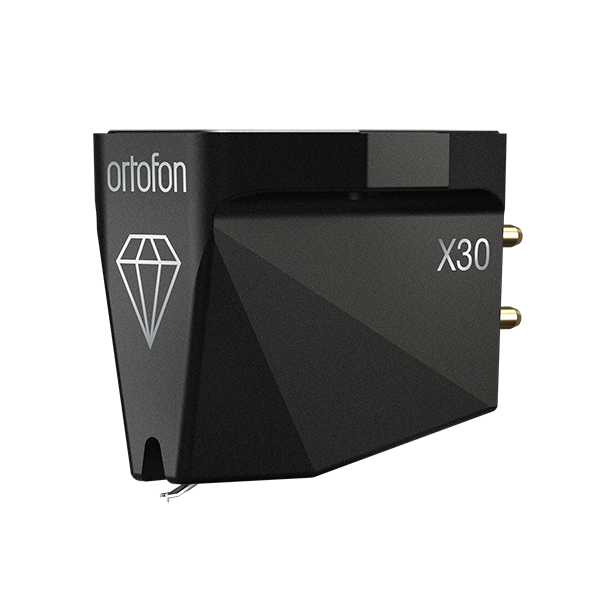
The slightly less expensive X30 answered back with its own strengths — a tactile grip on the music, a midrange that glowed with warmth, and bass that landed with serious punch. Not quite as pristine or scrubbed-clean as the Sumiko was top to bottom, but close enough that I found myself forgetting the price gap. The Ortofon simply made music — full-bodied, engaging, and unapologetically musical across the entire frequency spectrum.
What really caught me off guard was the X30’s composure under pressure. Fed dense, layered material, it refused to rattle. No breakup, no smearing of transients, no collapsing of the soundstage into mush — just clean separation, full-bodied tone, and an energy that stayed intact no matter how much I threw at it.
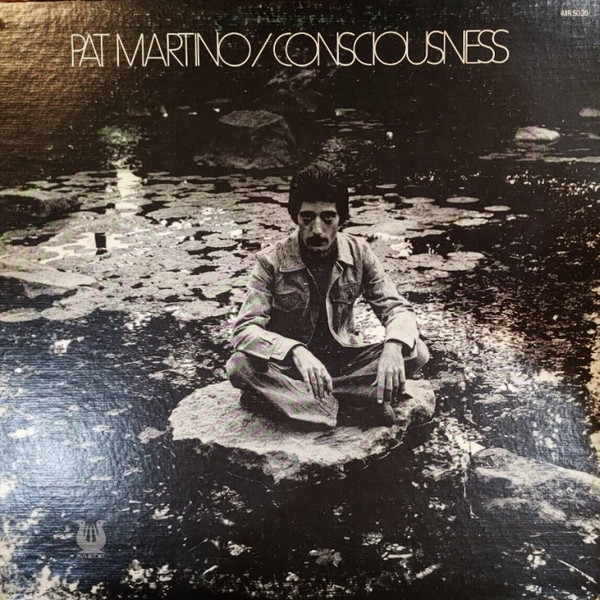
And I threw plenty. Pat Martino’s 1974 LP Consciousness (Muse MR 5039), Steps’ Step by Step (1981; Better Days YF-7020-N) and Miroslav Vitous’ Infinite Search (1970; Embryo SD 524) are all dense thickets of jazz-fusion combustion — notes stacked on notes, arrangements that buzz and snarl, and rhythms colliding into each other like cars merging badly on the BQE (Brooklyn-Queens Expressway) at rush hour. The X30 thrived in it, tracking every hairpin turn with speed, poise, and headroom to spare, always digging up another layer of detail from a soundstage that stretched wide and deep.
Then, without missing a beat, it pivoted into Everything But The Girl’s 2023 LP, Fuse (Buzzin’ Fly EBTG015VX) — all house-inflected pulse and low-end throb — and handled the switch with the same grace, the same energy, the same effortlessness. The synth bass that drives so much of that record, often expressed less strongly on lesser cartridges, came through deep, taut, and fully formed, with a small amount of overhang. By and large, the X30 handled every style of music with freshness and fullness. So, I kept going.
Giles Martin’s 2017 remix of The Beatles’ June 1967 benchmark LP Sgt. Pepper’s Lonely Hearts Club Band (Parlophone 0602567098348) came across with juice, tone, and clarity to spare. Ringo Starr’s toms popped like cherry bombs on “With A Little Help From My Friends” (Side 1, Track 2), while Paul McCartney’s bass sliced through the mix like a blade through silk. Vocals and guitars stood distinct and snappy, practically vibrating with presence. Ringo’s ride cymbal in particular bloomed with gorgeous spread and shimmering texture. Nothing gets by the X30.
Things turned a touch drier and smaller on Don Cherry / Ed Blackwell’s El Corazón ECM LP (1982; ECM-1-1230), the soundstage not quite as deep as I remembered. But what the X30 gave up in scale, it clawed back in delicacy and pinpoint imaging — every mallet strike and horn breath popped precisely in space.
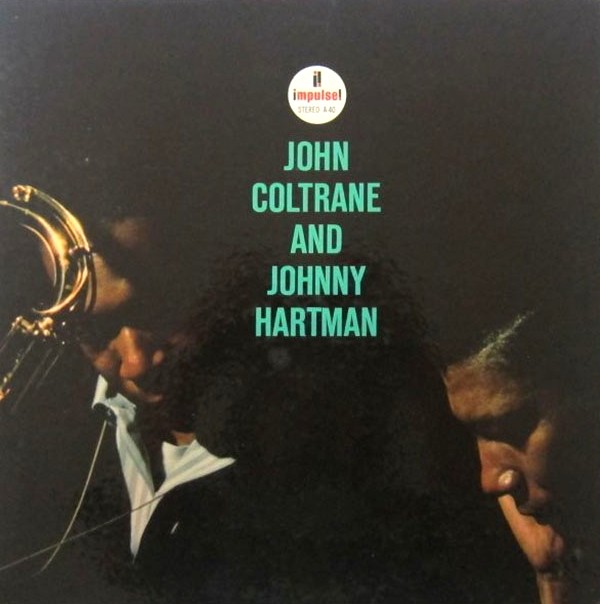
Spinning the stereo version of the self-titled John Coltrane and Johnny Hartman LP (1963; Impulse! Stereo A-40), the X30 didn’t hit with the sheer muscle of pricier cartridges I’ve had on the platter, but it nailed the essentials: Hartman’s baritone came through rich as bourbon, drummer Elvin Jones’ brushes swooshed with present and palpable air and flow, and Coltrane’s tenor sax carried exactly the tone and grain that made him Coltrane. Any sins here were sins of omission — the Ortofon X30 cart simply left a little on the table, rather than getting anything wrong. The positives stacked up high, and the negatives barely registered.
For my money — and/or yours — the Ortofon MC X30 cartridge easily earns its place among other fine $800-ish MC carts, including the Dynavector DV-10X5 Mk2 ($800; though I’d give the Ortofon the nod for slightly better transparency and energy), the Audio-Technica AT33PTG/II ($649), the Hana SL Mk II ($750; though the X30 is more exciting if less refined), and Ortofon’s own Quintet Blue ($600).
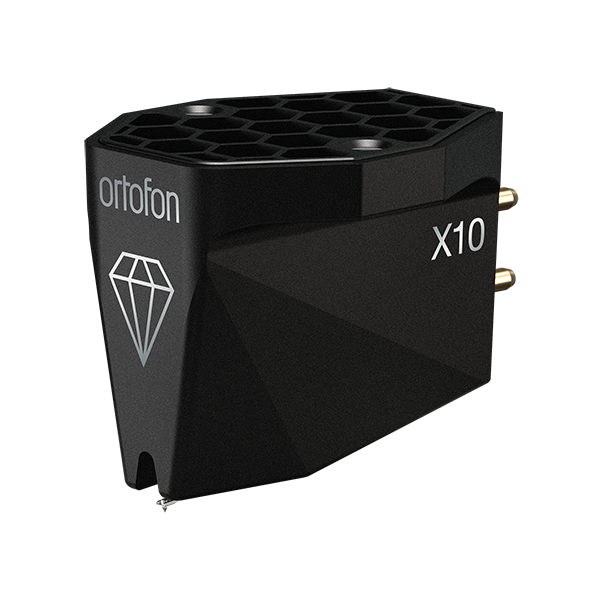
So how does the Ortofon MC MX10 cart fare in all this? Well, the MC X10 is cut from strikingly similar cloth to its pricier sibling. Detail retrieval, dynamic energy, and soundstage architecture all bear the family resemblance — yet the X10 never quite scaled the tonal richness or the expansive, wall-to-wall staging the X30 conjured so effortlessly. Still, patience paid dividends.
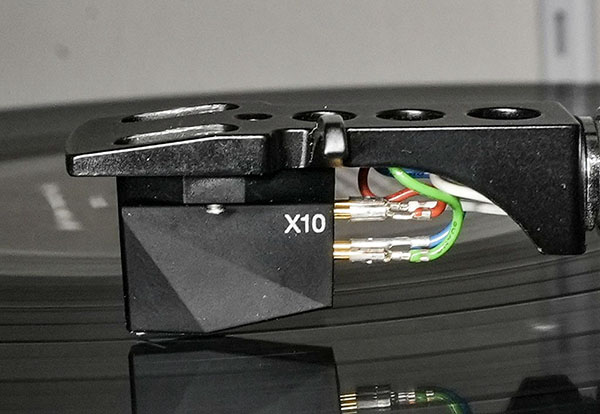
As the suspension worked itself in over repeated sessions, the X10 cart loosened up and began revealing genuinely surprising spatial qualities — image layering that felt three-dimensional rather than flat, instruments locking into distinct pockets of air rather than smearing together.
Detail retrieval was forthright, almost eager, and the overall tonal balance settled into something smooth and unfatiguing across most material. The one asterisk here: certain passages could produce treble peaks sharp enough to make you sit up in your chair — not harsh, exactly, but assertive enough to notice.
Conclusions
Judged purely as a successor to the 2M Red, Ortofon’s ubiquitous $100(ish) workhorse, the MX10 isn’t a close call — it’s an out and out rout. This is an MC cartridge that trounces expectations by delivering a tier of resolution, tonal quality, and dimensionality the 2M Red simply can’t touch.
Taken together, the MC X30 and MC X10 moving-coil cartridges form a compelling one-two punch from Ortofon. They comprise a pair of carts for those who want serious sonic payoff without the serious cash outlay, each model earning its keep while upholding the family name.
For more about Ortofon, go here.
To find an authorized Ortofon dealer, go here.
Author bio: Former musician, former artist, and former legal wastrel Ken Micallef has written numerous hi-fi equipment reviews for Stereophile and Analog Planet, and his byline has also appeared within Mojo, Electronic Musician, and The Grammys. You can also find him at YouTube (Ken Micallef Jazz Vinyl Audiophile).



















 |
Equipment Reviews | |
The Gruvy Awards | |
Blogs Analog Tips | Columns Music | |
Show Reports | |
News Resources |
 © 2026 AnalogPlanet
AVTech Media Americas Inc.
All rights reserved