


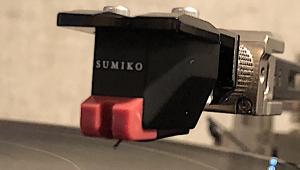
Sumiko Oriole Moving Coil Cartridge

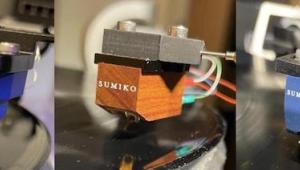
For decades, I have had a soft spot in my heart for Sumiko’s phono cartridges — not for their premiere models like the Pearwood Celebration I reviewed many years ago, but due to one of their lower entry-level models, the $139 Pearl, from the Oyster series.
In the mid-1980s, when I started working at Sound by Singer in Manhattan, we were selling a lot of turntables. CD was still a newfangled format, and most of our customers were using LPs as their primary source. Unlike today’s turntable buyers, who tend to be vinyl devotees, these people just wanted something easy to use that would sound good playing their Bruce Springsteen and Madonna records.
We sold a lot of Duals and Regas — with the Adcom GFC-1E cartridge, which sold for $99. It worked on almost anything, but its best quality was that it could sound pretty good with even the nastiest 1980s pop albums and their clangy, early digital sound. It was so forgiving. Then, around 1989, Sumiko launched a new line of cartridges called the Oyster series, including the $80 Pearl, which looked like an exact clone of the Adcom GFC-1E. Later research showed me that this basic model has been around for well over 40 years, selling under more than a half-dozen names including Coral 555, Andante E, and more recently Shelter 201.
When the Sumiko Pearl came out, it became our cartridge of choice for those Duals and Regas, and I’m forever grateful that 37 years later Sumiko is still selling them. I recommend the Pearl to people who want to dig out their old Duran Duran records and play them with no audiophile pretensions. Plug the 1989 price into an inflation calculator, and you’ll learn that the Pearl should really be selling for $215. (Please don’t tell Sumiko.)
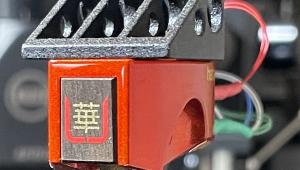
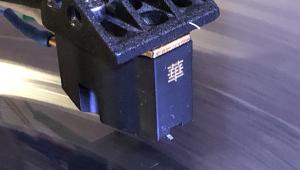
Starting in 2018, Sumiko made moves to rationalize their cartridge offerings, with several new moving magnet models and a couple of new moving coils, the Starling ($2,099) and the Songbird ($1,099). These use the same basic generator and skeletal cartridge body and are made in Japan by Excel Sound, the manufacturer that builds the Hana cartridges. The key difference is that the Starling has a boron cantilever fitted with a nude MicroRidge stylus, while the Songbird has a more basic aluminum cantilever with a bonded elliptical stylus.
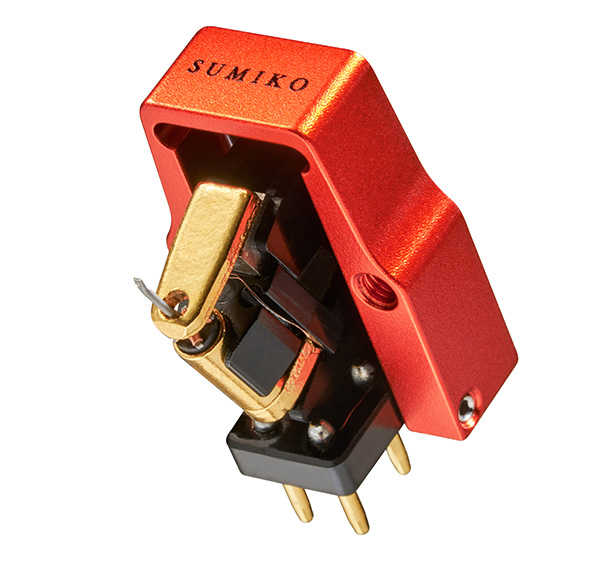
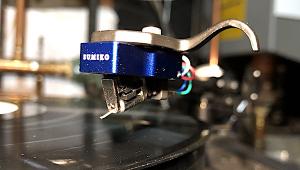
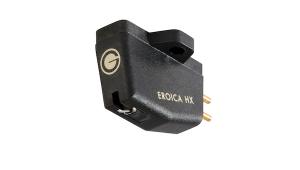
Now a new cartridge, the Oriole ($1,699; Footnote 1), fills the gap between the Starling and the Songbird. The Oriole uses an aluminum cantilever (like the Songbird) fitted with a nude Shibata stylus. But that’s not the only difference. The two older models have a 28-ohm coil impedance; the Oriole uses a lighter coil with fewer windings resulting in both lower output (a nominal 0.3mV) and much lower source impedance: 5.5 ohms.
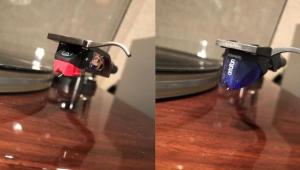
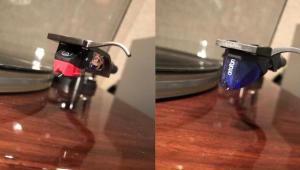
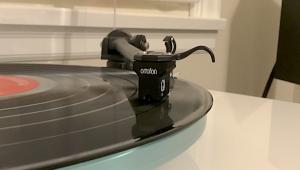
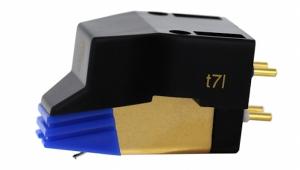
Like most skeletal-body cartridges, the Oriole leaves its generator and cantilever out in the open, with little to protect it from probing little fingers and the dust cloths of overzealous housekeepers. It does come with a well-designed stylus cover; I encourage its use to prevent the heartache of a broken cantilever. One of these days, I’ll write about the various stylus cover designs I have seen over the years, which range from perfect foolproof protection to putting your stylus in peril every time you use it.
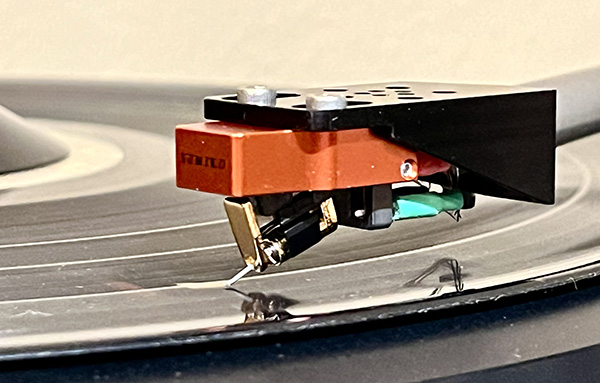
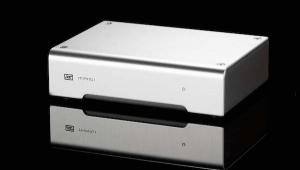
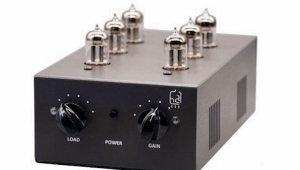
While that change in coil design and the resulting lower output voltage places greater demands on the phono preamp, it also opens the door to potentially higher performance with less moving mass and better compatibility with transimpedance (current-drive) phono preamps. I still have the remarkable CH Precision P1 phono preamp on hand, so I was able to test this compatibility by comparing its performance through both the P1’s current- and voltage-mode inputs.
Going back to an old favorite, I pulled out Shelly Manne & His Men At the Black Hawk Vol. 3 (1960; Contemporary Records S 7579), specifically the track “I Am in Love” (Side 1, Track 1). I loaded the voltage input at 100 ohms, and I found that while both inputs sounded superb, the voltage input sounded a touch more open and brighter, the transimpedance input a little darker and smoother. Its background was a little blacker, allowing me to hear a little deeper into the sound of the club in this 1959 live recording. Joe Gordon’s trumpet was especially impressive, with a purity of timbre and sense of clean dynamics you rarely hear. The Oriole behaved flawlessly, with superb tracking and no peakiness.
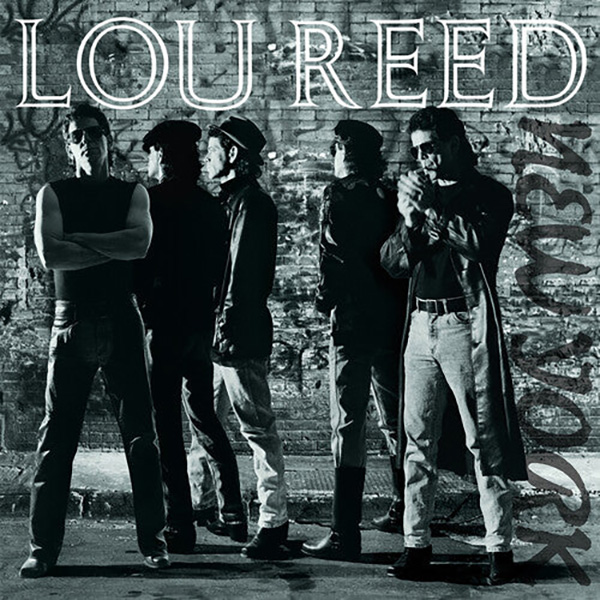
Lou Reed’s 1989 album on Sire, New York, has been getting a lot of renewed love lately. It has long been one of my favorite Lou Reed albums. Many of the songs have a ripped-from-the-headlines quality to them, yet it still sounds fresh today. Lou always had a bit of an audiophile streak — I once made a wiring loom for one of his guitar racks using high-end wire — and he always wanted his records to sound great on a good system. That attention to detail shows here with an open, clear mix that’s different from most records from the era. On the album’s second single, “Dirty Blvd.” (Side 1, Track 3), everything sounds up close and intimate, Lou’s and Mike Rathke’s guitars played clean with few if any added effects. Bassist Rob Wasserman’s Clevinger standup electric bass digs deep, bringing an interesting combination of the rich warmth of an acoustic bass and the drive and power of a solid-body electric.
Knowing its DNA, I figured the Oriole might sound a bit like a Hana ML or Umami Blue, but its character was different: more upfront and dynamic, a bit leaner and less laid-back than the Hanas. They all play in the same ballpark performance-wise; it comes down to whether you prefer caramel or lemon sherbet.
Editor’s note: This review first appeared in our sister site Stereophile’s May 2026 print edition, and it is shared here on AP with their kind permission. For more of Michael Trei’s Spin Doctor columns (this review is the second part of installment #36) — go here.
Footnote 1: Sumiko Audio, 11763 95th Ave. N., Maple Grove, MN 55311. Tel: (510) 843-4500. Web: sumikophonocartridges.com



















 |
Equipment Reviews | |
The Gruvy Awards | |
Blogs Analog Tips | Columns Music | |
Show Reports | |
News Resources |
 © 2026 AnalogPlanet
AVTech Media Americas Inc.
All rights reserved