


Technics SL-50C Turntable

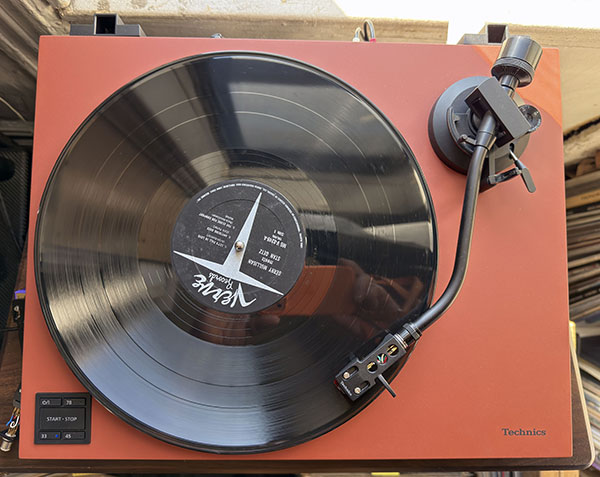
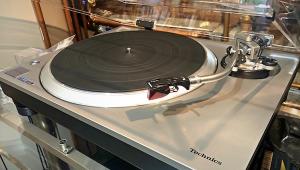
At the recent T.H.E. New York International Audio Show that was held October 24-26, 2025, Technics’ Business Development Manager Bill Voss introduced a fine new machine, Technics’ SL-1210GME Master Edition turntable (and, not to worry — we’ll be telling you more about that cool new table in a later post). Off to the side, less bathed in glory but equally capable, stood the Technics SL-50C direct-drive turntable ($899). A new design aimed squarely at the sub-$1,000 turntable market, the SL-50C is a little marvel of a vinyl spinning machine. Let’s find out why I can make that claim.
Specs & Features
Regarding the SL-50C table, Technics’ site boasts that it is “a new and more affordable direct drive turntable with a Hi-Fi design featuring the single rotor coreless motor and drive technology taken from the SL-1500C/SL-1200MK7 that delivers high rotational accuracy and low vibration.”
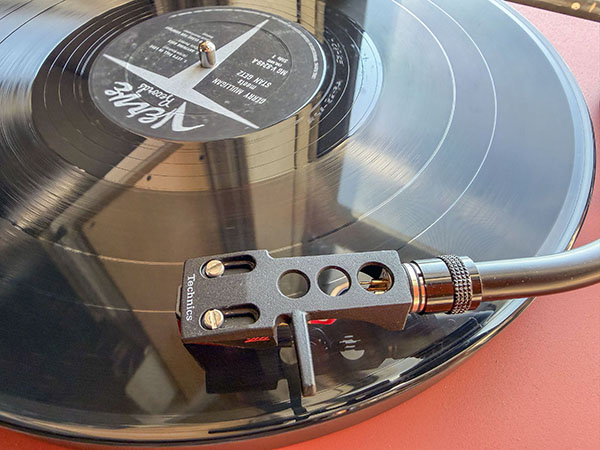
The Technics SL-50C is compact, measuring 13.9 x 5 x 16.9in (w/h/d) — light enough to lift with one hand. It boasts a coreless direct-drive motor (single rotor-type) found in premium models; supports 33, 45, and 78rpm playback speeds; and comes equipped with the acclaimed Ortofon 2M Red MM cartridge. The removable headshell allows for easy cartridge swaps.
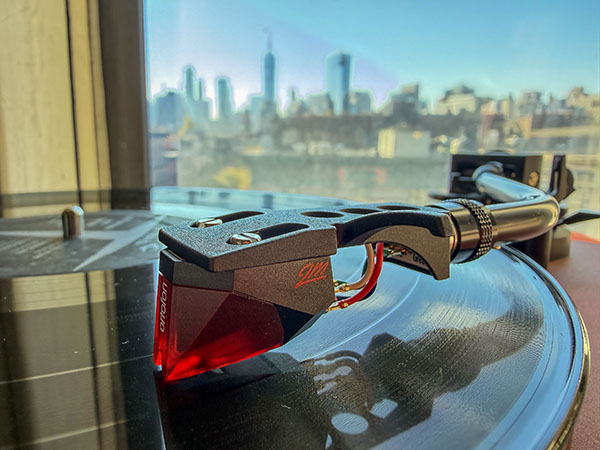
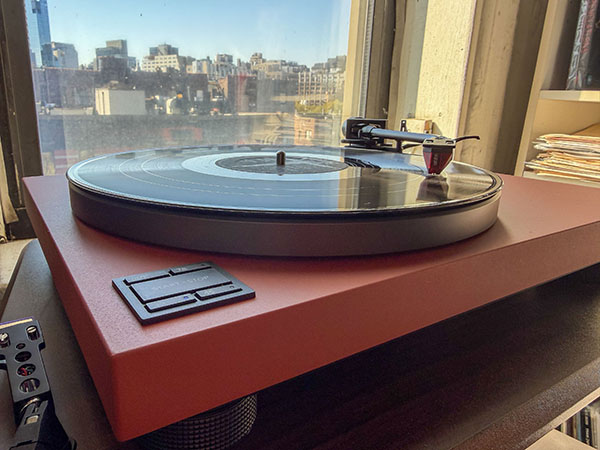
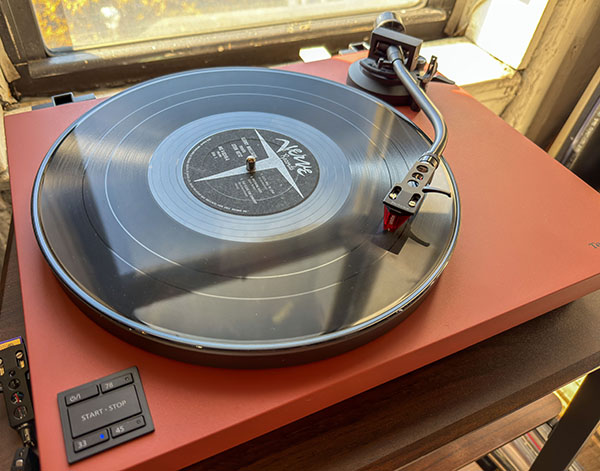
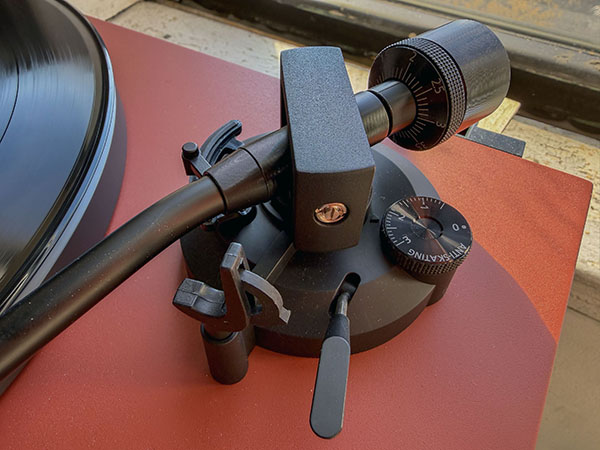
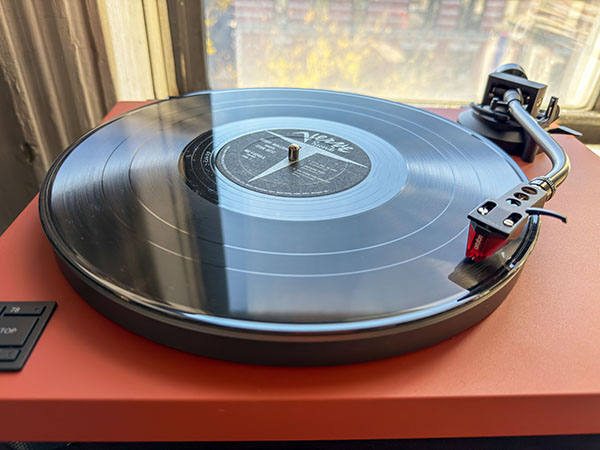
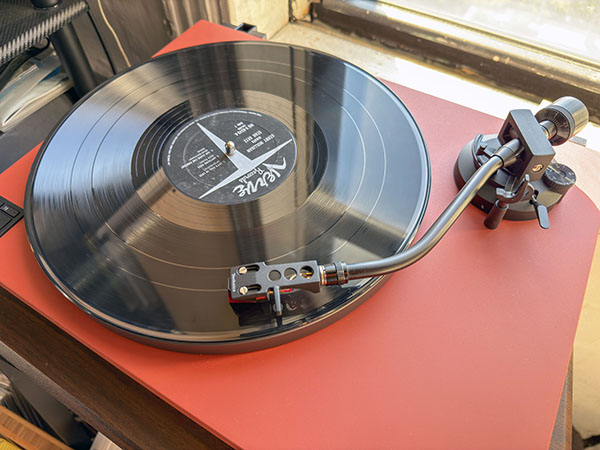
While it lacks VTA and azimuth adjustments, the SL-50C compensates with a switch-mode power supply, hinged dust cover, built-in phono preamp, practically instant startup time, and height-adjustable feet featuring new insulator material. Its aluminum S-shaped tonearm and 2.78lb aluminum diecast platter rest on a robust MDF plinth for stability. The SL-50C is available in black, grey, terracotta brown, and the reddish finish of my review sample (as you can see, all throughout my review).
The die-cast aluminum platter includes reinforced ribs and a directly mounted motor magnet for “excellent stability, rigidity, and precision,” according to the Technics site. “It works in conjunction with the same 12-pole, 9-coil, three-phase, coreless, brushless direct-drive motor found in Technics’ high-end SL-1500C and SL-1200 MK7 models. The result: high rotational accuracy and exceptional signal-to-noise ratio. You’ll also get minimized cogging thanks to the presence of stators that don’t use iron core.”
Inside the SL-50C, an equalizer circuit housed in a shielded case addresses external noise. Separate PCBs for power, motor control, and phono EQ are stationed away from the tonearm with crossover-free wiring to minimize distortion. The SL-50C uses digital processing to stabilize rotation control via speed detection and motor-drive signals. On the bottom of the plinth, newly designed insulating feet, comprised of rubber and the SL-1200 MK7’s housing and spring, are adjustable and provide vibration resistance.
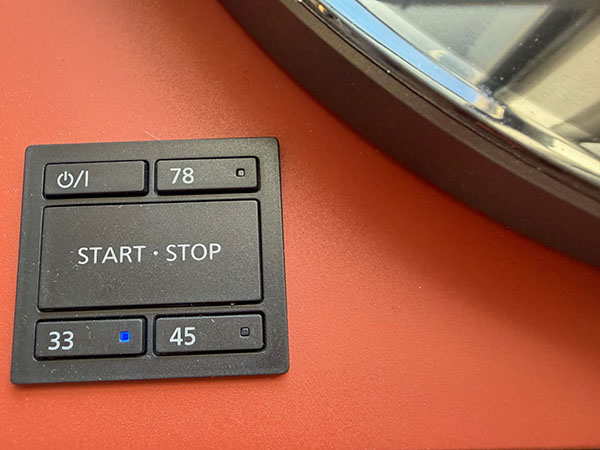
Additionally, the SL-50C table’s built-in moving-magnet (MM) phono preamp can be switched on and off, while the newly designed S-shaped tonearm “achieves high Initial-motion sensitivity,” and its non-SL1200 design should appeal to audiophiles not interested in DJ bells and whistles. I’d even venture to say the SL-50C looks nothing like any preceding Technics turntable.
Setup
The SL-50C turntable arrived in Technics’ latest green packaging, meaning that everything in the package can be recycled — unless, that is, you’re a reviewer such as myself who must hang on to every box.
A pair of low-rent, spindly interconnects were included, along with a very robust ground cord with fat spades on both ends.
My unboxing video on AP’s YouTube channel shows the practically effortless setup routine of the SL-50C — and if you need a refresher on it or haven’t seen it yet, you can watch it directly above. While not as effortless as the Rega Planar 8 turntable I recently reviewed here on AP back on September 25, 2025, it came a close second, as the SL-50C was up and running within 20 minutes.
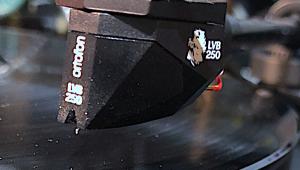
The associated system and gear I used for this review included Ortofon 2M Black LVB 250 MM and Nagaoka MP-200 MM cartridges, Fosi Audio Box X5 and Allnic H-5500 phono preamps, ampsandsound Yosemite preamp, Doshi Evolution stereo amp, and DeVore Fidelity Super Nine loudspeakers. Assorted cabling from Darwin, AudioQuest, Triode Wire Labs, and Auditorium 23 rounded out the connections.
I started with a firm tap on the SL-50C’s top plinth — nothing. Not a whisper from the speakers. Dead silence. I tried again, this time rapping my finger on the platter near the spindle, then on the tonearm assembly, even the headshell. Still: absolute, unbroken quiet. For an $899 turntable, that kind of isolation isn’t just good — it’s dumbfounding.
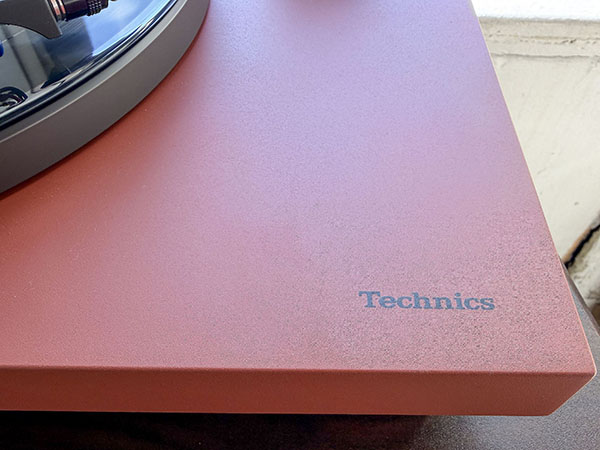
Fit ’n’ finish for a table at this price point was good too. The matte finish of the plinth was unobtrusive, and didn’t call attention to itself. The tonearm wand and assembly were solid and robust, though the cueing lever felt delicate, if not cheap, in use. The range of the cueing lever seemed truncated. But one look at the underside of the platter, which recalled far more expensive Technics platters, showed where the money was spent — on performance, not cosmetics.
Listening Sessions
Vinyl used for this review included Analogue Productions’ new, and quite excellent, UHQR 200g 45rpm 2LP version of Art Pepper’s 1957 masterpiece Art Pepper Meets the Rhythm Section (AUHQR 0022-45), tenor saxophonist Jérôme Sabbagh’s Stand Up! One Step LP (Analogue Tone Factory ATF 003), and The Chet Baker Quintet’s Boppin’ With The Chet Baker Quintet, from New Land’s recent 5LP mono box set, Five From ’65: The Quintet Summer Sessions (NEWLANDX006). As seen in the photos throughout this review, you’ll also see one of my vintage copies of the mono Gerry Mulligan Meets Stan Getz LP (Verve MGV-8249) a-spinning.
The SL-50C table paired with the Ortofon 2M Red delivered warm, engaging sonics, driving forward with infectious stride and swing. Its rhythmic timing was precise, its flow effortless — faithfully capturing the tone and rhythmic backbone of Sabbagh’s intimate jazz session. While it could occasionally sound splashy or aggressive on hot transients, and its soundstage wasn’t the deepest, the cartridge excelled in clarity, layering, and separation, rendering images with acceptable definition.
Playing the 45rpm Art Pepper discs confirmed my positive findings. Transients could sound peaky or jolting, balanced by energetic pacing, swinging drums, buoyant or boomy bass, and Pepper’s sweet, slightly acerbic tone. If ever a turntable benefited from trickle-down technology, the SL-50C is it, generating a fine sound that consistently surprised.
The superb mono reproduction of The Chet Baker Quintet’s Boppin’ LP was represented by a fairly large, clear, focused mono center field, with decent separation of instruments breathing calmly throughout.
Somehow, good mono is more magical than stereo, imo. Generally, stereo spells everything out from hard-paned imaging as on the Pepper disc, to more conventional stereo as on the Sabbagh disc. Mono, as heard on the Baker LP, causes your brain to receive and process information differently, with the mono platform creating its own sense of layering, separation, and often more energy and drive than any stereo disc. The Baker disc flew from the system like a jet, drawing me in.
The Technics table paired with the 2M Red cart was a top-notch combo — a top end that sparkled with spice, never edging into harshness; mids that shone with clarity; and bass that punched with richness and control, its overhang never muddying the music. Yes, the Ortofon could occasionally sound muted and lacked the razor-sharp resolution and theatrical drama of pricier MM cartridges — but for $99, it’s easy to see why so many swear by it as their go-to.
The Ortofon 2M LVB 250 swap upgraded the SL-50C. Paired with the Fosi phono preamp, the LVB 250 exploded the Baker disc’s once-tight mono image into a vast, breathing soundscape. Resolution sharpened, dynamics punched harder, and separation became surgical. Depth, absent with the 2M Red, now stretched out in layers, revealing the studio’s walls and instruments suspended in three-dimensional space. The music pulled me in with a newfound intimacy and impact. This was mono reborn.
Switching to the Nagaoka MP-200 transformed the SL-50C yet again — this time, into a seducer. Music bloomed with lush sustain and effortless grace. Where the LVB 250 cut with clarity and drama, the MP-200 whispered with opulence — its tonality rich, its dynamics relaxed, its touch sweet. Sabbagh’s horn glided, angelic and unhurried, more Stan Getz than Harold Land, all honeyed phrasing and smoky ease. Throughout it all, the SL-50C table adapted to each cartridge. It chameleoned, unlocking their souls with a finesse that defied its sub-$1K price tag.
It was now time to try the onboard phono stage. A simple switch on the back of the table enabled its built-in phono preamp. The unit performed well, lacked gain, and sounded rather small of stature. It’s a stop gap while you save for a proper outboard phono preamp.
Next, I upgraded from the $99 Fosi Audio Box X5 to the $5,000 Allnic HT-5000 — a phono preamp that leaves nothing to chance. It delivers on-the-fly gain and loading, multiple inputs/outputs for MC and MM carts, and an all-tube circuit that screams elite craftsmanship. Built like the Titanic, the HT-5000 draws a life force from every note, evoking the passion of a string quartet, but with a future-proof design. No icebergs here, as the SL-50C continued to shine in its wake.
The Allnic HT-5000 sent the SL-50C table’s sound soaring — stage expanded, instrument separation sharpened, delivery both relaxed and commanding. Suddenly, the $899 turntable punched far above its weight, easily rivaling $1K competitors. While it may not match the drive and rhythmic explosiveness of pricier decks, this level of performance at this price is a shock to my brain’s system.
Conclusions
The Technics SL-50C direct drive turntable breaks the mold. Its clean, Rega-esque lines and understated design give no clue to its sonic firepower. This turntable is bold, transparent, and revealing, exposing the true character of every cartridge and phono preamp I put to it. The SL-50C’s capability and flexibility are surprising for the price. If there’s a better gateway to analog nirvana at this price point and marginally above, I haven’t found it. Highly recommended.
For more about Technics, go here.
To find an authorized Technics retailer, go here.
Author bio: Former musician, former artist, and former legal wastrel Ken Micallef has written numerous hi-fi equipment reviews for Stereophile and Analog Planet, and his byline has also appeared within Mojo, Electronic Musician, and The Grammys. You can also find him at YouTube (Ken Micallef Jazz Vinyl Audiophile).





















 |
Equipment Reviews | |
The Gruvy Awards | |
Blogs Analog Tips | Columns Music | |
Show Reports | |
News Resources |
 © 2026 AnalogPlanet
AVTech Media Americas Inc.
All rights reserved