


Short Cuts, Vol. 31, Vintage Blues Upgrade Edition: A Trio of Mighty Fine Reissue LPs From John Lee Hooker, Memphis Slim, and Furry Lewis

When it comes to recordings of the blues, there are different pockets of reissue-related activity that remain of interest to many music enthusiasts these days. Three new recent LP upgrades from three different iconic names span several generations of interest: namely, mid-20th-century icons John Lee Hooker and Memphis Slim, along with Furry Lewis, who began recording in 1927.
More specifically, Grammy-winning blues legend John Lee Hooker’s 1992 Pointblank/Charisma album Boom Boom is now enjoying its first widely distributed vinyl release courtesy BMG (it came out on July 25, 2025), while both pianist Memphis Slim’s 1959 Vee-Jay debut Memphis Slim At the Gate of Horn and acoustic fingerpicking/slide guitarist Furry Lewis’ 1961 Prestige/Bluesville LP Back on My Feet get the restorative spa treatment as part of Craft Recordings’ excellent, ongoing Bluesville reissue series.
As to those latter two Craft reissues, both of which were released on August 1, 2025, we can share much of their crucial behind-the-scenes DNA that helps make this continuing series such an excellent one. From the official press materials, we find that both of these LPs have been issued on vinyl “in partnership with audiophile leader Acoustic Sounds, and feature all-analog mastering by Grammy-nominated engineer Matthew Lutthans (The Mastering Lab). The albums are pressed on 180g vinyl at Quality Record Pressings (QRP) with faithfully reproduced tip-on jackets (including Studs Terkel’s original liner notes for Memphis Slim at the Gate of Horn). Rounding out each title is an insightful OBI strip with new notes by Grammy-winning producer, writer, and musician Scott Billington.”
I’ll explore the DNA of the John Lee Hooker LP in the review that directly follows below!
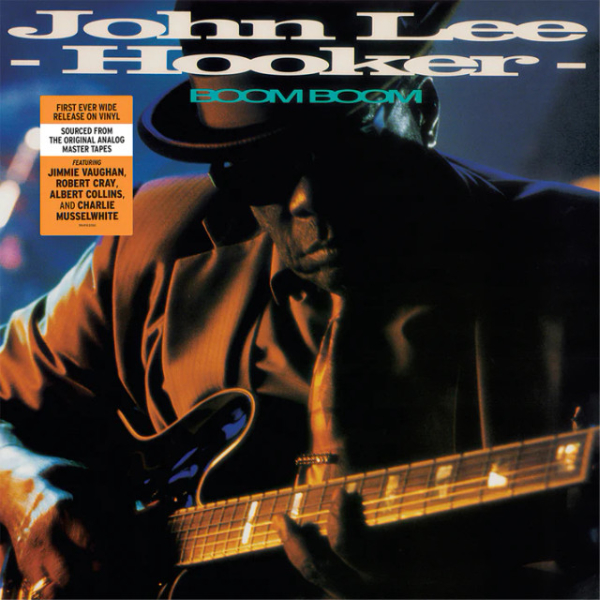
JOHN LEE HOOKER
BOOM BOOM
1LP (BMG)
MUSIC: 8.5
SOUND: 8.5
While John Lee Hooker was enjoying a resurgence of popularity after the commercial success of his late-period comeback album on Chameleon, September 1989’s The Healer, by the time of Boom Boom, his 1992 release on Pointblank/Charisma, the times were again a-changin’, as the latter album seems to have experienced some level of a mixed response. Though it was a No. 15 hit on the UK charts, Boom Boom didn’t make much of a squeak over here in the States. I suspect that might have had something to do with the explosion of the so-called grunge movement in the wake of Nirvana’s breakout September 1991 LP on DGC Nevermind, but that is just a guess.
Whatever the cause, that is all now decades-past history — and fortunately, we can now enjoy this fine late-period effort from a stone-cold blues legend. Maybe this time around, John Lee Hooker’s Boom Boom LP will have more opportunity to find the audience it deserves.
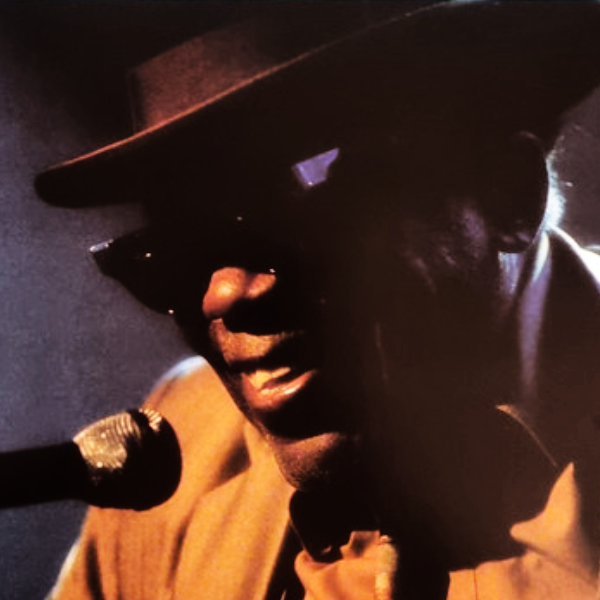
As far as the DNA for this new Boom Boom LP goes, Hooker’s official site confirms that the audio “was sourced from the original master tapes to cut lacquers for the album’s first-ever wide release on vinyl.” (Pointblank’s 1992 edition of the LP only came out in the UK.) An etching in the new BMG deadwax indicates the lacquers were cut by Truetone Mastering, and its chief engineer Carl Rowatti.
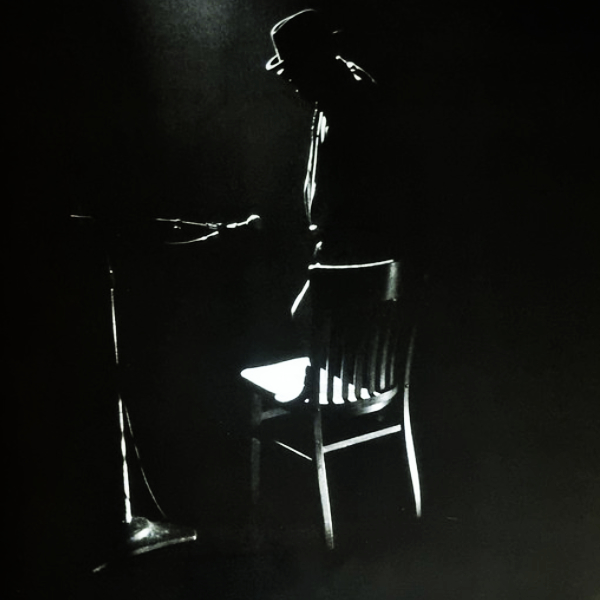
We don’t yet know where this new Boom Boom LP was pressed, but its standard-weight pressing is generally quiet and well-centered, and I had no problems on the latter front. The LP itself comes housed in a loose-fitting, glossy, printed paper inner sleeve that includes the credits and tracklistings on one side, and a cool B&W silhouette of Hooker on the other (as seen below). The SRP for Boom Boom is a quite reasonable $27.99, and you can purchase it via the Music Direct link graphic a few paragraphs below.
One thing Boom Boom can be commended for is its raw, pure bluesy flavor. Unlike a lot of modern-era blues recordings — which are really just well-produced rock records masquerading as blues — these Roy Rogers-produced sessions keep things earthy and real with guitar, bass, drums, and sometimes organ. Like its above-noted predecessor The Healer, an album that featured many star appearances, Boom Boom includes name guests like Charlie Musselwhite, Jimmie Vaughan, Robert Cray, and Albert Collins.
That said, I love that a tune like “I’m Bad Like Jesse James” (Side One, Track 2) features just Hooker and his electric guitar in the studio, with some simple slap reverb that captures his fluid foot-tapping timekeeping in vivid stereo. Even a sort of redundant romp like “Boogie at Russian Hill” (Side Two, Track 1) — which finds the backing band edging toward ZZ Top territory — works with Albert Collins’ scorching lead-guitar playing in tow.
For me, I find tunes like “Hittin’ the Bottle Again” (Side Two, Track 2) a whole lot more pure in capturing Hooker’s huge vocals — vocals that threaten to dominate his finger-picked, boxy-sounding (but lovely!) National Steel Guitar. (Actually, I’d kinda like to hear Tom Waits cover this tune!)

“Bottle Up and Go” (Side Two, Track 3) is another smoker, with some fine harmonica playing from John Hammond and sweet acoustic bass from Steve Ehrmann, all of it propelled by Scott Matthews’ perfectly restrained snare-drum brush work. [AP editor Mike Mettler adds: Me, I love how Boom Boom alternates between full-band and JLH solo tracks all throughout both sides. I did, however, experience a few pops and clicks on Side Two, which I was able to minimize after a thorough Degritter Mark II RCM cleaning session.]
Boom Boom sounds perfectly fine, and is very enjoyable via its new, standard-weight vinyl presentation. It is not a jaw-dropping gamechanger of a release per se, but simply a good, raw — and, at times, rockin’ — blues album that captures the feel of one of the all-time blues greats at a late peak doing his thing in a pair of optimized California recording environments (nine tracks cut at Russian Hill Recording in San Francisco, and one at The Plant in Sausalito). What’s not to like?

JOHN LEE HOOKER
BOOM BOOM
1LP (BMG)
Side One
1. Boom Boom (Feat. Jimmie Vaughan)
2. I’m Bad Like Jesse James
3. Same Old Blues Again (Feat. Robert Cray)
4. Sugar Mama
5. Trick Bag (Shoppin’ For My Tombstone)
Side Two
1. Boogie At Russian Hill (Feat. Albert Collins)
2. Hittin’ The Bottle Again
3. Bottle Up And Go
4. Thought I Heard (Feat. Charlie Musselwhite)
5. I Ain’t Gonna Suffer No More
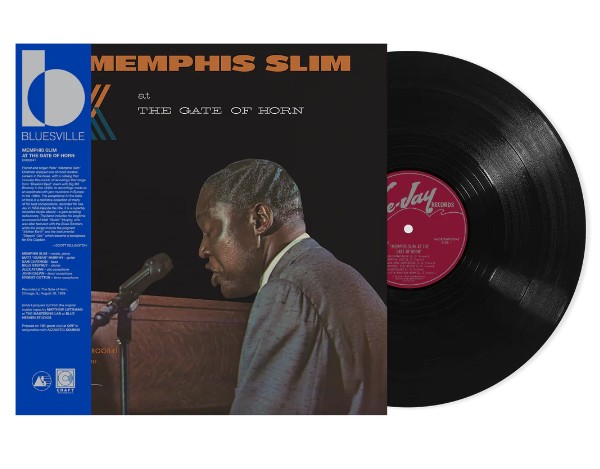
MEMPHIS SLIM
MEMPHIS SLIM AT THE GATE OF HORN
180g 1LP (Vee-Jay/Bluesville/Craft Recordings)
MUSIC: 9
SOUND: 8.5
Despite its title, this is not quite a live album, but it was recorded onstage at a Chicago club called Gate of Horn on August 18, 1959. There, the producers captured the feel of a live Memphis Slim set without the potential sterility of going into a recording studio. In effect, Memphis Slim at the Gate of Horn feels timeless, and besides Slim’s vocals and piano and a swinging horn section, it also features the searing guitar work of future Blues Brothers member Matt “Guitar” Murphy cutting through the mix in fine form.
The Memphis Slim at the Gate of Horn LP itself comes housed in a plastic-lined, audiophile-grade inner sleeve and has an SRP of $32.99, and you can purchase it via the Music Direct link graphic that appears below, just before the tracklisting section.
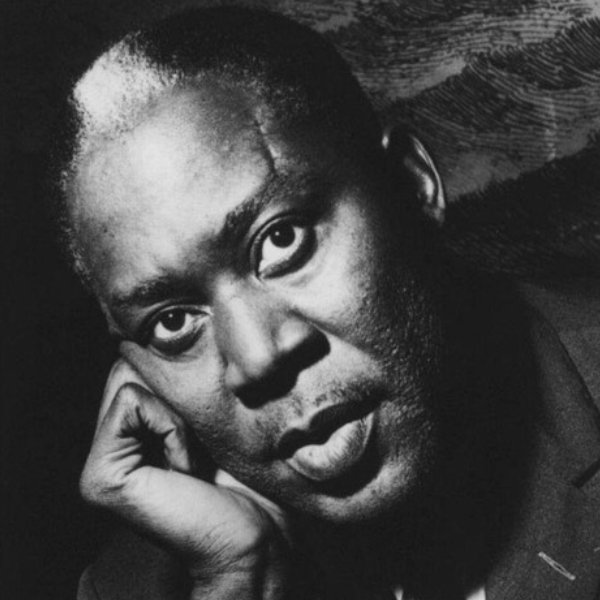
Most of the tunes here are credited to L.C. Frazier. a publishing alias for John Len Chapman, which is Memphis Slim’s birth name. And what tunes they are! Well-recorded, Memphis Slim at the Gate of Horn is at once familiar, yet timeless and fresh. You can feel the influence of recordings like this on later LPs, especially those of the British blues invasion of the 1960s. [AP editor Mike Mettler adds: Testify, Mark! Among other things, blues aficionados will certainly swing ’n’ sway to cuts like “Steppin’ Out” (Side 1, Track 2), a song that Cream — and, later, Eric Clapton, after he went solo — mightily embellished with their own top-tier interpretive skills.]
What’s that? You say you want to find a clean original 1959 Vee-Jay pressing of Memphis Slim at the Gate of Horn? Good luck! At the time of this posting, there are just two copies on Discogs going for between $57 and $75 in VG condition, with similarly graded copies on eBay at even higher prices.
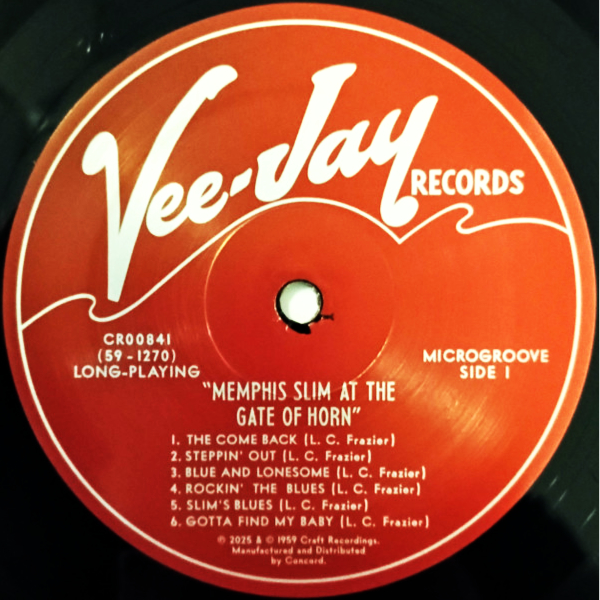
So, an excellent reissue of Memphis Slim at the Gate of Horn was no doubt in order, and I’m quite pleased with it. The fidelity is rich and round. And I always appreciate the attention to little details that appeal to collectors, such as recreating the original 1959 maroon Vee-Jay label design (as seen above). All these factors, not to mention the purity and performance quality of the music at hand on both sides, add up to making this vibrant Memphis Slim LP a top-notch reissue.
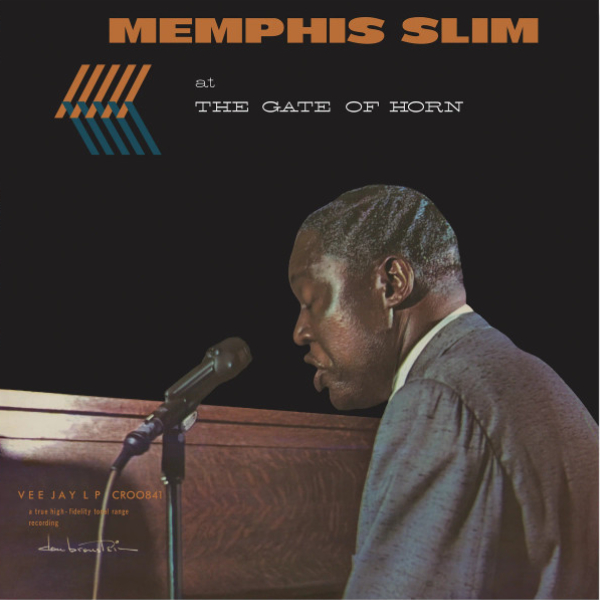
MEMPHIS SLIM
MEMPHIS SLIM AT THE GATE OF HORN
180g 1LP (Vee-Jay/Bluesville/Craft Recordings)
Side 1
1. The Come Back
2. Steppin’ Out
3. Blue And Lonesome
4. Rockin’ The Blues
5. Slim’s Blues
6. Gotta Find My Baby
Side 2
1. Messin’ Around
2. Wish Me Well
3. My Gal Keeps Me Crying
4. Lend Me Your Love
5. Sassy Mae
6. Mother Earth
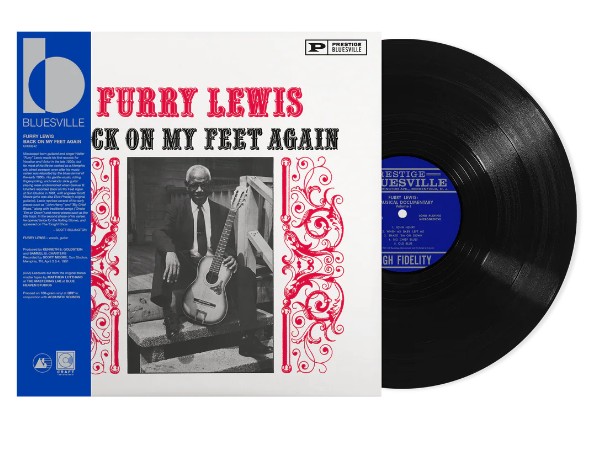
FURRY LEWIS
BACK ON MY FEET AGAIN
180g 1LP (Prestige/Bluesville/Craft Recordings)
MUSIC: 10
SOUND: 9
Of the three albums reviewed in this Short Cuts installment, Furry Lewis’ Back on My Feet Again is the one I actually own a rare original pressing of in fairly nice condition for direct comparison. Before I get into all that, just like the Memphis Slim LP I reviewed directly above, the Back on My Feet Again reissue of this 1961 Prestige LP is housed in a plastic-lined, audiophile-grade inner sleeve, and it also sports an SRP of $32.99. You can purchase it via the Music Direct link graphic that appears after the tracklisting section below.
It’s also important to recognize that Furry Lewis’ place in the timeline of music history before I go any further. Lewis was believed to have been born in the late 1890s, and like many original folk-blues artists, Lewis lived a hard life — much of it in Memphis, Tennessee. He reportedly lost a leg in an accident while trying to jump on a moving freight train. Once healed, and then fitted with a new artificial leg, Lewis became a performer, in addition to being a professional street sweeper much of his life. Through all that, in 1927, he began recording now impossibly rare and hard-to-find sides for Vocalion.
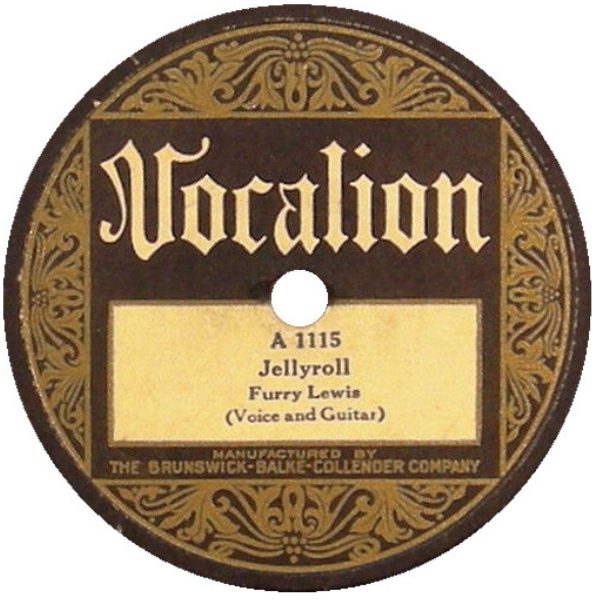
Amidst the folk blues revival of the late 1950s, Lewis was rediscovered and recorded by crucial field producer/historian Sam Charters. Look him up on the interwebs if you are not familiar with his name, for Charters is an important force in raising awareness of country folk blues and black musicians in general, and I feel he’s right up there with the more well-known ethnomusicologist Alan Lomax.
Some songs on Furry Lewis’ Back on My Feet Again — like “White Lightnin’” (Side B, Track 3), with its immediately identifiable melody and lyric, “train I ride” — help trace the roots of the early rock ’n’ roll classic, “Mystery Train.” The latter song was recorded initially by Junior Parker and later, more successfully, by Elvis Presley for Sun.
This latter connection is important, and certainly not lost on this writer, as the engineer on Back on My Feet Again is one Scott Moore, a name some of you might recognize from his days with Elvis when he was known as Scotty Moore, the guitarist for the King’s seismic hits for Sun and RCA. This album, in fact, was recorded at Sam Phillips’ legendary Sun Studio locale in Memphis, so it bears some of that same sonic footprint.
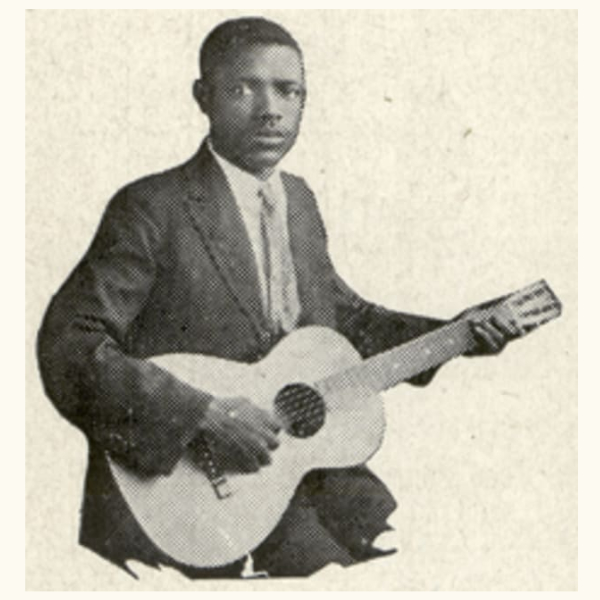
So, think about Back on My Feet Again in this context: You have a legendary studio recording engineered by a legendary guitarist who knew the capabilities of the studio itself, documenting for the ages an even more legendary original blues musician. The resultant combo is an almost idyllic acoustic folk-blues record bearing the rich Sun feel, including some of that equally legendary reverb/slap echo.
For me, at least, this all makes Furry Lewis’ Back on My Feet Again sound unlike most acoustic country/folk blues records I’ve heard to date. Now, I certainly make no claims to being the ultimate authority on every blues recording, so this may be more common than I suspect. Regardless, this album sounds especially great, as it was clearly professionally made — something that wasn’t always the case for many blues recordings of the day. Here, Moore and Charters, along with the additionally credited producer Kenneth S. Goldstein, have captured the essence of Lewis’ rich, fingerpicked acoustic guitar work, as well as his classic slide playing. As far as how the new Craft pressing compares to the original, it is remarkably close. I guess that is because Back on My Feet Again was a great recording to begin with, and the reissue’s producers have kept the slightly bright yet rich feel in place.
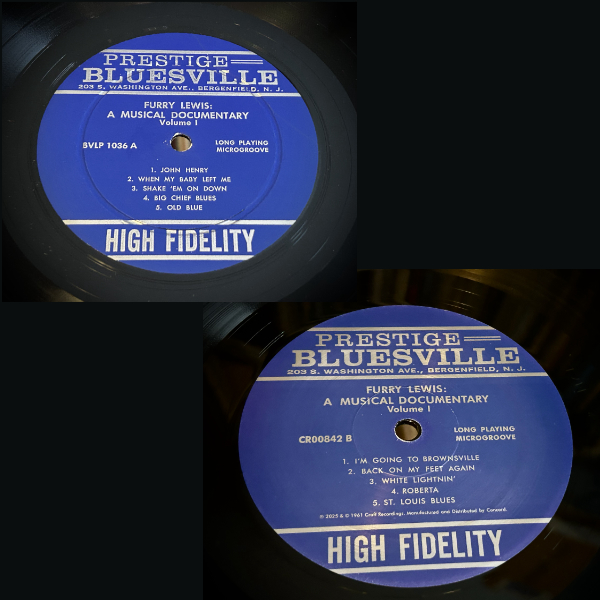
[AP editor Mike Mettler adds: I wholly agree with Mark’s aural assessments above. One thing I find interesting is that the album title Back on My Feet Again only seems to appear on the front and back jackets — but, on both sides of the LP label itself, the phrase “A Music Documentary – Volume I” appears directly underneath Furry Lewis’ name instead of the title on the front and back sleeve. Furthermore, Done Changed My Mind, Lewis’ followup LP, from later in 1961, also has a similar title-difference thing on its LP labels, this time being designated as “Volume II.” As best I can tell, this was done in order to distinguish the splitting up of the sessions Charters recorded at Sun Studio in Memphis on April 3 and 4, 1961, into two separate albums, but I remain curious as to why the album titles don’t appear on the LP labels themselves. Feel free to email us directly if you have any further insights about how these titular choices were made — and by whom! And now, back to Mark to wrap up the Lewis LP review proper.]
As far as finding a clean Back on My Feet Again original, well, that is another challenge that might cost you some dollars. On Discogs, of the eight Back on My Feet Again LP copies available in the U.S. as of this posting, they start around $65 for a VG copy and run up to just under $150 for the lone NM offering. If you don’t need the original serial numbers and the overall feel of an original Prestige pressing, this fine new Craft Recordings edition is probably a much greater option for most collectors and blues enthusiasts these days, especially for those of us on a tight budget.
The bottom line for me is that the Craft version of Furry Lewis’ Back on My Feet Again is arguably my favorite of the three blues reissue LPs I’ve reviewed here today. This is the good stuff, folks.

FURRY LEWIS
BACK ON MY FEET AGAIN
180g 1LP (Prestige/Bluesville/Craft Recordings)
Side A
1. John Henry
2. When My Baby Left Me
3. Shake ’Em On Down
4. Big Chief Blues
5. Old Blue
Side B
1. I’m Going To Brownsville
2. Back On My Feet Again
3. White Lightnin’
4. Roberta
5. St. Louis Blues
Author bio: Mark Smotroff is an avid vinyl collector who has also worked in marketing communications for decades. He has reviewed music for eCoustics, among others, and you can see more of his impressive C.V. at LinkedIn.





























 |
Equipment Reviews | |
The Gruvy Awards | |
Blogs Analog Tips | Columns Music | |
Show Reports | |
News Resources |
 © 2026 AnalogPlanet
AVTech Media Americas Inc.
All rights reserved