


The Beach Boys: The Final Nine Analogue Productions Reissues Part II
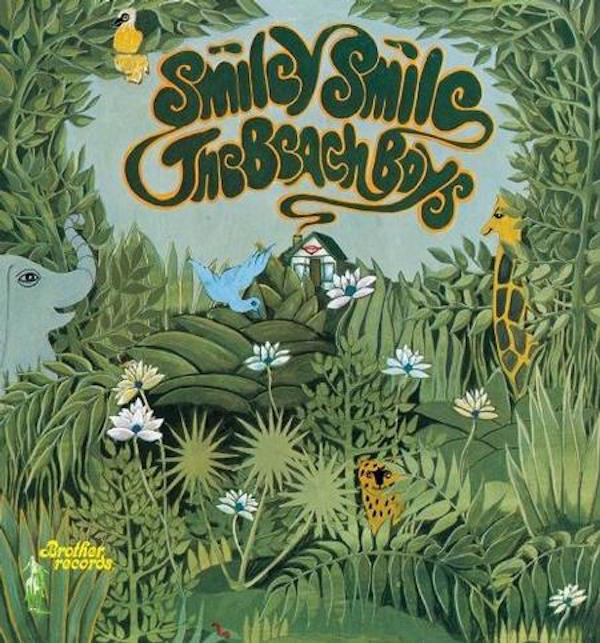
The twelfth Beach Boys studio album released in September of 1967, Smiley Smile has a confusing history both artistically and commercially. It was originally to be a “preview” of an album to be called Smile that ended up being scrapped until a few years ago. The original version of the groundbreaking and highly successful single “Good Vibrations” released in the fall of 1966 is here as are parts of “Heroes and Villains” and “Vegetables”, originally destined for Smile. Most of the rest of the album was tracked in Brian’s home studio in the spring and summer of 1967.
Though he produced it, credit went to the group per Brian’s wishes. This was a home recording in the best and worst senses of the word. The equipment was hardly “state of the art” and lacking a proper echo chamber, the empty swimming pool and a shower stall served the purpose.
In many ways the album serves as a Rorschach test, with listeners making of it as they see fit rather than what it really is, which is somewhat difficult to pin down. It makes use of sound effects, newly invented effects devices and but a few instruments, mostly keyboards.
Perhaps that’s why when originally released late in the “Summer of Love” it sold so poorly. Look at what was the competition earlier in the year!
Compared to glossy studio recordings of that time filled with effects, other than “Good Vibrations”, the album felt “home made”. Over time, that has worn well. The opener “Heroes and Villains” written in collaboration with Van Dyke Parks is a chipper, old-fashioned sounding multi-part number steeped in silent movie nostalgia.
The history of the song’s recording could be turned into a short story.
“Vegetables” has a similarly contorted, confused history with many versions. Some say it was about Wilson’s health obsessions. Others say it was marijuana inspired. That’s followed by a charming “Musique Concrete” piece and then “She’s Goin’ Bald”, which also alludes to silent movies within a moving pastiche of musical settings. The side’s closer “Little Pad”, has a dreamy Hawaiian-motif anchored by a ukulele. It’s a charming side of a record that bears scant resemblance to rock, rock’n’roll, pop or any kind of music of that era.
Side two opens with “Good Vibrations” followed by the soft, effervescent “With Me Tonight”, which sounds like something inspired by The Fleetwoods’ “Come Softly”. It’s a light, frothy and pleasing confection.
“Wind Chimes” is a dreamy, “in your head” vocal pastiche that ends up being more psychedelic and mesmerizing than most of the era’s complex and grandiose attempts at “mind blowing”.
“Getting’ Hungry” has a catchy, almost Reggae-like chorus (before Reggae was born), and a slow, meandering verse backed by simple bass and percussion. It sounds like something that greatly influence Beck and if it didn’t, it should have!
“Wonderful” written with Van Dyke Parks is another multi-segmented song with stops for group giggles, soothing harmonies and a feeling that it’s about to grind to a halt, which is a Parks trademark. It’s not been used in a Pistachio nut commercial—yet. Its lyrical meaning has been interpreted to be about, among other things, a “spring awakening”
The album ends with “Whistle In”, more of a incantation than a song, backed by electric bass and old-timey piano. The album feels as if you’ve been taken to a place inside Brian Wilson’s head, where everything he’s created over the previous five years has gotten denser, smaller, more concentrated and more wondrous but that like the Big Bang creation of the universe, it was about to implode, which of course it and he did.
This is an intimately drawn album of impressive musical doodles that sailed over many heads (pun intended) in 1967 but which can be far better appreciated today and needed today because of how it can help slow you down and draw you in. Into Brian Wilson’s head, which then was an interesting place to be.
This reissue is so much better than the original, so much closer to the closely miked creation you’ll almost feel like wiping off your speakers. Originally released only in mono, it’s now available in stereo as well but again, for me the mono is the way to go. A real magical mystery tour—no bus needed!
Sunflower (MS 2118)
The Beach Boys exited Capitol Records in 1970 and signed with Reprise in a deal to distribute its Brother Records label. Van Dyke Parks, who was then a Warner Brothers Music executive helped broker the deal, which stipulated Brian’s involvement in every release.
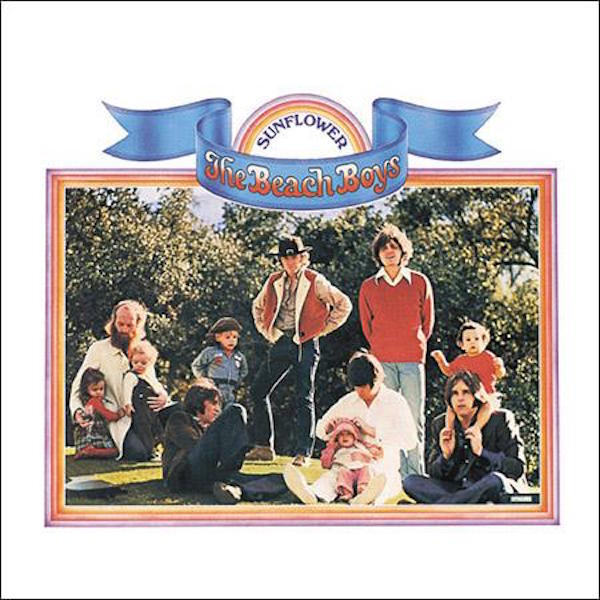
The group’s sixteenth studio, released at the dawn of a new decade had a fresh, new mature sound both tuneful and muscular while retaining the group’s signature harmonies. What’s more, it was recorded in “real stereo” that captured real room ambience and not in multi-miked mono stitched together with artificial reverb, and in a new Brothers Records recording studio. Sunflower also had an attractive gatefold cover featuring “next-gen” young Beach Boys offspring.
The album got great reviews too, so what possibly could go wrong? Despite all of those “good vibrations”, it was a commercial flop reaching but 151 on the Billboard album charts—the group’s worst ever performance.
The album opens with “Slip on Through” a Dennis Wilson song and lead vocal that gets things off to a strong start. That’s followed by Brian’s cosmic, feel-good “This Whole World” that can make a bad day good.
Then comes “Add Some Music to Your Day” , another inspiring tune followed by “Got to Know the Woman”, another strong, syncopated Dennis contribution that almost swaggers, which is a Beach Boys rarity. The “good-timey”, Association-like “Deirdre”, written by Bruce Johnston and Brian Wilson, follows that. The strong side ends with the gospel-y “It’s About Time”.
Side two opens with Bruce Johnston’s waltz “Tears in the Morning” followed by “All I Wanna Do,” a dreamy, reverb-drenched Brian Wilson-Mike Love composition. “Forever” is another gem of a love ballad by Dennis Wilson. “Our Sweet Lover” is another love song-ballad—a string drenched one that continues the album’s pleasing ascent into greeting card heaven—and that’s meant as a compliment.
“At My Window” is a charming, child-like observance of a bird. The closer “Cool, Cool Water” is a short, charming Smiley Smile outtake that ends with a mystical, softly chanted plea underplayed by gently rolling “weather”.
Yes this is soft-rock, middle of the road fluff and that’s probably why in the early 1970’s it failed. Rockers were into way harder “blooze” based stuff, and soft rockers had found new heroes like The Carpenters and Bread. However, in retrospect this is a well-crafted, superbly recorded album that stands up well forty-six years later. And yes, it is one of the few ‘true stereo” (soft) rock records ever recorded. Interestingly, the original was mastered at Artisan where Kevin Gray once worked (though he didn’t master the original). His cut here is far superior to the original in every way.
Surf’s Up (MS 2118)
Yesterday I played for the first time Neil Young’s sprawling three LP ecological epic Earth (Reprise 554514-1) and it delivers the same message/warning about pollution Mike Love and Al Jardine deliver on “Don’t Go Near the Water”, the opener here on The Beach Boys’ seventeenth studio album released in 1971. I wonder what Republican Mike Love thinks now of climate change. Is he a denier? (if you are offended by this get over it. Are you offended by “Don’t Go Near the Water”?)
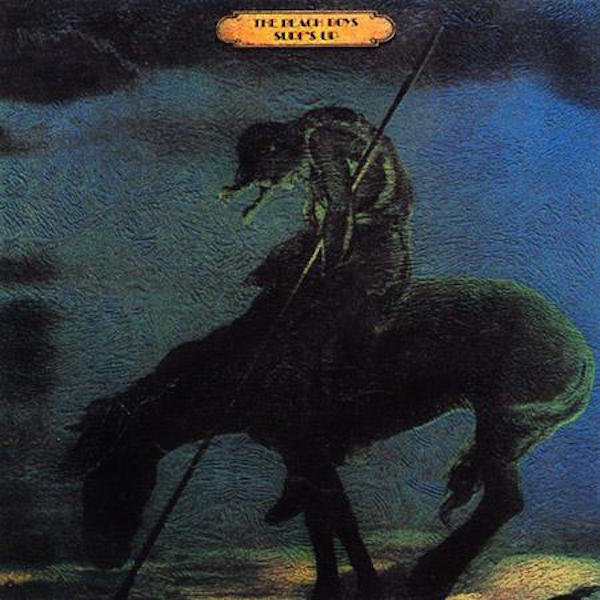
The cover of Surf’s Up let’s you know this is not a surfing album! It hit #29 on the Billboard album charts, which was a hundred plus better than did Sunflower. The second tune, the powerful “Long Promised Road” by Carl Wilson with words by Jack Rieley is a surprisingly sophisticated look at life’s travails and fits well with Rieley’s managerial direction for the band: bringing them into the counter-cultural milieu necessary to advance the band’s relevance in the “post-surfing”, post adolescent world of the band’s original fans. The lyrics draw heavily upon Van Dyke Park’s wordplay.
“Take a Load Off Your Feet” is a podiatrist’s wet dream song about foot care—literally. A cute Desenex-laden tune. Bruce Johnston’s “Disney Girls (1957) is a nostalgic waltz back through time that wasn’t welcome (by me) in 1972 but today its charms and the passage of forty plus years have won me over. I still don’t know what to make of Mike Love’s re-make of Lieber/Stoller’s “Riot in Cell Block Number 9” originally recorded by The Robins.
Love seems to embrace “winds of change” until they turned to flames. He all but canonizes the Kent State Four, killed by The National Guard, but it hardly achieves the darkness of CSN&Y’s “Four Dead in Ohio” and Love ends by basically saying yes, we’re all fed up with war and racial strife but you’d best stay away next time there’s a riot”. Who can argue with that?
Side two is where Surf’s Up shines. It opens with “Feel Flows” another Wilson/Rieley song that’s the equal of “Long Promised Road” and equally mesmerizing. It’s almost all Carl Wilson, which is impressive, and supposedly includes Charles Lloyd (!) on flute and saxophone. The song’s meaning is somewhat more diffuse than that of “Long Promised Road”.
“Looking at Tomorrow (A Welfare Song)” is a short straightforward and well executed look at poverty and unemployment. The delicately told “A Day in the Life of a Tree” could have been on Neil Young’s new album and unfortunately resonates as well today as in 1971 though since then acid rain has been well dealt with no thanks to the usual cast of knuckle heads who denied it or said fixing it would “cost too much.”
Brian’s “’Til I Die” is one of those late night treasures about life and mortality that induces chills every play (even decades after the first play). The title song finale about rebirth by Brian and Van Dyke Parks is a fitting denouement after the transcendent “’Til I Die”. “Surf’s Up” was supposed to part of the abandoned Smile project. Brian at first refused to re-visit the song. This version includes the original backing track from 1966 with Carl’s new vocal overdub for the first part. Near the end of the album’s completion Brian changed his mind and to complete parts and write new lyrics. However it was cut and pasted together it’s among the best Beach Boys tracks.
. This is another “true stereo” recording mixed to “unfold” in surround sound using Dynaco’s passive box. It worked well. You can get much of the surround information with Dolby Pro-Logic but just plain stereo is a well-mixed, superbly transparent, delicately drawn production.
The original Artisan Sound mastering is masterful and if you have a clean one, you’re all set. This reissue is not quite as transparent but the inner detail resolution is superior as is the bottom end. If I had to guess which album(s) were cut from “best available” as opposed to master tapes, I’d pick this one simply because the top end is not as open and airy. If you don’t have an original you won’t know you’re missing something, and you are getting inner detail and bottom end weight the original lacks.
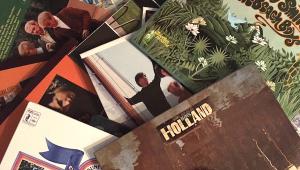
Holland (MS 2118)
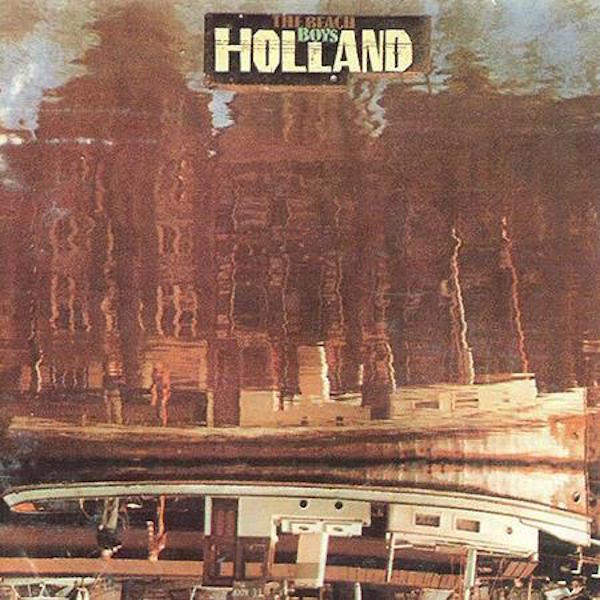
By 1973 when this album was released as the group’s nineteenth studio album, it could be argued that The Beach Boys was a group in name only. Sure brothers Carl and Dennis remained as did Al Jardine and Mike Love but added here are Ricky Fataar and Blondie Chaplin, two South African musicians and former members of The Flames, a band Carl Wilson saw play in London and signed to Brothers Records. The group recorded a Carl Wilson produced album and in 1970 broke up.
When Dennis Wilson injured his hand and was no longer capable of drumming, Fataar joined as drummer as did former The Flames guitarist Blondie Chaplin. Later in his career Fataar was the drummer for The Rutles and was seen in the mockumentary “All You Need is Cash”.
This crew retreated to The Netherlands where for this project a complete high quality custom designed recording studio was flown in from Los Angeles. Now that’s dedication! As with Sunflower, Holland, released in January of 1973, was recorded in true stereo.
The opener, “Sail on Sailor” with music written by Brian, Van Dyke Parks and Tandler Almyn and lyrics by Jack Rieley (who co-wrote lyrics with Carl Wilson for many later Beach Boys tunes and managed the group during the 1970’s) and Ray Kennedy, gets the album off to a stellar start.
The loping tune sounds Stevie Wonder-inspired. It’s a song and production that deserves repeated (endless) plays and never grows stale. In fact, side four of this double LP is devoted to a 45rpm version of the song.
Side three is filled with what came with the original LP as a 45rpm bonus EP containing the Brian Wilson written, produced and performed “Mount Vernon and Fairway (A Fairy Tale)”, a Jack Rieley narrated fairy tale musical about a magical transistor radio that enchants a young prince. Mount Vernon and Fairway was the intersection near Mike Love’s childhood home.
After “Sail on Sailor” comes “Steamboat”, one of Dennis Wilson’s most unusual tunes, with even odder words by Jack Rieley. It’s a slow, meandering “tribute” to steam power, including a shout out to Robert Fulton. It’s an endearing oddity aided by excellent production.
Then comes an odd “California Suite” coupling “Big Sur”, “The Break of The Eagles”, and “California”. It’s a combination ecological drama, history lesson and California glorification, with music and spoken word. The third part, “California” by Al Jardine takes “California Girls”, grafts onto it a western slow gallop rhythm and adds a west coast travelogue. It’s like “Hotel California” minus the darkness and cocaine.
Side two opens with “The Trader,” a continuation of side one’s history lesson with a melody filched from “Feel Flows”. That’s followed by “Leaving This Town”, a Fataar/Chaplin/Carl Wilson/Mike Love song, that wears Stevie Wonder on its sleeve even more than does “Sail on Sailor”. It is a downcast song that concludes with a plea for guidance. This album can only be understood in the context of 1972, which was for many reasons unsettling and a time of decay.
“Only With You” is a cloying Dennis love song followed by the odd closer, “Funky Pretty”, written by Brian, Mike Love and Jack Rieley. It’s an odd love song about a “Pisces Lady” and an appropriate conclusion to an altogether odd album.
I won’t begin to describe Brian’s delightful fairy tale. You’ll have to find it for yourself! However, I have an original white label promo copy of Holland that I got in 1973 and while I’ve played the album many times, I admit to not playing the EP.
The original is a standard jacket with a lyric insert and of course includes the EP. To make this work as a gatefold double LP with inside artwork that includes the EP cover art must have taken some time, effort and expense. It’s been very well done.
As for the sound of this reissue, while side one sounds very good, and beats the original as described in some of the other records covered here, side two sounds as if it was mastered from a later generation source: it’s soft, muffled and pretty mediocre-sounding. I guess this is an example of “best available source”. If I’m wrong I’m sure Kevin Gray will slap me down! So much good reissue work here, I hate to end on a down note.
Conclusion
I have listened through to every one of these Beach Boys reissues, mono and stereo. They were sealed copies and not specially chosen for me. So first off let me tell you that there was only one click on one record. Otherwise there was complete silence and the records were all pressed concentrically.
There’s some really shmucky, nasty stuff on The Steve Hoffman Forums written by bitter wankers about these records and Analogue Productions generally. There are complaints about the pressing quality about the cost of the records and about release time delays.
I’m not sure what these people expect or what they think it costs to license a major catalog like The Beach Boys and see this through, which means locating all of the tapes including perhaps a few alternative tapes to find the best ones and then cut lacquers in mono and stereo and reproduce the artwork as exquisitely and perfectly as has been done by Analogue Productions. In every way possible this Beach Boys reissue series (also available on SACD) is as good as reissues can be.
I guess a Beach Boys fanatic will want it all but if you are looking to pick and choose among the entire reissue project my top recommendations would be these:
1) Surfin’ USA (mono)
2) Surfer Girl (stereo)
3) All Summer Long (stereo)
4) The Beach Boys Today! (mono)
5) Summer Days (and Summer Nights)
6) Pet Sounds (mono)
7) Smiley Smile (mono)
8) Sunflower
9) Surf’s Up
(I encourage you to submit corrections to this long piece!) ]
 | |||||||||
|

| ||||||||






























|
Equipment Reviews | |
The Gruvy Awards | |
Blogs Analog Tips | Columns Music | |
Show Reports | |
News Resources |
 © 2026 AnalogPlanet
AVTech Media Americas Inc.
All rights reserved