


New Vinylphyle & DSS 60th Anniversary Reissues of The Beach Boys’ Seminal 1966 Masterpiece Pet Sounds Both Raise the Audiophile Bar in Their Own Respective Ways

Yesterday, on May 21, 2026, we looked at the first-time vinyl release of The Beach Boys’ The Pet Sounds Sessions Highlights on Capitol/UMe, in a review that you can read right here. Today, on Friday, May 22, 2026, we delve into two new versions of The Beach Boys’ seminal May 1966 masterpiece, Pet Sounds, which were released on May 15, 2026, in two separate high-grade vinyl editions in celebration of the album’s 60th anniversary: a) Capitol/UMe’s Vinylphyle series 2LP mono/stereo set, and b) Interscope/Capitol’s ultra-premium Definitive Sound Series (DSS) One Step edition.
There are worse things in life than having to listen to Pet Sounds all week long, but that’s what I’m here for! First up, I will tackle the Vinylphyle 2LP edition, and then I’ll delve into the DSS version.

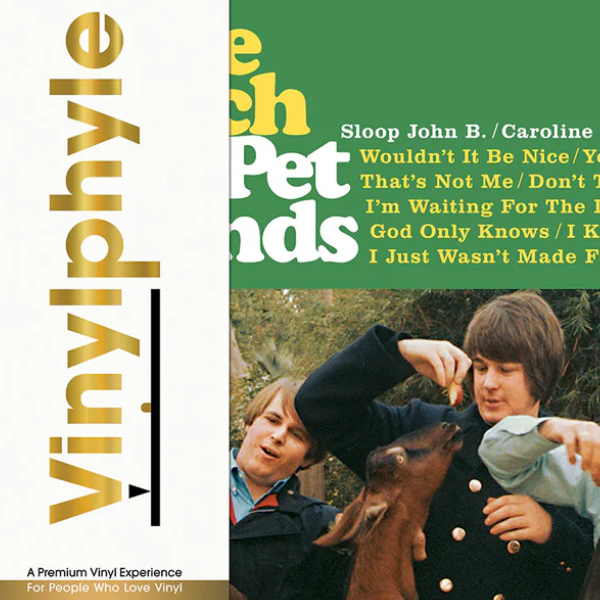
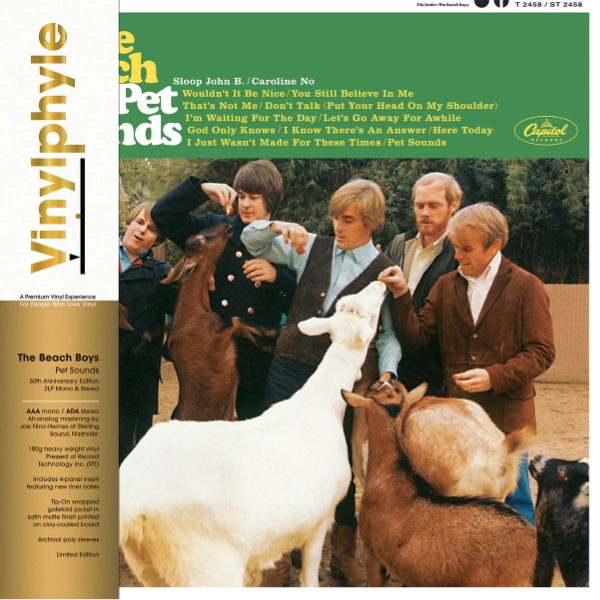
UMe’s recently introduced Vinylphyle audiophile reissue series has rapidly established itself as a trusted brand for high-quality restorations of classic pop, rock, and soul recordings. Mastered from original tape sources and manufactured to exacting standards, the discs are pressed on high-quality 180g heavyweight black vinyl at one of the best manufacturing facilities in the world, RTI. Each LP in this series arrives securely packed in audiophile-grade, plastic-lined inner sleeves. The covers are premium as well, featuring heavy cardboard construction and superior quality printing.

For the 60th anniversary Vinylphyle edition of The Beach Boys’ Pet Sounds, the label has created a compelling 2LP edition featuring the original, all analog (AAA) May 1966 Capitol mono mix as well as the hybrid analog/digital (ADA) 1996 stereo mix that was created from a 2025 sequenced ½-inch 30ips copy. This transfer was made by Joe Nino-Hernes at Sterling Sound, Nashville (and he also cut the lacquers), and the 180g vinyl pressings were manufactured at the aforementioned RTI in Camarillo, California.
The Vinylphyle 2LP edition of The Beach Boys’ Pet Sounds album has an SRP of $54.98, and you can order it now directly from the band’s The official site store here, or from UDiscoverMusic here.
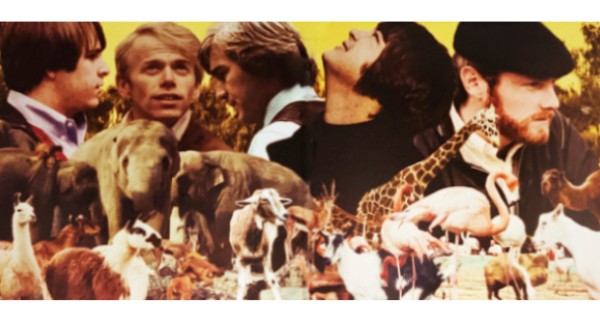
The 2LP Vinylphyle Pet Sounds includes a four-page insert with compelling liner notes that includes a heartfelt introduction by no less than The Who’s Pete Townshend. A happy surprise in this new package is a fun new gatefold collage featuring 1966-era images of The Beach Boys surrounded by many barnyard animals, keeping in the spirit of the original cover aesthetic. Rounding out the authenticity of the set, the producers have reproduced — and very well, I might add — the flat matte rainbow-ring Capitol label design of the mid-1960s.
The Vinylphyle Pet Sounds is about as close as you can get to the 1966 listening experience, save for cracking open a sealed original! And even then, this new edition would likely sound better. Presenting the music in a less-compressed manner, there is certainly better bass response and a greater sense of midrange. Right from that big drum hit which kicks off “Wouldn’t It Be Nice” (LP1 & LP2, Side 1, Track 1), you know you’re in for a great listening experience true to the original 1966 feel.
While I will always prefer the monaural mix on LP1, the stereo mix on LP2 here is also super enjoyable. Crafted by engineer Mark Linett and Brian Wilson back in the mid-’90s, this mix does a great job of presenting this legendary work as a two-channel listening experience while maintaining album’s original intent and feel.
For those of you seeking a good upgrade from an original 1966 Pet Sounds LP or are simply hoping to get a good first exposure to the album, this new Vinylphyle edition may be just the ticket — especially if you want to enjoy both the mono and stereo mixes separately. The RTI pressing is superior to any standard original editions I’ve seen and heard, so the music just pops out of your speakers, allowing you to hear more of the underlying musicality, and more of the studio presence.
Ratingswise, Pet Sounds itself easily goes to 11 for the Music, no matter which source you are listening to. It’s an incredible recording. As for the Sound rating for the 2LP Vinylphyle edition, I rank it as a solid 9 because, in the context of 1966 recordings, it remains an amazing-sounding recording, and this version sounds very good indeed. The stereo mix on LP2 sounds great too, even with the necessary digital production stages that went into its making. It is a different experience — and one well worth experiencing. (Incidentally, AP editor Mike Mettler concurs with both of my Vinylphyle edition ratings here.)
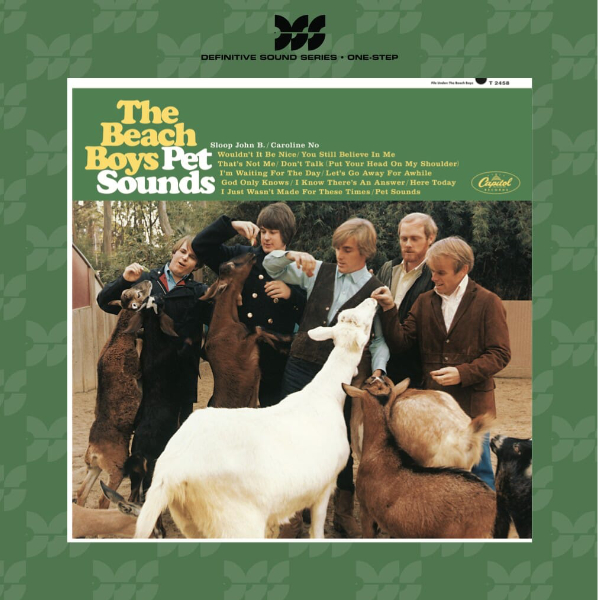
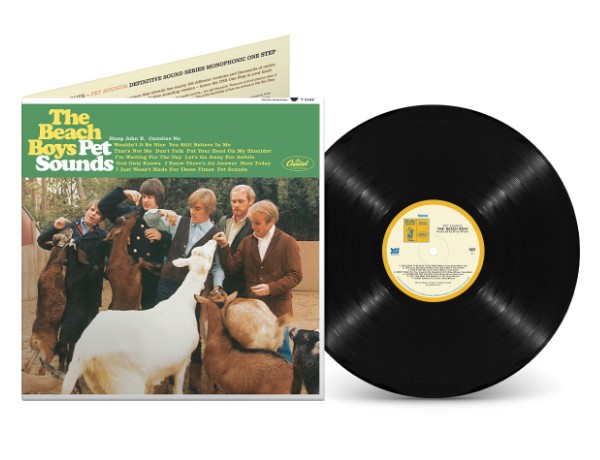
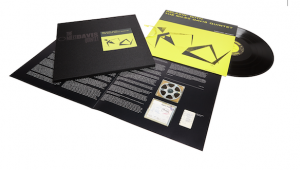
And now it’s time for the crème de la crème of the 60th anniversary celebration of Pet Sounds, which is most certainly the new Definitive Sound Series (DSS) edition. It sports an SRP of $99.99, and while it is currently sold out at The Beach Boys’ official site store, Music Direct is taking preorders here, and/or via the MD link graphic ahead of the tracklisting section below, for its indie-store-related June 26, 2026, rollout — so we heartily suggest you order now before they sell out, as this DSS edition is capped at 6,000 units.
Several significant details set this DSS Pet Sounds version apart from the Vinylphyle version. In addition to the acclaimed one-step manufacturing process — which minimizes the number of stages in the vinyl production process, reducing signal loss, distortion, and other anomalies — is the remarkable fact that a completely different tape master was used!
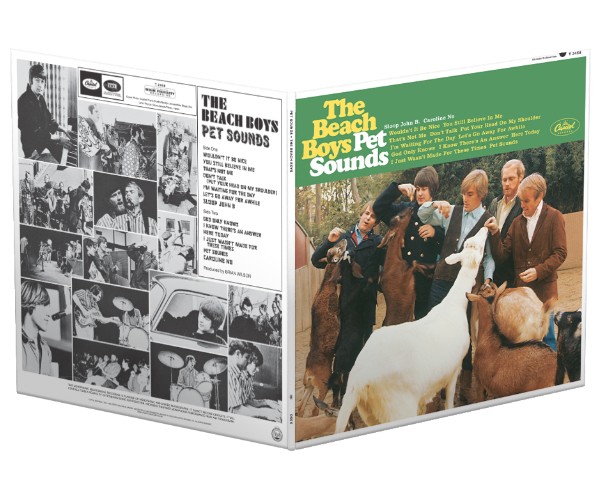
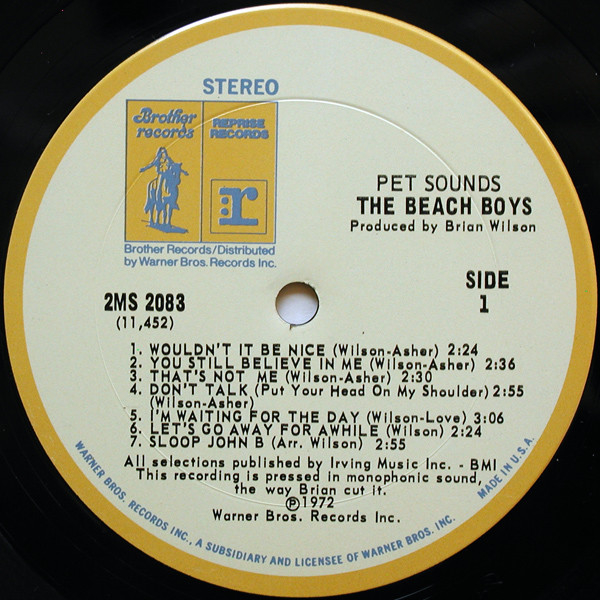
By 1972, The Beach Boys had left Capitol and were recording for Warner Bros.’ Reprise subsidiary (the band’s music was marketed under their own boutique brand name, Brother Records). The Beach Boys surprised many fans back in the day when, in May 1972, a new album called Carl and The Passions: “So Tough” was issued as a 2LP set. The second disc in that release, however, was not a new record but none other than a new remaster of Pet Sounds!
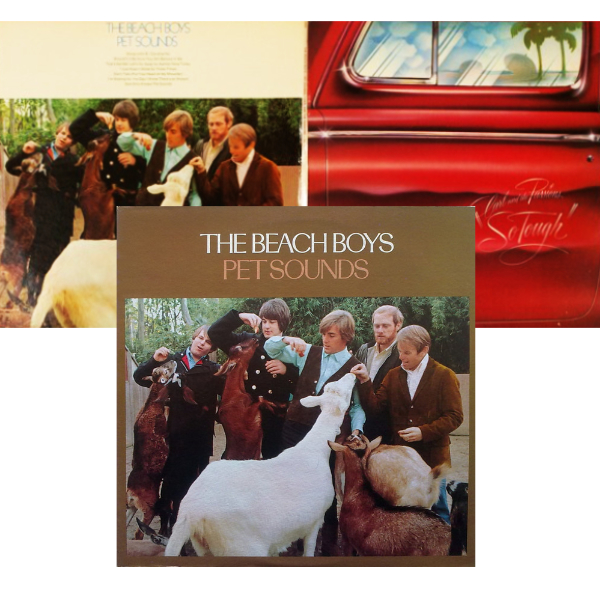
There have been many speculative reasons why this happened (and it’s a discussion beyond the scope of this review), but eventually, this new version of Pet Sounds was issued on its own as a standalone LP for a short period — and it’s now a sought-after collector’s item! — featuring earth-toned browns instead of the vibrant green of the original LP.
Over the years, deep fans have come to recognize that these 1972 pressings of Pet Sounds sounded markedly better than the 1966 editions. There could be many reasons for this conclusions, not the least of it being a different source tape used — possibly a so-called flat master — that was likely not as heavily compressed as the 1966 version.

Consider that, due to the demands of higher-frequency stereo FM radio that was becoming popular in the early 1970s, there was probably a desire to present Pet Sounds in a more high-fidelity manner in 1972 than what was reflected with the 1966 version, which was likely mastered at that time with bandwidth-constrained AM radio play in mind. Accordingly, early-1970s consumers were stepping up their home listening systems with audiophile-worthy componentry — higher-powered stereo amplifiers, tuners, combo receivers, and light-tracking semi-automatic turntables among them.
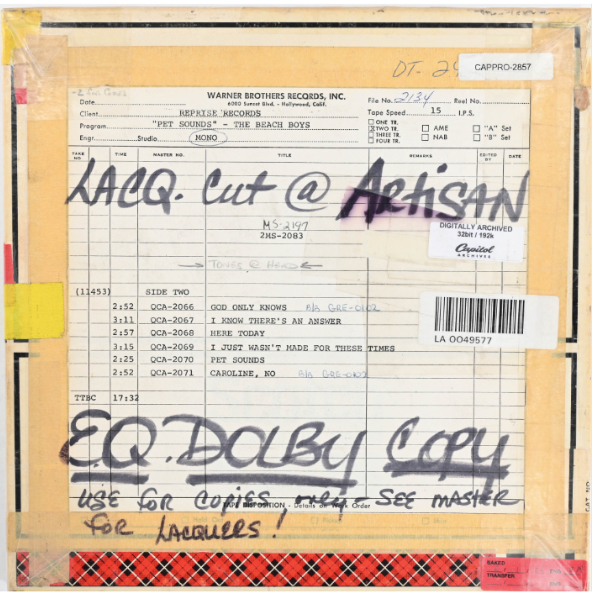
Fast-forwarding to the present, and, amazingly enough, the alternate, cleaner, and higher-fidelity-sounding master tape used for the 1972 release seemed to have simply been lost over the years — until now. In the liner notes on the Pet Sounds DSS version’s inner gatefold, reissue producer Tom “grover” Biery offers the following insights: “When comparing these tapes to the original 1972 pressing, not only did the sound match perfectly — the tapes sounded magnificent — but the exact running time for each album side corresponded precisely with the tape. The tape boxes also carry the original catalog numbers of those reissues (MS-2197 and 2MS-2083), and a file number, 2134, which matches the internal number used for all circa 1972 pressings. We were confident we had the best possible source for the monophonic One Step reissue of Pet Sounds.”
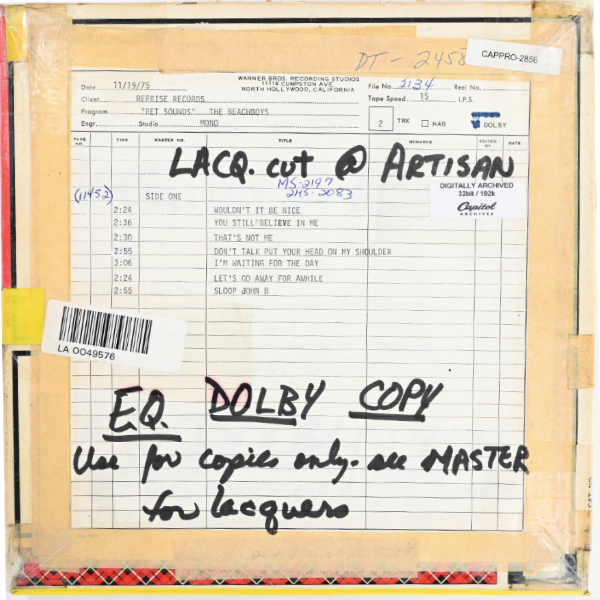
Digging down further into underlying DNA that went into the creation of this excellent new pressing, from official press materials we learn: “Interscope-Capitol’s Definitive Sound Series (DSS) edition presents Pet Sounds in its original mono configuration using the state-of-the-art One Step process, which eliminates multiple steps in the plating process and delivers the recording’s intricate arrangements and vocal harmonies with remarkable clarity. Pressed at RTI on Neotech VR900 D2 180-gram vinyl, the AAA [All Analog Mastering] was cut by Chris Bellman at Bernie Grundman Mastering from rarely used circa-1972 original analog tapes. Limited to 6,000 individually numbered copies, the release draws from the early-1970s Brother Records pressing, long noted for its sound quality. Each copy includes a certificate of authenticity documenting the mastering, plating, and pressing process.”
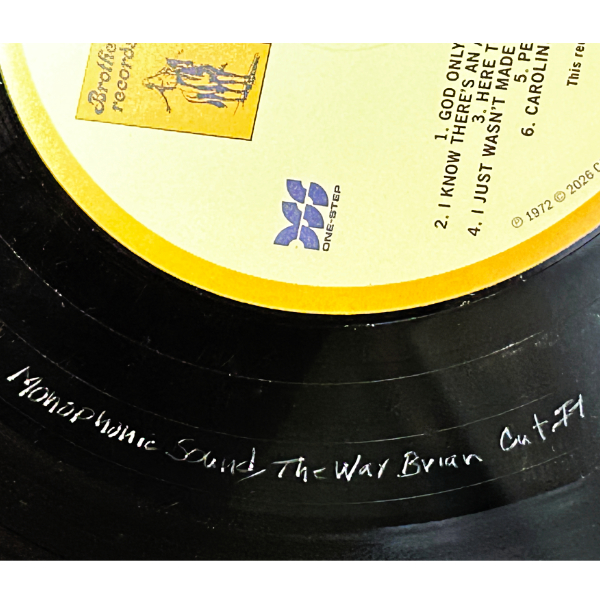
If you look carefully at the deadwax for this new DSS edition of Pet Sounds, you can’t help but notice extended etchings from mastering engineer Chris Bellman citing the phrase above, which echoes the closing of producer Tom Biery’s aforementioned liner notes. For the source of that inspiration, if you look closer still at the original 1972 label (which has been recreated on the new reissues), right there at the bottom it says the italics are ours, for emphasis: “This recording is pressed in monophonic sound, the way Brian cut it.” (“Brian” being Brian Wilson, of course!)
When I first put the DSS pressing on my turntable, for a moment I paused in trepidation, thinking: What if I didn’t like what I heard on it, given all the production buzz? (I respect this project too much to call it “hype.”) Fortunately, my fears melted away, as the album began to unfold before my ears — and all the nuances emerged.
The opening song, “Wouldn’t It Be Nice” (Side 1, Track 1), sounds really good, but the impact becomes more evident on the next tune, “You Still Believe in Me” (Side 1, Track 2), which comes alive with bells and studio presence that feels incredibly vibrant. The harmonies on “That’s Not Me” (Side 1, Track 3) appear more forward in the soundstage. The percussion sounds super-natural and unrestrained, while the guitar signature toward the end at the breakdown sounds extra haunting. In effect, I was hearing a much stronger sense of studio space here.
This is a good example of the sort of three-dimensionality that is possible to experience from monaural sound. I have heard this phenomenon before, and it’s a wonder. Quick sidenote: when I first got into using my Denon DL-102 monaural cartridge (for playing older wider-grooved records from the 1950s), I called up my late friend and legendary mastering engineer Gary Hobish (RIP) as to whether I was imagining this 3D sensibility while playing vintage 1950s Buddy Holly 45s. I felt I could almost see the depth of the studio where the band was recording and where the instruments were positioned in it. Gary confirmed I was not imagining things, and that those mixes reside in the grooves of those records.
So, anyway, while the DSS Pet Sounds is very much a mono recording, if you listen closely, there is some quite remarkable depth of field perceivable, resulting in a more natural presentation of the music. Vocals pop out more dramatically on “I’m Waiting for the Day” (Side 1, Track 5), as do the explosive hits of snare drum and tympani. There is also brief moment of either a wrinkled tape or dropout apparent, but it’s so brief that it is not a big deal. And, frankly, that is one of the challenges of an all-analog mastering process, as there is no opportunity to digitally repair anomalies like that. Little moments like it are inevitable, especially for a 60-year-old magnetic tape. Personally, I find it kind of cool, as it reminds you that you are listening to an original master tape.
A shudder rushed down my spine listening to “Let’s Go Away for A While” (Side 1, Track 6), as that incredible slap-echo on a (likely) woodblock floated in front of me while the strings, saxes, and horns warmed up my room like hot sun pouring down on a beautiful isolated sandy island beach.
This sensation continues on one of the greatest songs ever written, “God Only Knows” (Side 2, Track 1), as Carl Wilson’s lead vocals reached out through the speakers more directly into my heart and soul as if I was hearing it for the first time. The ambient (I think, flute) counterpoints are super-haunting in the distance, while the orchestral string section feels richer and rounder. The bass is more pronounced here. “I Know There’s an Answer” (Side 2, Track 2) is vibrant and alive, as the banjo and bass harmonica (or is that baritone sax?) solo kicks in.
I also noticed more session sounds popping out in the mix on this DSS edition. For example on “Here Today” (Side 2, Track 3) you can hear a little cough at one point, and moments where (I assume) Brian Wilson is talking back to the musicians in earlier layers of the overdubbing process. (Listen closely for it going into the bridge section especially.) This super-cool detail I never really noticed on my original 1966 mono pressing, but I went back to it to double-check — and indeed it is there; just not as audible.
Having dead-quiet vinyl is especially important on a recording like this, and I can’t understate the role the lovely RTI pressing plays in bringing this music to life. That completely silent moment before my favorite Pet Sounds song, “I Just Wasn’t Made for These Times” (Side 2, Track 4), is incredibly dramatic, simply by its transparency. This makes the song introduction all the more impactful. Again, details like tympani rolls and coconut/woodblock percussion appear much more dynamically.
Finally, the title track, the instrumental “Pet Sounds” (Side 2, Track 5), grooves its bossa nova swagger madly, so you may even want to get up dance around the room.
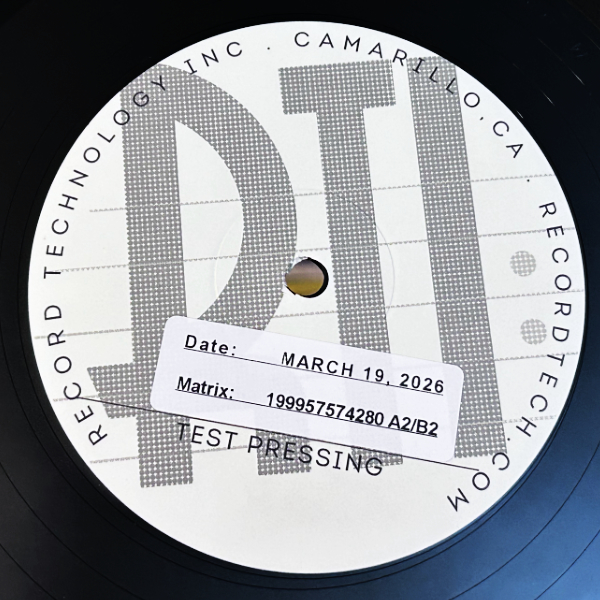
Initially, I thought it would be silly to compare the DSS Pet Sounds to the 1966 vinyl, but I’m glad I did, as it helped me appreciate just how much the engineers reined in the dynamics back in the day. In 1966, many teenagers were listening to records on automatic record changers (i.e., portables, or those living-room console furniture systems). I also played the 1972 Brother Records edition that is better than the ’66, but nowhere near as detailed as the DSS edition. Finally, I played the advance test pressing of the DSS edition that I had been sent an early copy of, and it sounds very similar.
Some of you may be wondering how all these different pressings of Pet Sounds stack up with one another. I would consider it kind of a “good-better-best” scenario. The quite good-sounding original 1966 mono Capitol pressing will always be the defining document of time and place, a marker of what the album sounded like upon its release. The new 2LP Vinylphyle edition is a much better representation of what that original master tape sounded like with the original 1966 mastering, but appearing less compressed — and, of course, enhanced by the quieter RTI vinyl pressing.
The DSS One Step is, to date, the best version among these three options. It sounds remarkable, more open, alive, and detailed, yet still sounding like Pet Sounds should sound.
I have only the most minor of nits to pick with the DSS edition: I wish the producers would pack the LPs outside of the album cover, yet still within the hardshell case. Given that most people will be buying this edition via mail-order, it can get bounced around in shipping, as mine did — and thus, my cover has a tear in the upper seam. It’s not a big deal or a dealbreaker, but when one is spending upwards of $100 on a single, limited-edition LP, consumers will want them arriving in perfect condition.

As far as ratings go, I’m happy to again send the music on Pet Sounds up to 11. Whatever version of this album you listen to, it is one of the greatest recordings ever made. I am also happy to give this DSS edition a solid 10 for Sound, because it sounds great. AP editor Mike Mettler, who again agrees with the 11 rating for the Music, tells me his Sound rating for the DSS edition is a 11; fair enough. Me, I left some wiggle room with my 10 rating for it to possibly go up that much further in the future — I mean, can you just imagine if there ever was a 45rpm UHQR 2LP edition made from the 1972 tape source?
All that being said, the DSS One Step version of The Beach Boys’ Pet Sounds is, right now, the benchmark for all future pressings to be judged against. Order yours soon, before they sell out!
Author bio: Mark Smotroff is an avid vinyl collector who has also worked in marketing communications for decades. He has reviewed music for eCoustics, among others, and you can see more of his impressive C.V. at LinkedIn.


THE BEACH BOYS
PET SOUNDS
1LP (Capitol/UMe)
Original Pet Sounds monaural recordings produced by Brian Wilson
Original Pet Sounds stereo co-produced by Brian Wilson and Mark Linett
Original Pet Sounds session mastering by Joe Gastwirt
VINYLPHYLE EDITION
MUSIC: 11
SOUND: 9
Vinylphyle edition producer: Frank Collura
Vinylphyle edition mastering by Joe-Nino Hernes at Sterling Sound, Nashville
Vinylphyle vinyl pressing at Recording Technology, Inc. (RTI), Camarillo, California
DSS EDITION
MUSIC: 11
SOUND: 10.5
DSS One-Step edition producer: Tom “grover” Biery for Capitol Records
DSS One-Step process by Dorin Sauerbier at Recording Technology, Inc. (RTI),
Camarillo, California
DSS mastering by Chris Bellman at Bernie Grundman Mastering, Hollywood
DSS pressing at Recording Technology, Inc. (RTI), Camarillo, California
Side 1
1. Wouldn’t It Be Nice
2. You Still Believe In Me
3. That’s Not Me
4. Don’t Talk (Put Your Head On My Shoulder)
5. I’m Waiting For The Day
6. Let’s Go Away For Awhile
7. Sloop John B
Side 2
1. God Only Knows
2. I Know There’s An Answer
3. Here Today
4. I Just Wasn’t Made For These Times
5. Pet Sounds
6. Caroline, No
*Note: The running order is the same for all editions reviewed here

















 |
Equipment Reviews | |
The Gruvy Awards | |
Blogs Analog Tips | Columns Music | |
Show Reports | |
News Resources |
 © 2026 AnalogPlanet
AVTech Media Americas Inc.
All rights reserved