


Sixty Years to the Day, the Grateful Dead Celebrate Their Historic July 3, 1966 Fillmore Auditorium, San Francisco, CA Performance With an Energetic 3LP Set
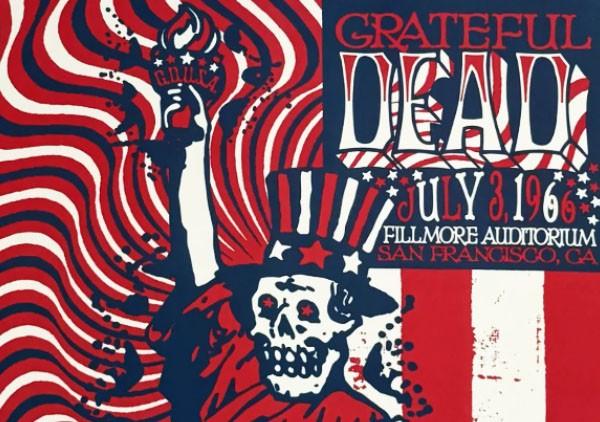
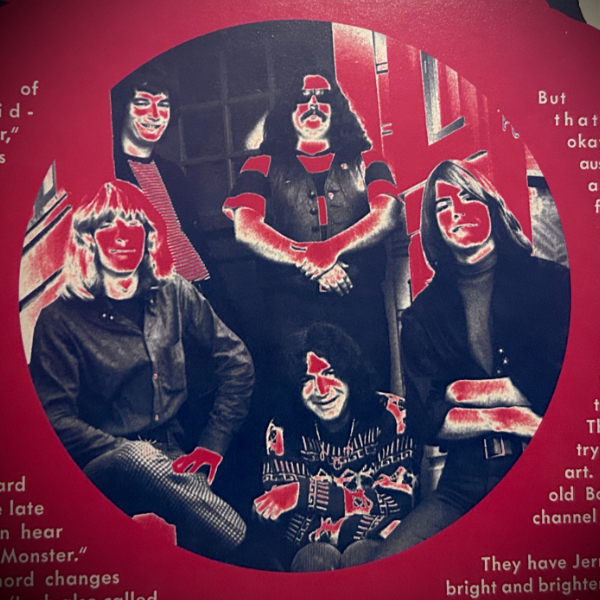
Looking for some musical fun this holiday weekend? One of the coolest things you can do is time travel back 60 years to the day and head on over to San Francisco, California, on July 3, 1966, in order to hear a then-unsigned scruffy primal dance band called the Grateful Dead in concert at the Fillmore Auditorium. At that exact moment in time, the Dead were, in fact, getting an early push from legendary promoter Bill Graham at his Independence Ball.
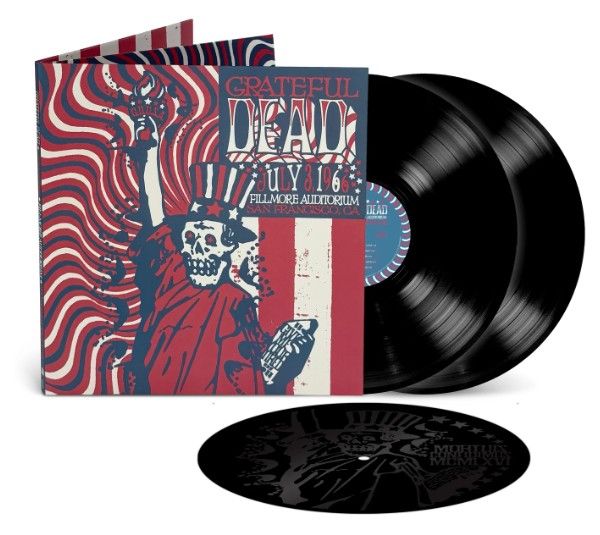
Fast-forward 60 years to the day now here on July 3, 2026 — for today, Rhino is releasing a five-sided, limited-edition 3LP set that celebrates a joyous live recording of that show, which is called (of course) July 3, 1966 Fillmore Auditorium, San Francisco, CA. As for me, I’ve been dancing on my seat, and am quite eager to tell you all about this fab musical time capsule.
First, I should note that the music on this 3LP set was previously only available as the opening gambit on the Grateful Dead’s massive 50th anniversary 80CD Rhino box set, October 2015’s 30 Trips Around the Sun. Yes, you read that right — that’s an 80CD collection that happens to contain 30 complete Dead concerts from 1966 to 1995, comprising a full 73 hours of Grateful Dead music that was all sonically restored by Plangent Processes. The first two discs in that box set commence with the July 3, 1966, show that’s now available in full on vinyl for the first time.
From online sources that include the Dead’s official site, we learn that the music on the July 3, 1966 Fillmore Auditorium, San Francisco, CA 3LP set was indeed recorded by Owsley “Bear” Stanley, and ultimately produced by Grateful Dead Legacy Manager and Archivist Dave Lemieux. This new five-sided, 3LP vinyl release was mastered by Jeffrey Norman at Mockingbird Mastering. Speed correction and tape restoration was accomplished with Jamie Howarth’s acclaimed, aforementioned Plangent Processes technology services (which I have discussed the benefits of elsewhere here on AP at great length).
Each of the 3LPs in the July 3, 1966 Fillmore Auditorium, San Francisco, CA set comes housed in an audiophile-grade, plastic-lined, black-paper inner sleeve. This limited-edition collection, which is capped at 6,600 copies, sports a quite reasonable SRP of $74.98, and you can order it directly from the band’s official Dead.net site store here.
For a show both performed and recorded in 1966, the sound is exemplary for what is basically, at its heart, an early soundboard recording. On the Dead’s site, Lemieux expands on the significance of this release by explaining: “One of the earliest live recordings by the Grateful Dead, July 3, 1966 at the Fillmore Auditorium shows a band with a bright, long, exciting future ahead. A year into their performing career, Jerry [Garcia], Bobby [Weir], Phil [Lesh], Billy [Kreutzmann], and Pigpen [Ron McKernan] performed live nearly a year before their first record came out. [. . .] This live recording, produced by Owsley ‘Bear’ Stanley, is some of the peppiest, most inspired live Grateful Dead put to tape.” (Both AP editor Mike Mettler and I agree with that latter statement, most especially! More on that in a bit.)
The vinyl pressing of July 3, 1966 Fillmore Auditorium, San Francisco, CA is exemplary, something that we’ve come to expect from the Rhino team. That said, figuring out where this album was pressed took a bit of sleuthing, as there is no obvious information listed on the album cover, liner notes, or official press materials.
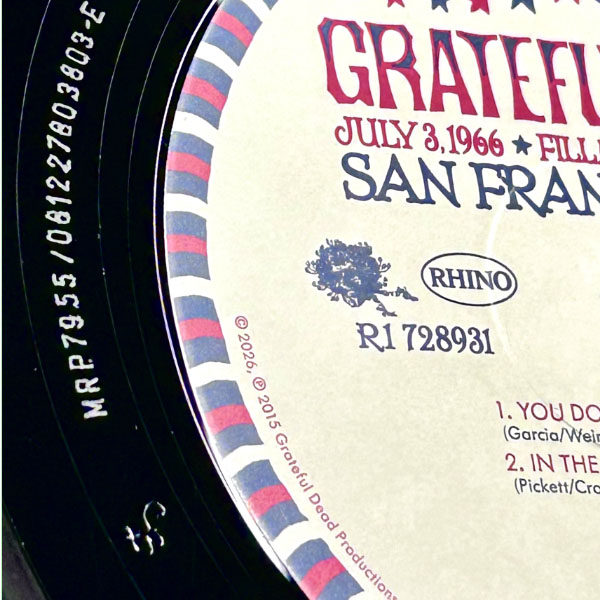
However, in looking at the runout groove’s deadwax, we see the telltale, etched-stacked CB initials that are the signature of Chris Bellman of Bernie Grundman Mastering in Hollywood. (See the evidence for yourself above.) And, at the start of the serial numbers that are also stamped there, we noticed the abbreviation “MRP,” which likely points us to one of the fast-growing newer vinyl manufacturers in America, Memphis Record Pressing.
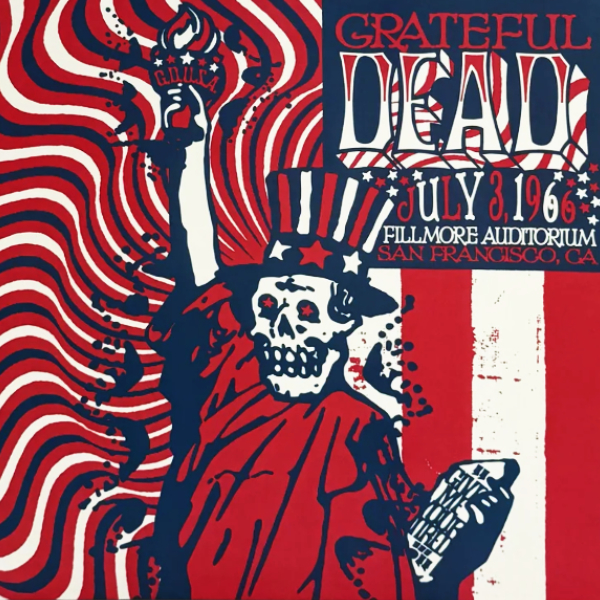
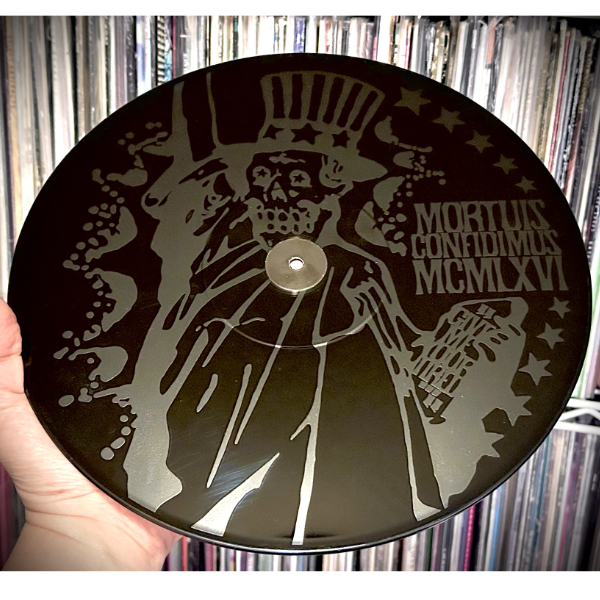
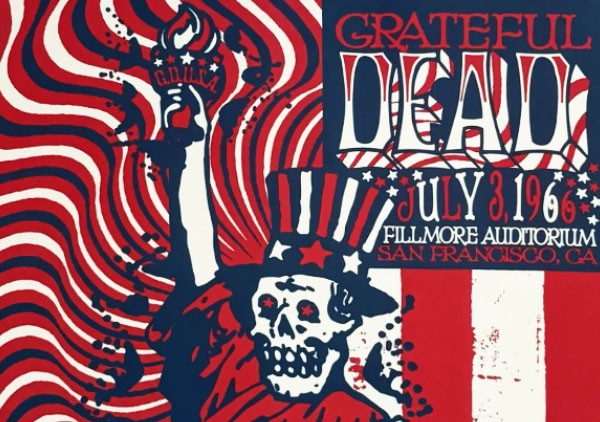
You’ll note that we said this 3LP release is “five-sided.” Well, I don’t always love having an empty side on an album, truth be told, but I must say that the etching on Side 6 of LP3 is pretty darn cool, featuring some of the groovy cover art that you see on the front cover.
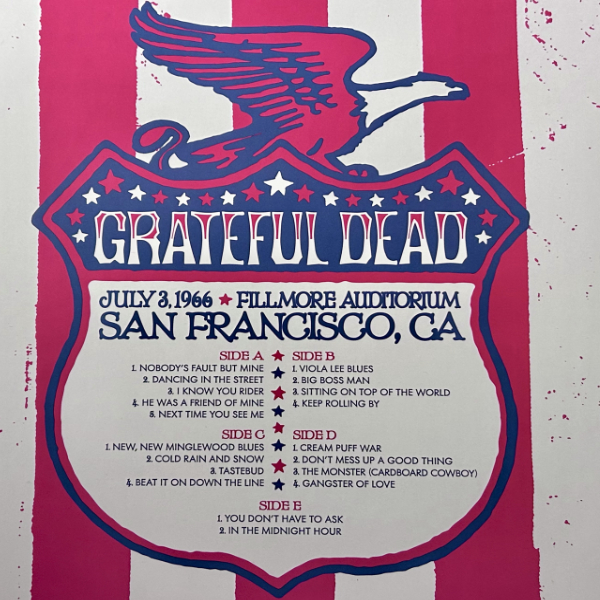
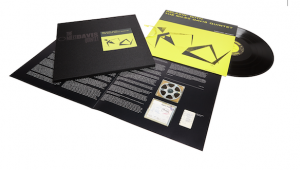
The triple-pocket heavy cardboard sleeve housing July 3, 1966 Fillmore Auditorium, San Francisco, CA is manufactured to a very high-quality standard that feels appropriate for a significant archival release of this nature. The appropriately fun red-white-and-blue patriotic printing is bold and powerful. I especially appreciate the “book”-styled approach to housing the three discs in this set. Unlike many three-disc gatefolds, this one features independent sleeves connected via a wide spine, which makes it much easier to take the discs in an out of each respective slot.
This design is much better than the wobbly — and more common — triple gatefold found on classic albums like the 1970 Woodstock soundtrack and even the Dead’s own Europe ’72. Besides the July 3, 1966 release, I have only seen its better, book-like approach on European releases such as UK editions of Yes’ classic triple 1973 3LP set, Yessongs.
And now, to the music! Indeed, this July 3, 1966, Independence Ball show finds the Dead breaking out future classics that would remain in their setlists more or less throughout their performing career. Included here are upbeat, early arrangements of traditional folk and blues covers such as “I Know You Rider” (LP1, Side A, Track 3) and “He Was a Friend of Mine” (LP1, Side A, Track 4), plus the first three tracks on LP1, Side B — “Viola Lee Blues,” “Big Boss Man,” and “Sitting on Top of the World” — as well as three of the tracks on LP2, Side C: “New, New Minglewood Blues” (Track 1), “Cold Rain and Snow” (Track 2), and “Beat It on Down the Line” (Track 4).
Honestly, it is hard to pinpoint specific favorite cuts at this time, as the whole show is super-energized and fun. Yes, I said fun, a factor many folks seem to forget while discussing the Grateful Dead’s music. When fans frequently gushed that “there is nothing like a Grateful Dead show,” they were also talking about having a whole lot of fun while hearing some amazing music!
July 3, 1966 includes many songs that were rarely performed, such as early originals “Tastebud” (LP2, Side C, Track 3) and the rollicking “You Don’t Have to Ask” (LP3, Side E, Track 1). “Cream Puff War” (LP2, Side D, Track 1), one of the Jerry Garcia originals to make it onto the band’s eponymously titled first album that was released in March 1967 on Warner Bros., makes a rare live appearance here, as does “The Monster (Cardboard Cowboy)” (LP2, Side D, Track 3), the Phil Lesh composition known to the band under several titles (including “No Left Turn Unstoned”).
Two groovy covers standout in this show, including that of Johnny Guitar Watson’s iconic 1957 single “Gangster of Love” (LP2, Side D, Track 4). The Dead also offer a fresh take on Fontella Bass’ then-current 1965 No. 5 R&B hit “Don’t Mess Up a Good Thing” (LP2, Side D, Track 4), which is played at a breakneck pace that almost feels like a pre-echo of the hyper vibe of the late-’70s SNL-icons-turned-real band, The Blues Brothers. These songs were sadly dropped from the Dead’s setlists within a month of this show. (Note that some of these tracks appeared on the 2005 Rhino CD compilation Rare Cuts & Oddities 1966, which later saw a limited 2LP reissue for Record Store Day 2023.)
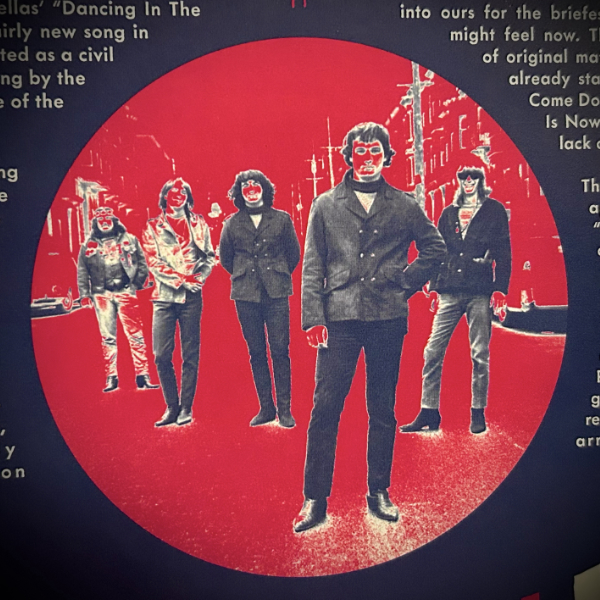
On July 3, 1966, you’ll also get to hear, on LP1, Side A, Track 2, a driving version of Martha and The Vandellas’ July 1964 mega hit “Dancing in the Street,” a song that the Dead continued to perform and evolve throughout their career, eventually landing on a funky jazz-infused disco arrangement of it for July 1977’s Terrapin Station (Arista), and the related tours of that time.
Going back to Lemieux’s earlier-noted comment about the “peppiness” of this show, I have to concur that indeed, 1966 Grateful Dead was a very different animal compared to what they became in their 1968–69 psychedelic-era peak, and their later jam-band-oriented incarnations. Whenever I play early Dead music for friends, they are always surprised how “poppy” the music sounds, almost like later punk and new wave music from the late-1970s. Incidentally, the Dead’s site describes this energy visually, saying that this recording “captures the group in the midst of a radical mutation, a charged R&B dance band already moving toward new musical terrain in the star-spangled ether of the Independence Ball.”
Indeed, the 1966 Grateful Dead were a super-tight, increasingly inventive rock and R&B quintet featuring not only Bob Weir and Jerry Garcia on guitars and vocals, but also original keyboardist and band co-founder Ron McKernan (a.k.a. “Pigpen”).
For those not familiar with this early stage of the Grateful Dead’s trajectory, it’s important to note just how important Pigpen was to the band at that time. With no disrespect to Garcia or Weir and in my opinion, in 1966, then 20-year-old Ron “Pigpen” McKernan had the strongest voice in the band, sounding more like a world-weary, road-seasoned blues icon than some middle-class teen emanating from the San Francisco Bay Area suburb of San Bruno (and later Palo Alto, where he first befriended Garcia). Some of this can be traced to McKernan’s father, who was a blues DJ and thus exposed his young son to a societally balanced lifestyle and appreciation for authentic blues, R&B, and soul music. Clearly, Pigpen took this music to heart, and he found his booming voice — and how to project his unique stage presence — early on. (Sadly, Pigpen passed away at the relatively young age of 27 in March 1973.)
I sure would have loved to have been a fly on the wall at one of these early Grateful Dead shows to see them with Pigpen in the band — but at 5 years old, and on the wrong coast at that, I was not quite ready for that primetime moment! Thus, July 3, 1966 Fillmore Auditorium, San Francisco, CA is about as close as I (and we!) will likely get to having that early Grateful Dead experience.
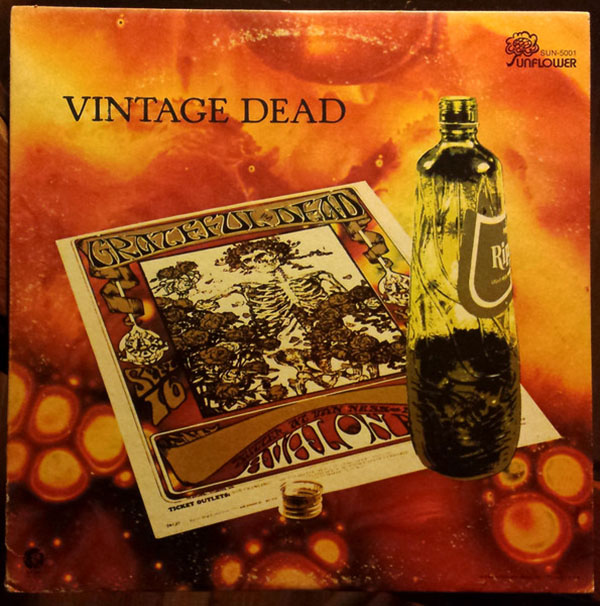
There are no doubt numerous unofficial bootlegs and tapes circulating of early Grateful Dead performances, but not many of them have been officially released, especially on vinyl. Vintage Dead, a 1970 LP on the MGM subsidiary Sunflower label, featured technically unauthorized (but apparently legitimate/legal!) recordings of the band captured at The Avalon Ballroom that were reportedly recorded on September 16, 1966 — as was the music on Historic Dead, its subsequent 1971 followup LP, also on Sunflower.
Birth of the Dead, initially a March 2003 Rhino 2CD set whose live 1966 offerings later appeared in a 2014 2LP edition via Friday Music, includes many Fillmore Auditorium recordings from later in July 1966 (as well as early demos). Apart from those releases, there really hasn’t been much of this early Grateful Dead period documented on vinyl — and certainly not (m)any presenting a complete show — so this new album is certainly very much a holy grail for many a Deadhead like myself (and Mettler too, for that matter).
Out of curiosity, I played July 3, 1966 Fillmore Auditorium, San Francisco, CA back-to-back with my clean copy of Vintage Dead, and I very much prefer the new edition’s sound quality. The tempos are certainly more steady — likely due to the Plangent Processes technology — but also the stereo presentation is much more distinct and clear, and freer of distortion. Check out the solo on the above-noted “Cold Rain and Snow” (LP2, Side C, Track 2) for an idea of what I’m talking about here. The overall balance is much better and it lets you fully appreciate all the players’ contributions, from Kreutzmann’s relentless hard-hitting drumming to Lesh’s already innovative emerging lead-style bass playing. In contrast, my old Sunflower Vintage Dead LP sounds muddy, and much less precise.
There are many fine performances to be found on July 3, 1966 — perhaps too many to call out apart from some of the details I’ve mentioned above. Instead, this is a good place to underscore why this five-sided LP set works so well as a whole. Beyond its beautiful representation of an under-documented era of the band, this music works well on vinyl in a way that later incarnations/eras of the band often posed some challenges to cut to wax.
In 1966, the Dead were just starting to jam out more and extend their performances in the manner of jazz players. But they hadn’t quite yet reached the majesty of side-long epics akin to the “suites” that comprise John Coltrane’s epic January 1965 Impulse! LP, A Love Supreme. The longest track on July 3, 1966 is an almost 15-minute version of Wilson Pickett’s “In the Midnight Hour” that ends the set (LP3, Side E, Track 2), but most of the tunes here are well under 7 minutes long, and many are even much shorter.
In contrast, and in many a future live Dead set, the band often played extended song sequences that segued from one into the next, which, for vinyl presentation, could require resequencing and/or fadeouts at the end of any given album side. If you have a 45-minute version of “Dark Star” — like I have of their Europe ’72 performance of the song on the 2012 Rhino RSD LP of the same name — then you know how that singular tune just can’t fit on one LP side, so the performance unity is broken at the album flip. Live 1966-era Grateful Dead, in contrast, is more perfectly suited to work within the space limitations of LP sides.
I know many people who have been collecting the Grateful Dead’s archival releases on vinyl, and I think that it’s totally cool to do so if you have the budget and the space for them. For me, it can sometimes be a bit of a challenge, so I tend to cherry-pick choice LP releases like this one, which scratches my collectors itch (if you will), yet respects the challenges I have with storage space! For me, July 3, 1966 Fillmore Auditorium, San Francisco, CA is essential to hear — and to have — on vinyl.
As far as our Ratings go, I can easily give these July 3, 1966 recordings a 10 for the Music. As far as the Sound, this release is a very good offering — but it is also early stereo, so as good as it does sound in regard to all the restoration work done for it, it isn’t quite up to the audiophile level later soundboard-derived releases offer. Given that context, I would give the July 3, 1966 collection an 8.5 for Sound, a rating chosen in relation to other studio and later-live recordings in the vast and ever-expanding Dead catalog.
If I were to rank this particular live recording solely against other Grateful Dead recordings from this early period, July 3, 1966 Fillmore Auditorium, San Francisco, CA would get a 9 or 10. (AP editor Mike Mettler tells me he rates the Music at a 9 and gives the Sound an 8, but agrees that this release’s overall historical importance in the early-Dead catalog makes it unquestioned essential listening.)
Finally, do note that the Grateful Dead’s July 3, 1966 Fillmore Auditorium, San Francisco, CA 3LP set is a limited edition of a recording-year-specific 6,600 copies — and that, historically speaking, Grateful Dead vinyl can tend to sell out quickly, so to borrow a phrase from Janis Joplin, “Get it while you can!”
And, with that — all of us here at AP central wish one and all a very safe and happy July 4th holiday weekend ahead! Happy sparkling, and happy spinning!
Author bio: Mark Smotroff is an avid vinyl collector who has also worked in marketing communications for decades. He has reviewed music for eCoustics, among others, and you can see more of his impressive C.V. at LinkedIn.
GRATEFUL DEAD
JULY 3, 1966 FILLMORE AUDITORIUM, SAN FRANCISCO, CA
3LP (Dead.net/Rhino)
MUSIC: 10
SOUND: 8.5
Original recordings by Owsley “Bear” Stanley
Produced by Grateful Dead Legacy Manager and Archivist Dave Lemieux.
Recordings mastered by Jeffrey Norman at Mockingbird Mastering.
Speed correction and tape restoration by Plangent Processes
Pressing lacquers cut by Chris Bellman, Bernie Grundman Mastering, Hollywood
Vinyl manufactured at (likely) Memphis Record Pressing
LP1, Side A
1. Nobody’s Fault But Mine
2. Dancing In The Streets
3. I Know You Rider
4. He Was A Friend Of Mine
5. Next Time You See Me
LP1, Side B
1. Viola Lee Blues
2. Big Boss Man
3. Sitting On Top Of The World
4. Keep Rolling By
LP2, Side C
1. New, New Minglewood Blues
2. Cold Rain And Snow
3. Tastebud
4. Beat It On Down The Line
LP2, Side D
1. Cream Puff War
2. Don’t Mess Up A Good Thing
3. The Monster (Cardboard Cowboy)
4. Gangster Of Love
LP3, Side E
1. You Don’t Have To Ask
2. In The Midnight Hour
LP3, Side F
**no music – etching only









 |
Equipment Reviews | |
The Gruvy Awards | |
Blogs Analog Tips | Columns Music | |
Show Reports | |
News Resources |
 © 2026 AnalogPlanet
AVTech Media Americas Inc.
All rights reserved