


David Bowie’s Benchmark 1976 Album Station to Station Connects Anew With Stellar 50th Anniversary Half-Speed-Remastered 180g 1LP Reissue
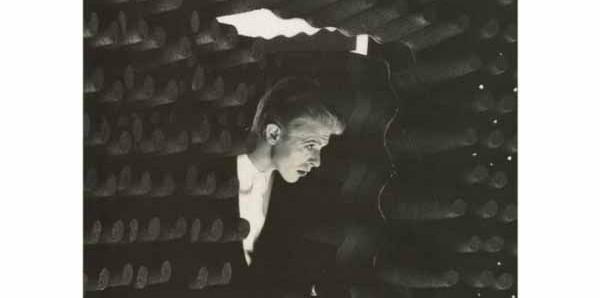
Fifty years ago, upon the release of his 10th studio album on RCA, January 1976’s Station to Station, David Bowie painted a firm portrait of his future, presenting his Thin White Duke persona that was first hinted at on March 1975’s line-in-the-sand smash hit LP Young Americans. Now celebrating its so-called Golden Jubilee, Station to Station was re-released 50 years to the day on January 23, 2026, via Parlophone in a new half-speed-mastered, audiophile-worthy limited-edition 180g LP, alongside a fun, companion picture disc option.
Station to Station was recorded in Los Angeles at Cherokee Studios, a location that may not be as much of a household name like The Record Plant or Hit Factory is today. However, Cherokee’s client list reads like a who’s-who of ’70s and ’80s hitmakers including Michael Jackson and Tom Petty & The Heartbreakers. Interestingly, legendary Beatles producer Sir George Martin reportedly considered Cherokee to be the best studio in America at that time.

As with the half-speed-mastered edition of the aforementioned Young Americans (Footnote 1), we find that, to quote the official press materials, “This new pressing of Station to Station was cut on a customized late Neumann VMS80 lathe with fully recapped electronics from 192kHz restored masters of the original Record Plant master tapes, with no additional processing on transfer. The half-speed [remaster] was cut by John Webber at AIR Studios.”
The new, limited-edition pressing of Station to Station has been manufactured at Optimal Media in Germany on 180g black vinyl, and it comes housed in a plastic-lined audiophile-grade inner sleeve (Footnote 2). It sports a very reasonable SRP of $27.99, and it’s available via Music Direct here, and/or via the MD link graphic that appears ahead of the tracklisting section near the end of this review.

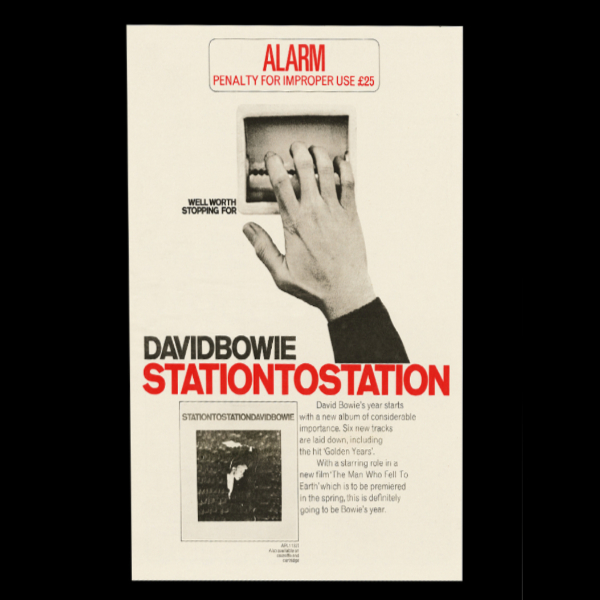
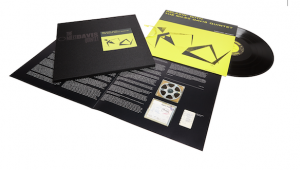
The picture disc version of Station to Station (shown above) arrives in a clear plastic inner sleeve to reveal the album art through a custom die-cut cardboard cover. This version includes a nifty bonus poster (an original ad for the album), and it carries an SRP of $31.99. It too can be purchased right here, at Music Direct.
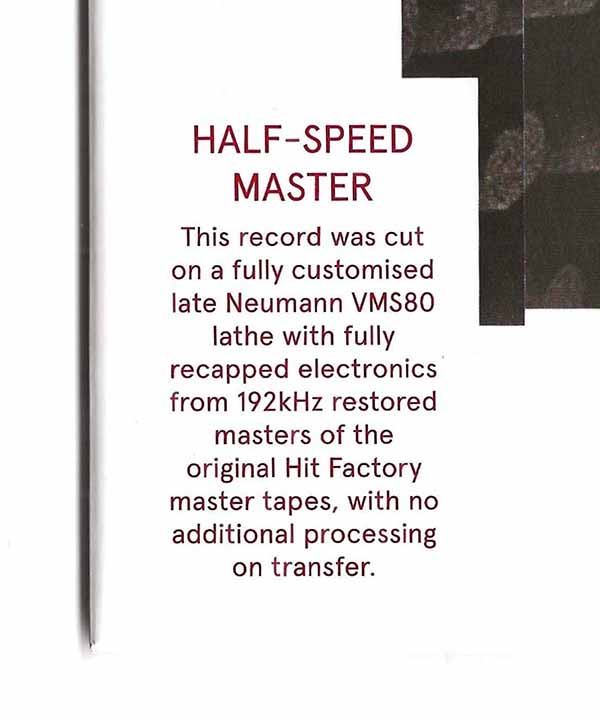
Curiously — and somewhat confusingly — the hype “sticker” on the cover of the new reissue (actually, it’s a hype OBI!) indicates usage of “original Hit Factory master tapes,” something that was not noted in the above-noted press materials, so we reached out to Bowie’s PR folks and learned exclusively that the album was mixed at the Hit Factory.

As with other releases in Parlophone’s Bowie reissue series, it is worth noting that the Station to Station LP features the period-relevant orange “Bowie” record label design that mimics the original European RCA label design of the era. This is an interesting choice for U.S. fans/collectors to take note of since, at that time, the company was experimenting with changing up its image, switching to a very bland (and frankly, ugly) putty beige color from the neon orange that had been around since the late 1960s. (Later on, the labels went back to being all black, akin to RCA’s earliest label designs.)
Station to Station was co-produced by Bowie and Harry Maslin, who was known for his mid-’70s hit-making work with Barry Manilow (“Mandy,” a No. 1 single), The Spinners (“Then Came You,” also a No. 1), and Carly Simon (“Mockingbird,” No. 5), as well as Bowie’s own No. 1 1975 hit from Young Americans, “Fame.” (Footnote 3) If Young Americans was Bowie’s toe-in-the-water offering for creating soul-infused, early disco-flavored pop hits, then Station to Station not only confirmed the more funkified direction for his sound, but also the stark, more mechanistic influence of the krautrock scene emerging out of Germany from bands like NEU! and Kraftwerk.
Bowie’s Ziggy Stardust image and persona had been fully put to bed by this point in time, and you can clearly feel his new template emerging here, something that would come into full flower on his subsequent RCA releases such as January 1977’s Low, October 1977’s “Heroes,” and May 1979’s Lodger (a.k.a. “The Berlin Trilogy”), culminating with arguably Bowie’s grandest musical statement since those Ziggy days, September 1980’s Scary Monsters (and Super Creeps).
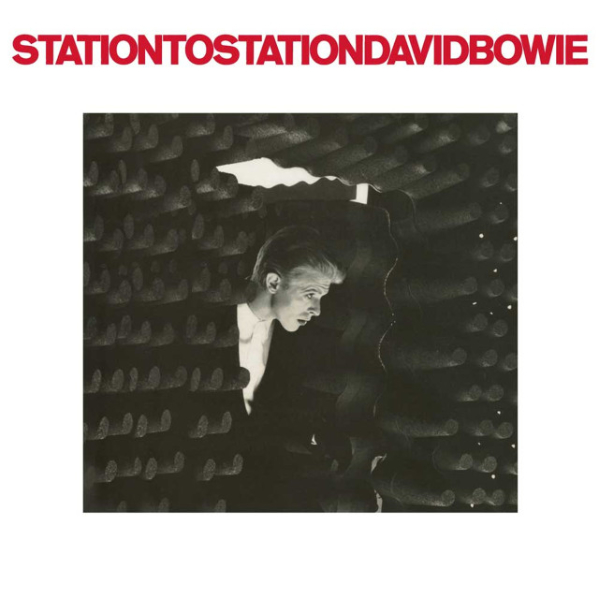
Overall, I am super-pleased with the sound of the new half-speed-mastered edition of Station to Station. Prepping for this review, I enjoyed a reference listen to a quite nice of-era French pressing of the album that I own. The new HSM edition, however, pretty much trounces that version on many levels.
As we’ve come to expect from Optimal, the new pressing quality is exemplary. The thick, 180g black vinyl feels especially sturdy, almost 200g-ish in nature. My copy was well-centered and completely quiet, save for the very end of the runout groove where there appeared to be some surface noise (albeit not a deal breaker for me by any stretch of the imagination).
Going back to the earlier statement from the press release that the new lacquers were cut from a hi-res transfer off the original tapes with “no additional processing on transfer,” one can easily hear how open and uncluttered the music sounds on this new HSM edition, which feels very uncompressed. I detected a wider soundstage with better definition to the instrumentation that is not only clearer, but the stereo separation is much more vivid. In contrast, my 1970s pressing sounds almost monaural in comparison!
So, by-golly-by-gosh, where should I start exploring some of the differences? From the beginning, of course! Since there are only six tracks on Station to Station, I took the time to offer up some song-by-song analysis.

From the opening train-chugging sound effects, the detailing on the “Station to Station” title track (Side 1, Track 1) is so much more distinct that it feels almost like a remix. I noticed many finer aspects to the guitars, the ratchet-like percussion crackling in the back of the mix, and the emerging train sounds that return during the chorus breakdown before the upbeat section kicks in. The piano parts also sound so much more distinct and present now.
“Golden Years” (Side 1, Track 2) sounds much more widescreen, so when Bowie sings those heavenly “annnnngelllll” moments — absolutely bathed in deep reverb — it feels like a voice coming down from on high. There are other sweet little echo-fied harmony parts in the pre-chorus sections that I never really noticed fully on earlier versions of the album. At the dramatic breaks, you can hear the guitarist (either Earl Slick or Carlos Alomar) rip his funky fingers down the fretboard along the strings before full-stop muting them. Plus, the whistling solo toward the end feels more realistic than ever.
“Word on a Wing” (Side 1, Track 3) offers more percussion presence, and those little choral keyboard sample bits at the end are more haunting than I’ve ever heard before. But really, the star on this tune is Bowie’s voice, which appears bigger and richer compared to earlier pressings I’ve heard. The apparent passion in his singing here makes me wonder what some reviewers were thinking back in the day, as I’ve read that some critics dissed Bowie for “disconnected-sounding” vocals. As I write this here in 2026, he sounds anything but detached!

Roy Bittan’s dramatic piano introduction to “TVC 15” (Side 2, Track 1) always sounded clear in the original mix, but for my tastes, it felt a bit too tack-piano rinky-dink on the past editions I’ve heard. On the new HSM version, Bittan’s piano appears more natural, woody, and resonant in all its funky, Dr. John-meets-Elton John/New Orleans-inspired glory, especially the many keyboard flourishes now appearing more prominently towards the end of the song. Those distant, heavily reverberated and distorted Slick/Alomar guitar textures way in the back of the mix during the verses feel more apparent as the song builds up, more clearly layering up a big bed of overdriven amplifier tones for Bowie’s own saxophone parts to float over.
I also noticed more distinctive, round, and less compressed amp tone apparent on the slinky guitar intro to “Stay” (Side 2, Track 2), as well as the ripping solo that leads into Bowie’s double-tracked vocals (which, again, sound more open and airy now on the HSM edition). “Stay” arguably takes the crown for the funkiest groove on the whole album — so much so that you can feel the band so fully engaged in Bowie’s vision for the sound he wanted to create. Those congas feel extra groovy too!
“Wild Is the Wind” (Side 2, Track 3) is a super-interesting album closer — a somber, almost acoustic moment that reminds me more than ever of a song from Andrew Lloyd Webber’s original October 1970 Jesus Christ Superstar 2LP concept album on Decca/MCA. Seriously! One musical phrase Bowie sings here always jumps out at me, as it seems to briefly mirror a similar signature rise from the epic Superstar Side 3 track, “Gethsemane (I Only Want to Say).” Bowie’s dramatic delivery on “Wind” feels cut from similar cloth.
This is one song on the album where rich, strummy acoustic steel-string guitar fills out much of the musical palette, buoyed by electric guitar atmospherics and absolutely perfect support from the band. Those tom-tom fills by Dennis Davis at the break are so clear, you can almost feel the flex of the drumheads as the sticks make the rounds across the kit. Again, I don’t know how anyone could have said Bowie’s vocals on Station to Station felt distant and detached, when he is, to my ear, sounding quite intense, veering into the territory of Deep Purple’s Ian Gillian (who, in fact, also sang many leads on the original 1970 Superstar LP).

As far as how the picture disc version of Station to Station sounds, well, it is perfectly okay, if you are not looking for an audiophile listening experience. The music here sounds notably more compressed like the previous, standard editions of the album, with less detailing apparent. And unfortunately, as can typically be expected from picture discs, there is quite a bit of surface noise apparent in the form of distinct “whooshing” sounds you can clearly detect at the start and finish of both album sides, and more or less throughout if you are listening closely.
That said, if you are a deep fan of Bowie’s and want to have fun spinning a picture disc without audiophile worries about sonic purity, and/or just have a copy of it in hand in order to fulfill your completist tendencies, this version certainly satiates those cravings — and the bonus poster (seen below) is no doubt a super neat treat for fans!
And now, to the ratings. Overall, Station to Station is an excellent album, garnering a solid 9 from me as far as the underlying Music goes. My appreciation for this album has only grown over the years, and this new half speed master has certainly offered new insights, bringing my Sound rating up to a very solid 9.5. I was especially happy to hear how well the album performs when pushing my amp. Even given the digital mastering stage, I detected no hard edges that would make the music hard to enjoy at louder volumes. In fact, the music rocks harder than ever. (Footnote 4)
Bottom line: If you love David Bowie’s Station to Station and want to hear it on vinyl in a new light, the new 50th anniversary half-speed-mastered edition is a sure bet to get.

Author bio: Mark Smotroff is an avid vinyl collector who has also worked in marketing communications for decades. He has reviewed music for eCoustics, among others, and you can see more of his impressive C.V. at LinkedIn.
Footnote 1: AP editor Mike Mettler adds: Mark reviewed the 2025 Parlophone HSM version of Young Americans here on AP on July 18, 2025. (If you scroll down to the Footnotes section in that review, you’ll find links to a myriad of other Bowie LP and box set reviews we’ve done in recent years.)
Footnote 2: Mettler again. When I opened up the outer plastic wrap on my copy of the HSM Station to Station, I ripped a seam all the way down the right side of the supplied plastic-lined inner sleeve, so I duly replaced it with a MoFi Original Master Sleeve. Lesson: Always have replacement audiophile inners on hand, just in case!
Footnote 3: In other chart-related news, Mark wanted us to know that Station to Station was a Top 5 hit on the pop charts upon its release on January 23, 1976, as it reached the No. 5 spot in the UK and No. 3 in the U.S., achieving Gold status (500,000 copies sold) within its first month of release. The album’s first single, “Golden Years,” reached No. 8 in the UK, and No. 10 in the States.
Footnote 4: Mettler once more. My original, well-loved 1976 RCA Station to Station LP (APL1-1327) isn’t really worth cuing up at this point, so having the new HSM 2026 edition is a godsend, with its deep black vinyl duly being well-centered, and offering nary a click or pop whatsoever during playback. I also have the September 2010 EMI 5CD/1DVD/3LP STS box set (BOWSTSD2010 5099964760124) with the AAA version that is indeed masterful in its own right (9.5/10), as is the 5.1 mix on the included DVD. As to my own ratings for the 2026 HSM version of STS, I’m going to give the Music a 9.5, and the Sound a 9.5 as well.
As Mark noted, Bowie was soon entering his most fertile “Berlin Trilogy” period, but Station to Station is as seamlessly excellent in its own way as what was to follow it. Given Parlophone’s Bowie-related re-release trajectory, I suspect we’ll be getting HSM reissues of those late-’70s Bowie LPs soon(ish) enough.
DAVID BOWIE
STATION TO STATION
180g 1LP (Parlophone)
MUSIC: 9
SOUND: 9.5
Original album arranged by David Bowie
Original album produced by David Bowie and Harry Maslin
Original album recorded, mixed and mastered by Harry Maslin
Original album recorded at Cherokee Studio in Los Angeles
Original album mixed at The Hit Factory in New York
New reissue half-speed mastered lacquers cut by John Webber at AIR Studios (London)
Reissue vinyl pressed at Optimal Media, Germany
Side 1
1. Station To Station
2. Golden Years
3. Word On A Wing
Side 2
1. TVC 15
2. Stay
3. Wild Is The Wind











































 |
Equipment Reviews | |
The Gruvy Awards | |
Blogs Analog Tips | Columns Music | |
Show Reports | |
News Resources |
 © 2026 AnalogPlanet
AVTech Media Americas Inc.
All rights reserved