


Reconsidering ’80s Visionaries Talk Talk Via Excellent Half-Speed-Mastered Reissues of 1988’s Spirit of Eden and 1984’s It’s My Life, Plus 2025’s Newly Revampled The Very Best of Talk Talk 2LP Set

Talk Talk is one of those groups that often fall through the cracks of both music history and mainstream consciousness — beloved by some, overlooked by many. Here in America, the group’s presence kind of came and went in the 1980s in a flash. Fortunately, they left behind a handful of recordings that have aged remarkably well. Pre-echoing the sounds of later, bigger artists — as well as a future music genre known as post-rock — the time is ripe for reconsidering Talk Talk.
Accordingly, an excellent new half-speed-mastered (HSM) edition of the band’s September 1988 LP for EMI, Spirit of Eden, was released worldwide on Parlophone on February 6, 2026. We have also been spinning Parlophone’s 40th anniversary HSM of Talk Talk’s February 1984 hit LP It’s My Life that was released in October 2024, so I’m also going to cover that one here as well. Additionally, AP editor Mike Mettler is going to cover the March 2025-released The Very Best of Talk Talk 2LP set in his extensive Footnotes section that follows my portion of the review.
Both of these releases share important production DNA. From official press materials we learn: “This new reissue is a 1LP cut at half-speed by Matt Colton at Metropolis and overseen by drummer Lee Harris and Mark Hollis’ son, Charlie.”
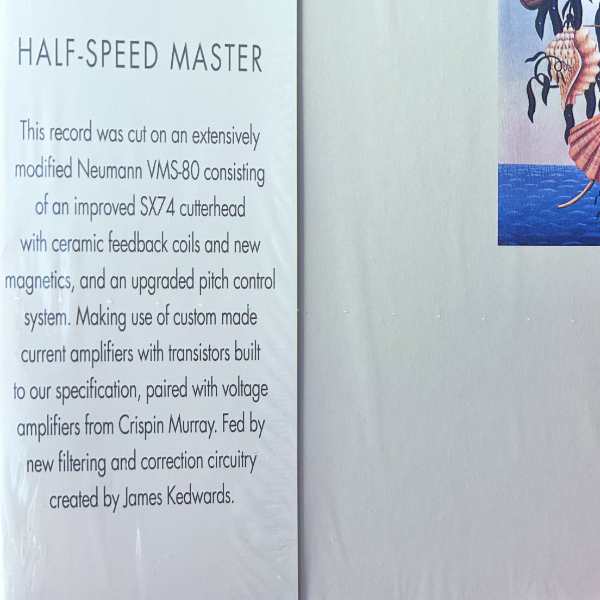
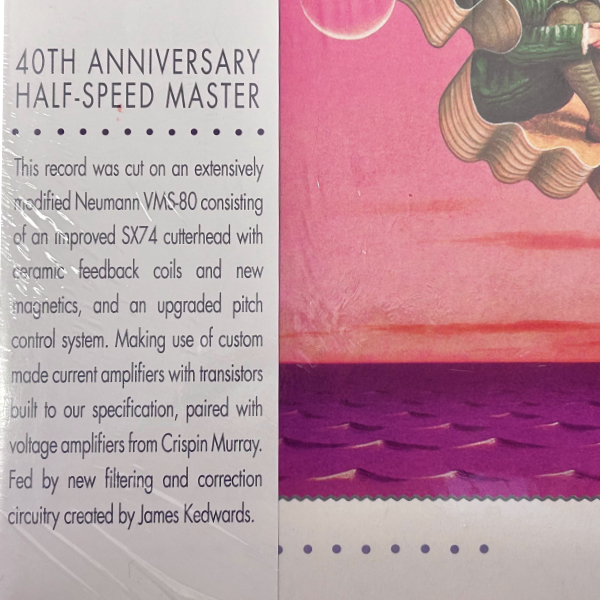
From the elegant OBI strips that accompany the Talk Talk HSM reissues, we learn addition information on the care and handling that went into the creation of these editions: “This record was cut on an extensively modified Neumann VMS 80 consisting of an improved SX74 cutter head with ceramic feedback coils and new magnetics, and an upgraded pitch control system. Making use of custom-made current amplifiers with transistors built to our specification, paired with voltage amplifiers from Crispin Murray. Fed by new filtering and correction circuitry created by James Kedwards.”
While we don’t know 100 percent for certain whether both albums were recorded natively in the digital realm (which was already happening in the mid-1980s), it could likely be some hybrid of analog and digital production. Spirit of Eden was reportedly digitally assembled from long extended jams. Either way, we do know that these new HSM vinyl pressings sound very, very good!
With the vinyl having been manufactured in Germany and being of high quality — deep dark black, dead-quiet, and perfectly centered — there is a very good likelihood these LPs were pressed at Optimal, one of the best manufacturing facilities in the world, as they have been ID’ed over on Discogs.
Happily, you can pick up these new HSM editions very affordably. In fact, both albums sport a quite reasonable respective SRP of $24.99 each, and you can obtain both of them at Music Direct. You can get Eden here and Life here, and/or via the successive pair of MD link graphics that appear later in this review.
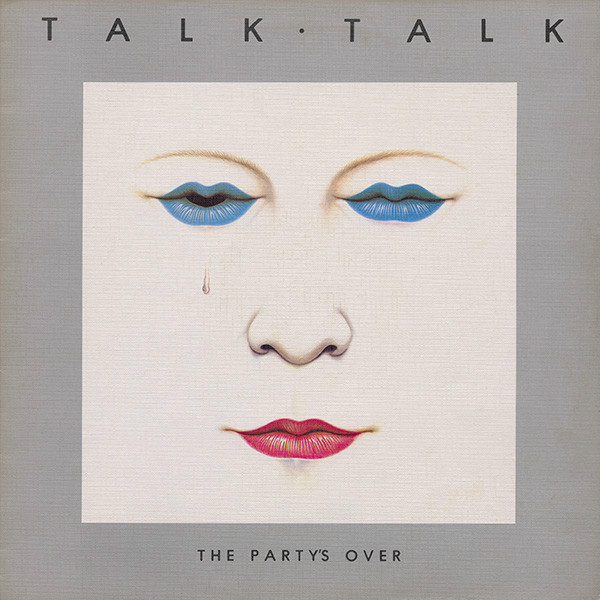
As I was preparing this review, I went down a bit of a research rabbit hole about Talk Talk, and I have to say that I’ve come away with a fresher, expanded perspective. My personal journey with Talk Talk began while I was still in college in the early ’80s as one of my more forward-looking, audiophile-oriented Deadhead friends played me their debut LP, July 1982’s The Party’s Over, on EMI. By chance, later that year, I got to see the group open up for Elvis Costello while supporting that record at New York’s Forest Hills Tennis Stadium on August 27, 1982.
Honestly, I was not immediately blown away by Talk Talk live, and in retrospect — and also, to their defense — I think they were unfairly overshadowed that evening. At that time, Elvis was scaling his second (or third, depending on your perspective) creative peak with his July 1982 masterwork on F-Beat/Columbia, Imperial Bedroom, and all the related buzz was super-high. Elvis delivered, beyond most everyone’s expectations, one of the finest performances of his career up to that point. As affirmed by glowing reviews the next day, it remains one of my favorite Elvis Costello shows ever (and I’ve seen many of them over the years). But such is the plight of the opening act, alas. I’m sure Costello experienced his own like-moments earlier in his career.
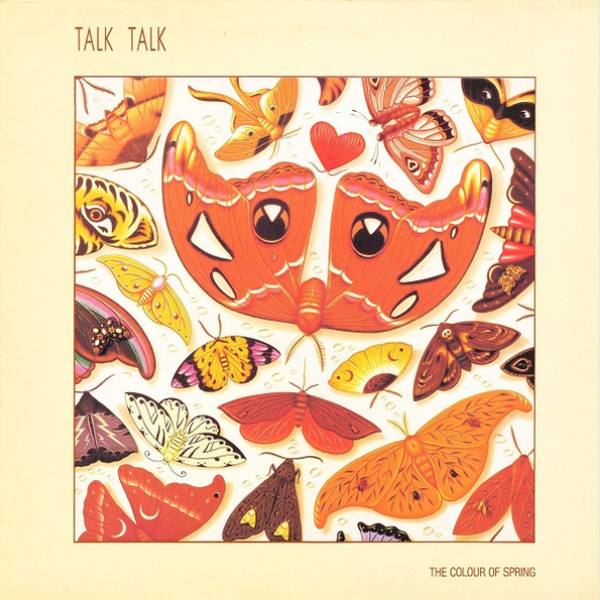
Fast forward to several years later when I heard some amazing new music being played in a store in Manhattan’s Greenwich Village that knocked me out immediately. It turned out to be the then-new Talk Talk album, February 1986’s The Colour of Spring, which I bought on an EMI CD (a UK import) on the spot. It quickly became part of my ’80s/’90s life soundtrack. This album was every bit of strong as contemporary releases such as The Cure’s August 1985 The Head on the Door LP on Fiction, as well as the early Smiths albums of the era.
With an album this big in hand, Talk Talk enjoyed the strongest success of their career. The Colour of Spring did do quite well around the world, and it was their biggest release, having reached No. 8 in the UK charts. For some reason, however, Spring stalled in the US at No. 58 on the Billboard Top 200 albums charts. From my vantage point, Spring should have been much bigger over here, especially buoyed by a gripping single like “Life’s What You Make It” (which inexplicably got stuck at No. 90 on the Billboard Hot 100).
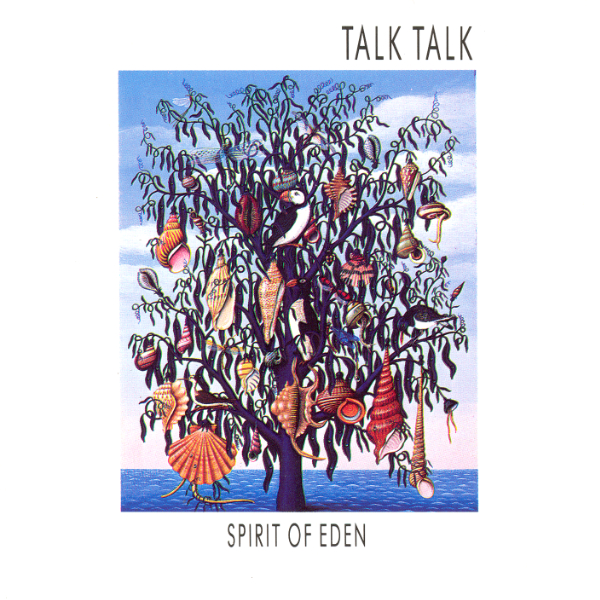
Despite critical acclaim, the band and their main songwriter Mark Hollis clearly turned inward, ending their touring phase and becoming more of a studio band instead. Their next album, September 1988’s aforementioned Spirit of Eden, grew even more experimental. A beautiful progressive production with rock, jazz, and gospel overtones, the buzz didn’t translate into deep album sales. Today, Eden is widely considered to be an influential masterpiece.
In retrospect, I think Talk Talk was unfairly pigeonholed as a “synth-pop” band. Sure, they used some synthesizers early on, but they also had a live drummer (not a drum machine/sequencer like many synth pop bands) and guitars in the group — they were far from the vibes of, say, Depeche Mode.
In fact, listening to Talk Talk with fresh ears here in the present day, I’m realizing that their sound was quite possibly influential on groups like Depeche Mode, and even The Cure. Seriously — go back and listen to DM’s creative leaps with March 1990’s Violator (Mute), when they added big guitars into to their mix. Mark Hollis’ back-of-the-throat vocal style certainly plays into that realm as well. Listening to the slow groove of Spring’s “I Don’t Believe You” with fresh ears, it feels almost like a pre-echo of The Cure’s “Lullaby” (on May 1989’s Disintegration, on Fiction) — it’d make a great DJ sequence to segue!
At the time, Talk Talk got lumped in with many other so-called “new romantic” groups, and ultimately were overshadowed by the likes of Tears For Fears and the group they were most often compared to early on, Duran Duran. But that was then and this is now, so let’s look at these two new TT HSM editions with fresh ears.
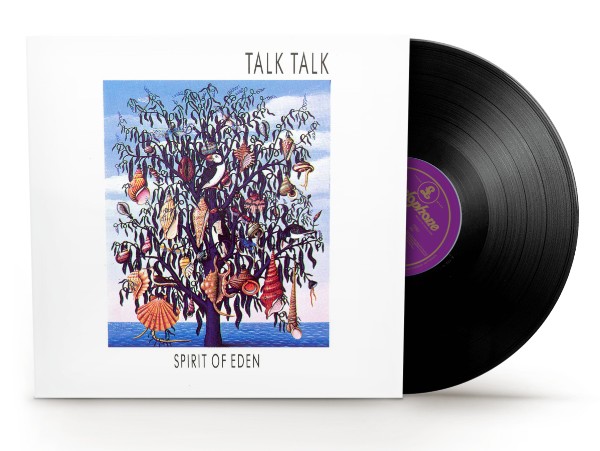
After the aforementioned 1986 release The Colour of Spring, 1988’s Spirit of Eden was a further departure for Talk Talk, a project largely driven by singer and songwriter Mark Hollis, along with producer Tim Friese-Green. Reportedly assembled from extended experimental jams, the final recording is a moody, lush, and rewarding listen. The instrumentation is impressive with textures of harmonium, bassoon, oboe, cor anglais (a.k.a. English Horn), the Choir of Chelmsford Cathedral, dobro, and more. There is even a “shozygs,” an invented instrument played on the album by its creator Hugh Davies. (Curiosity got the best of me, and I had to look that detail up!)
Speaking of musicians, there are many other notable performer7s on Spirit of Eden, including bassist Danny Thompson (Pentangle, Richard Thompson), guitarist Robbie McIntosh (Pretenders, Paul McCartney), and violinist Nigel Kennedy (Robert Plant, The Who, English Chamber Orchestra).
One of those albums you must play start to finish to allow your mind to ebb and tide with its flow, Spirit of Eden opens up sounding like you’ve happened upon a radio station playing late-1960s Miles Davis (think July 1969’s In a Silent Way), but this quickly turns the dial into a quasi Philip Glass-meets-Erik Satie vibe on “The Rainbow” (Side 1, Track 1). But soon again, it transitions into a bluesy swamp groove replete with deep harmonica stylings against rich organ and acoustic piano textures. And this is just the first song, folks!
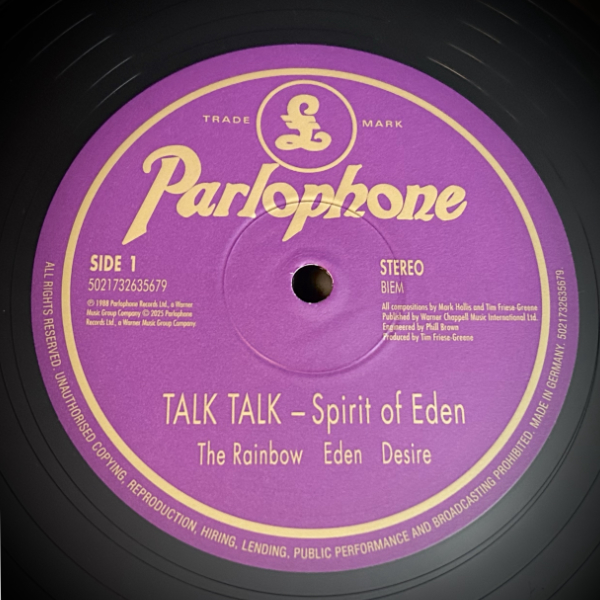
Frankly, the whole album proceeds in this surprisingly meditative, dreamlike fashion, as if an alternate-universe Peter Gabriel was fronting a deconstructed Radiohead soundtrack for a prequel of The Matrix with doors opening and closing all around you. The music is so mesmerizing that, before you in know it, you are immersed in the hushed churchlike organ of “Desire” (Side 1, Track 3), which slams up against a wall of overdriven electric guitar and some feedback (giving way to more bluesy ripping harmonica!). It’s just gorgeous.
I love the haunting organ set against the angelic choir on “I Believe in You” (Side 2, Track 2), a sound that somehow reminds me of no less than George Harrison’s “Long Long Long” (from The Beatles’ November 1968 2LP set The White Album; LP2, Side 3, Track 7). The moody churchlike vibe continues on “Wealth” (Side 2, Track 3), and it makes me even wonder if Kate Bush might have listened to this album before creating her own magnificent standout track from November 1993’s The Red Shoes, “You’re the One” (LP2, Side 4, Track 3 of the November 2023 2LP reissue on Fish People).
I could go on, but I think you get the sense that Spirit of Eden feels like that kind of album which no doubt inspired other musicians as much as regular fans. Talk Talk’s progression from the angsty, hooky-synthy pretty-boy pop rocks of their eponymously titled 1982 hit single to this more free-form progressive song cycle in just a few years is quite dramatic. This music is about as far from the clean-cut new-romantic, new-wave synth pop image and sound of the band’s debut as one might dream. Hollis clearly wanted to put the past far behind him.
While I don’t have an original pressing of Spirit of Eden to compare and contrast, I will say that the new half-speed-master LP sounds very, very good. The deep dark black vinyl pressing is excellent, playing quietly and perfectly well-centered. If there was a digital stage in creating this remaster, the producers handled it very well, as I get no sense of harsh edges emerging even when I turn up the volume on my amplifier. To the contrary — the album opens up quite nicely!
As for my ratings, I am thus happy to give the Spirit of Eden HSM LP a solid 9 for both Music and Sound. I also appreciate the recreation of the vintage purple Parlophone labels that were on the original 1988 pressings. However, I do wish that the producers had included a plastic-lined inner sleeve to protect the album, though at least they did reproduce the original paper in the sleeve album graphics.
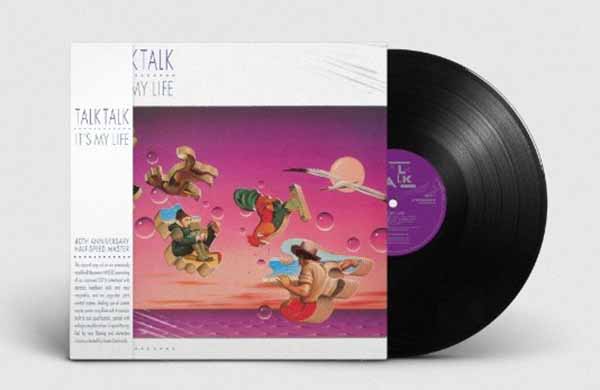
I was so enamored of Talk Talk’s The Colour of Spring that I have to admit I never spent as much time with its predecessor, 1984’s It’s My Life, as I probably should have. This is a perfectly solid album with some obvious standout tracks. In fact, if you listen closely to “Such a Shame” (Side 1, Track 2) and the hit title track (Side 1, Track 4), you can kind of hear clues to how the band made such big leaps to their more expansive sound to come. “Tomorrow Started” (Side 2, Track 1) feels like it was pointing to the sound of the next album (appropriately for the title, actually!). Talk Talk’s future sonic architecture was there.
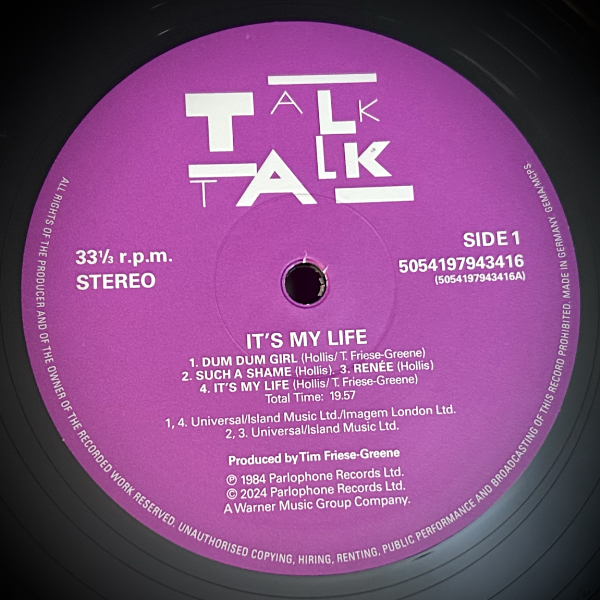
I have owned a couple different copies of It’s My Life over the years, my most recent one being a nice original pressing from Holland. It was always something of a bright album, bearing much of that mid-1980s production sheen, right down to the gated snare drum sound, especially on some of the singles.
That said, the new HSM edition of It’s My Life sounds richer and warmer than past versions I have heard. The soundstage is more open and widescreen, which is great for those percolating percussion parts. It is quite nice hearing big acoustic guitars leap from the mix periodically on tracks like “The Last Time” (Side 2, Track 2), achieving a nice musical balance reminding me of the approach my musical heroes from Swindon, England took in the 1980s, XTC.
All in all, this HSM of It’s My Life sounds very good for what it is: a rocking, periodically synth-popping, mid-’80s hit music production. I am happy to give this album a solid 8 for the Music as well as an 8 for the Sound, recognizing my inherent biases which must save the expected, hopeful 10s for The Colour of Spring HSM, once they get around to it.
At any rate, many riches await you in the universe of Mark Hollis and Talk Talk — and thus, both the Spirit of Eden and It’s My Life HSM LPs come highly recommended. Get them now!
Author bio: Mark Smotroff is an avid vinyl collector who has also worked in marketing communications for decades. He has reviewed music for eCoustics, among others, and you can see more of his impressive C.V. at LinkedIn.
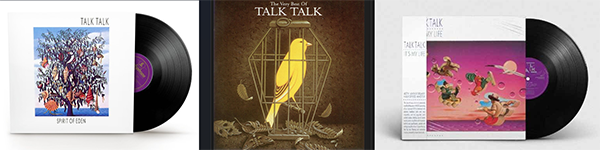
MM Footnotes Special: AP editor Mike Mettler adds: I heartily, essentially concur with Mark’s ratings for the HSM version of Talk Talk’s Spirit of Eden, though I’m giving the Music a 9.5, while the Sound remains a 9. (I might have leaned toward a 9.5 for the Sound of this uber-moody classic LP, but there was some surface noise in the runout grooves on both sides.) Meanwhile, the HSM It’s My Life also gets a 9 for Music, and a 9 for Sound. Also similar to what Mark said, I have an even finer appreciation for this music decades after the initial release period, as I never really spent as much time with these LPs as I would have liked (if much at all, tbh). Steven Wilson told me on more than one occasion that he would have loved the chance to remix the Talk Talk catalog himself — and now I better understand why.
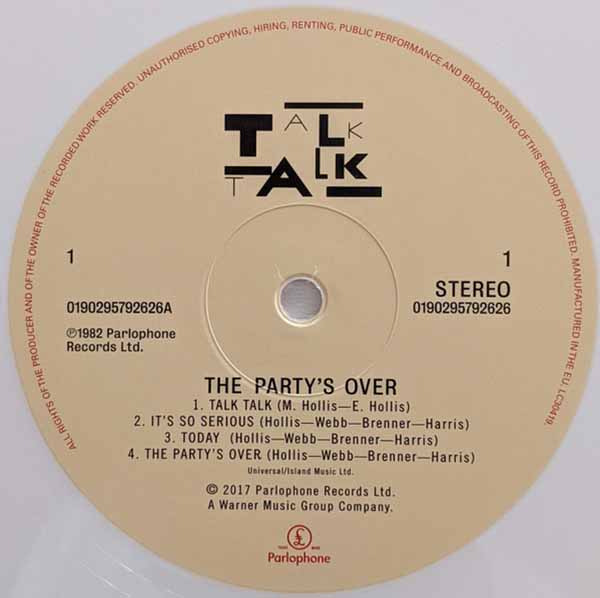
Incidentally, the 40th anniversary edition of The Party’s Over, which was released via Parlophone in July 2022 on white vinyl, gets an 8.5 for the Music, and a 9 for Sound — and it also gets bonus points for replicating the original crosshatch-textured LP cover. The song “Talk Talk” (Side 1, Track 1) is what I call the band’s “Bad Company” moment — i.e., the song name and the band name intertwinedly (hey, I can make up words!) mesh together to define their identity and sound all at once. This LP is apparently a repress of the 2017 edition, though I can say the version of the title track that’s on black vinyl in the collection I’ll be discussing in the very next paragraph has a wider soundstage, deeper low end, and less forward-facing right-channel percussion elements.
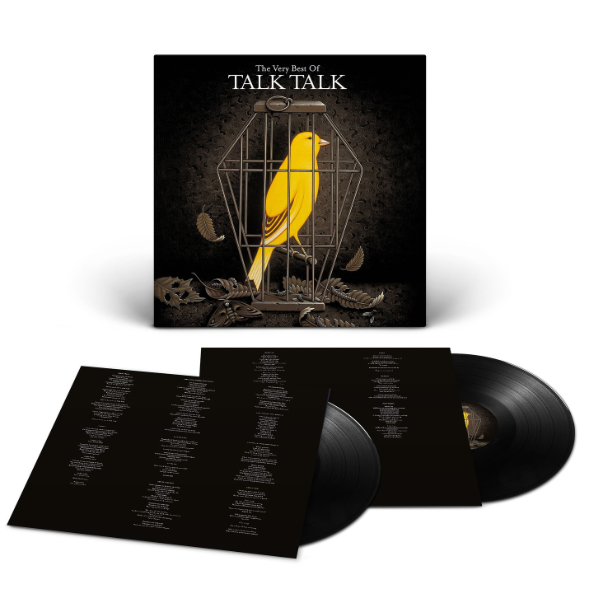
The March 2025-released The Very Best of Talk Talk 2LP set on Parlophone is quite wonderful — dead-quiet black wax, perfectly centered, and it caresses the full dynamic range in ways I feel would make Mark Hollis (who passed away in 2019) proud. It goes for $34.99, and it’s available via Music Direct here, and/or the MD link graphic directly above this Footnotes section.
As per the credits, it was originally mastered by Terry Burch at Abbey Road Studios (as in, he handled the source material for the 1997 CD version of this collection that I’ll mention more about below), and that the 2025 edition was mastered by Matt Colton at Metropolis Studios, London. No half-speed designation is specified before the word “mastered” in the credits here, however — though it would be fair to say the same HSMs Colton handled for the tracks that were culled from both Eden and Life were used here. (If we find out otherwise, we’ll report back on that.)
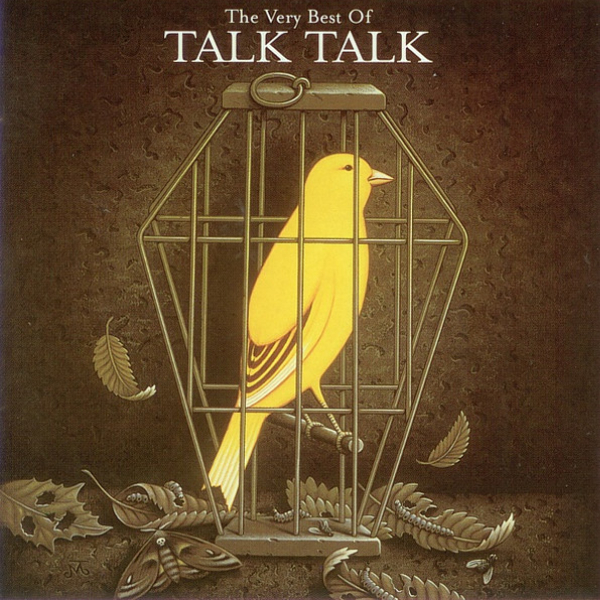
As alluded to above, this 2LP set is a revamp/reworking of the 1997 EMI CD compilation of the same name, albeit this time with all of its tracks presented in chronological order, plus with some swap-outs that bring the running order down from 16 to 15. Two CD cuts, “For What It’s Worth” (a B-side of the 1986 single for “Living in Another World”) and “John Cope” (one of the B-sides for the 1988 “I Believe in You” single), have been dropped entirely from the new 2LP set, while “New Grass” (LP2, Side B, Track 3), from Laughing Stock, their September 1991 release on Verve/Polydor, was added at the very end. It’s possible that there may have been rights issues related to those B-sides — or, perhaps, they’re being held back for an eventual multidisc vinyl pressing of the band’s 1988 EMI compilation, Asides Besides, that features 28 extended versions, demos, dub mixes, dance mixes, and other B-sides, all told.
Five tracks from Mark’s beloved The Colour of Spring are included here and split across the back half of LP1, Side B and the front end of LP2, Side A — and I almost hate to give away how bloody good they sound, but the track he mentioned, “Life’s What You Make It” (LP1, Side B, Track 2) is crisp ’n’ clean, especially the piano lines that drive the verses, as supported by wide-panned percussion and a gnarly guitar riff during the final chorus. Period-perfect, in other words.
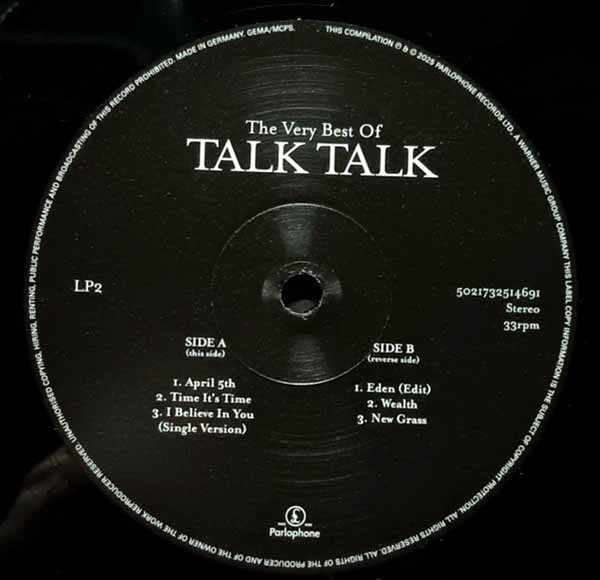
Meanwhile, the above-mentioned “New Grass” that’s the last song on the fourth side (and was licensed from Polydor Ltd. UK for this release and remaster) is also a nice surprise — a lengthy, almost 10-minute-long jazzy loper that’s led by snare and cymbal-ring taps and wafting keyboards behind Hollis’ musings. Did Radiohead take notes from this track, one wonders — who’s to say? Laughing Stock deserves a proper HSM itself — though a year or so ago, it did see a standard repress done in Mexico, with the lacquers cut by Ian Sefchick, via Polydor/UMe that I’ve yet to personally see a copy of anywhere in person, so I can’t comment on it (yet).
I would give the Music for The Very Best of Talk Talk a 9.5 (some songs are 9, some 10, and a few are stone-cold 11s), and the Sound a 9. Like Mark, I too look forward to a fully separate release for The Colour of Spring at some point — which only seems inevitable in this, the album’s 40th anniversary year.
TALK TALK
SPIRIT OF EDEN
1LP (Parlophone)
MUSIC: 9
SOUND: 9
Original album produced by Tim Friese-Green
Original album recorded at Wessex Studios, London
Original album engineered by Phil Brown
HSM reissue produced by Lee Harris and Charlie Hollis
HSM reissue disc lacquers cut by Matt Colton at Metropolis
HSM reissue pressed by (likely) Optimal Media, Germany
Side 1
1. The Rainbow
2. Eden
3. Desire
Side 2
1. Inheritance
2. I Believe in You
3. Wealth

TALK TALK
IT’S MY LIFE
1LP (Parlophone)
MUSIC: 8
SOUND: 8
Original album produced by Tim Friese-Green
HSM reissue produced by Lee Harris and Charlie Hollis
HSM reissue disc lacquers cut by Matt Colton at Metropolis
HSM reissue pressed by (likely) Optimal Media, Germany
Side 1
1. Dum Dum Girl
2. Such a Shame
3. Renée
4. It’s My Life
Side 2
1. Tomorrow Started
2. The Last Time
3. Call In The Night Boy
4. Does Caroline Know?
5. It’s You
TALK TALK
THE VERY BEST OF TALK TALK
2LP (Parlophone)
MUSIC: 9.5
SOUND: 9
Originally mastered by Terry Burch at Abbey Road Studios (for 1997 CD)
2025 edition mastered by Matt Colton at Metropolis Studios London
LP1, Side A
1. Talk Talk
2. Today (Single Version)
3. Have You Heard The News?
4. It’s My Life
5. Such A Shame (Original Version)
LP1, Side B
1. Dum Dum Girl
2. Life’s What You Make It
3. Living In Another World (Single Version)
4. Give It Up (Single Version)
LP2, Side A
1. April 5th
2. Time It’s Time
3. I Believe In You (Single Version)
LP2, Side B
1. Eden (Edit)
2. Wealth
3. New Grass












 |
Equipment Reviews | |
The Gruvy Awards | |
Blogs Analog Tips | Columns Music | |
Show Reports | |
News Resources |
 © 2026 AnalogPlanet
AVTech Media Americas Inc.
All rights reserved