


Grateful Dead’s Remarkable, Transformative 1975 Masterpiece, Blues for Allah, Receives a Quite Significant 50th Anniversary 180g Vinyl Upgrade

The Grateful Dead’s September 1975 LP Blues for Allah is many a Deadhead’s almost favorite album. It is indeed home to a near-perfect dizzying blend of ultra-tight playing, funk-forward, progressive, jazz-fusion-oriented music wrapped up in a handful of incredibly catchy tunes. Much of this music went on to become concert staples for the band, and it also catapulted them into the Top 20 for 13 weeks, ultimately peaking at No. 12 on the album charts. Blues for Allah is also home to some of the Dead’s more challenging experiments, and thus it can be something of a stumbling block for some.
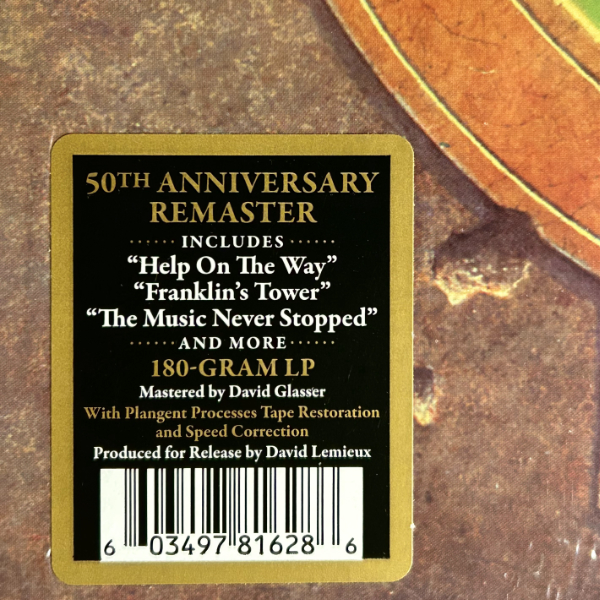
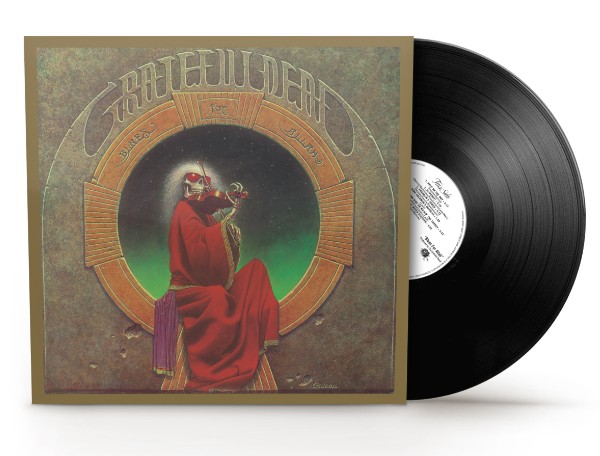
Whatever side of Shakedown Street you are dancing on, there are many reasons to seriously consider picking up this new 50th Anniversary 180g reissue of Blues for Allah, which was released via Rhino on September 12, 2025, as it features spectacular sonic restoration courtesy of Jamie Howarth’s Plangent Processes and complemented by exemplary remastering by David Glasser from Airshow Mastering, with fresh lacquers cut by the esteemed Chris Bellman at Bernie Grundman Mastering.
All of this may conspire to have you appreciating this wonderful Grateful Dead music even more than ever!
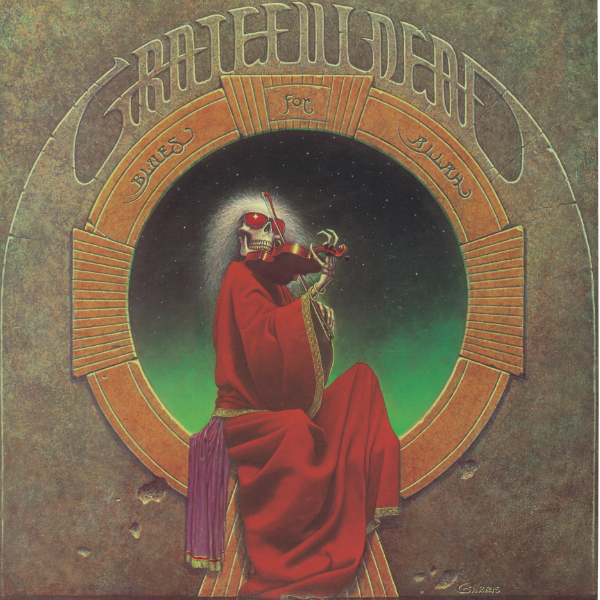
Before digging down deeper into the music, let’s dissect some of the critical DNA beneath this fine release (which the Dead originally put out on their own imprint back in the day). The official press materials state that Blues for Allah “features a newly remastered version of the original album by Grammy Award-winning engineer David Glasser, sourced from the original analog tapes with speed correction and tape restoration by Plangent Processes.”
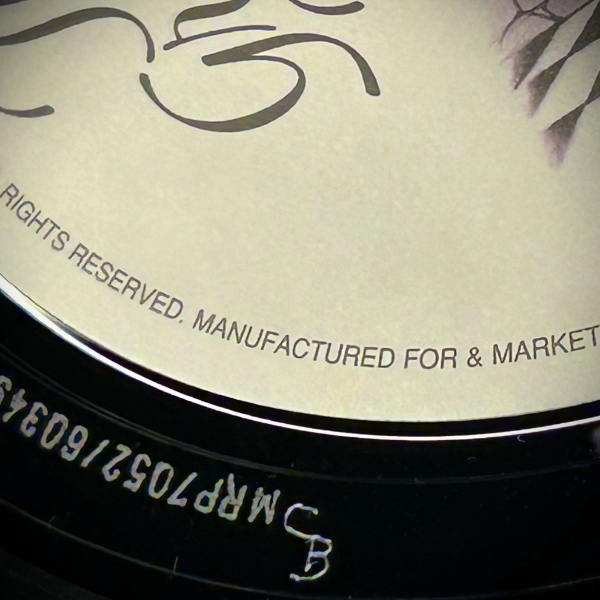
As far as finding the info about the cutting of the lacquers used for creating the vinyl pressing stampers, we had to do a little bit of sleuthing — it wasn’t that hard, really! — and it appears Chris Bellman of Bernie Grundman Mastering is behind this cut, but, unfortunately, he is not listed on the album credits. However, if you look closely at the deadwax below, you’ll see his tell-tale “CB” hand-etched initials there. This makes sense, as we had also discovered Bellman’s presence in a similar fashion on Rhino’s 50th anniversary 2024 reissue of the Dead’s June 1974 LP
We also confirmed that the 50th anniversary edition of Blues for Allah was pressed at GZ-owned Memphis Record Pressing. I was first clued into GZ by noticing that the serial number stamped into the vinyl deadwax includes the initials “MRP” at the start of the numerical sequence.
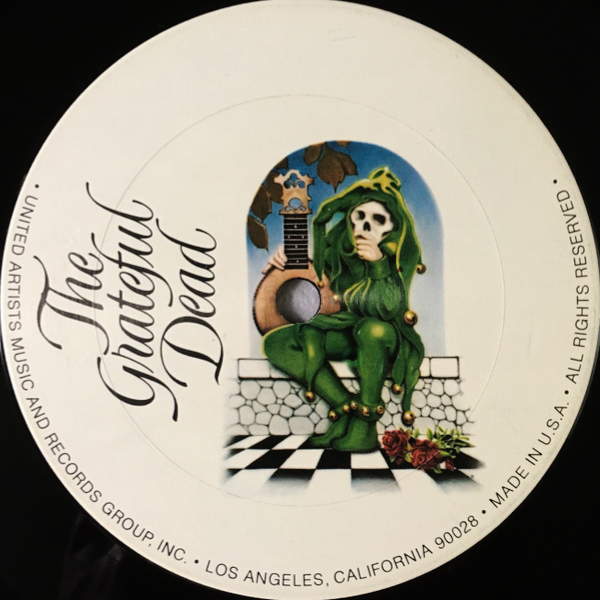
The LP itself comes housed in an audiophile-grade plastic-lined inner sleeve — just like the original pressings of Blues for Allah did, actually! Rhino even reproduced the original picture labels featuring a Lute-toting skeletal jester, and the separate lyric sheet that came with first editions (in both English and Arabic!).
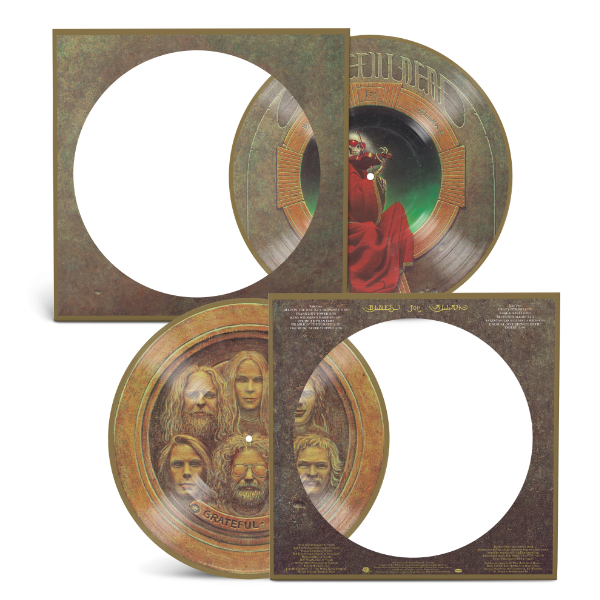
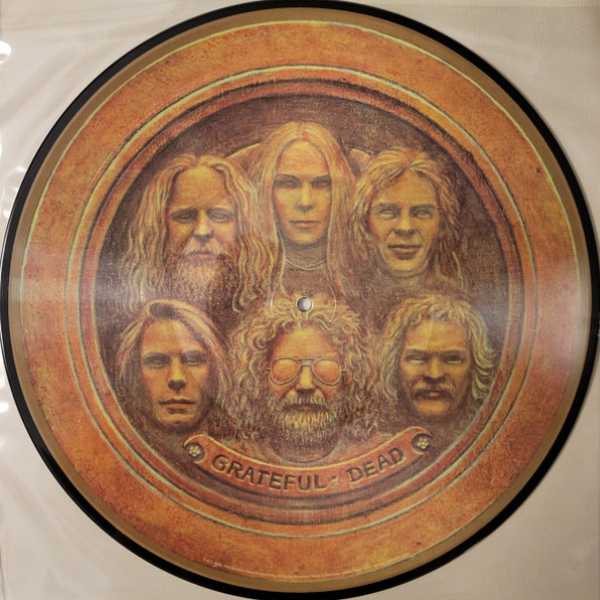
The SRP for the black vinyl edition is a very reasonable $24.98, and you can get it from the Grateful Dead’s official site here. Color vinyl options, such as midnight fire custom and translucent green, are available at other retailers and indie record stores for a similar SRP. There is also a nifty picture disc edition — pressed at Optimal, not Memphis — that’s available at Music Direct for $29.99, which you can order here, and/or via the MD link graphic that appears later in this review, before the tracklisting section. We’ll show examples of some of the color and picture-disc options throughout this review, and I do have to admit that I’m sorely tempted to pick up a copy of that latter edition, if just to see artist Philip Garris’ “The Fiddler” spinning on my turntable!)
Back to the official press release for more info, where the Grateful Dead offer up a compelling quote from a noted expert on the topics at hand that will serve as a perfect springboard for discussions ahead: “‘Blues for Allah is the Dead’s unique vision, a deeply humane parable that framed their own artistic renewal in the most inclusive, expansive terms,’ writes Nicholas G. Meriwether, Executive Director of the Grateful Dead Studies Association and author of the set’s liner notes. ‘Fifty years later, it remains one of their most musically successful and resolutely experimental albums.’”
Honestly, the first side of Blues for Allah (comically listed on the label as “This Side”) is about as perfect a song cycle as ever was committed to physical media by any band in popular music history, not just the Grateful Dead. It’s that good. And I say this knowing that the Dead created some amazing end-to-end listening experiences in the studio, being that I am one of the true believers in the group’s studio efforts, even though a good many Deadheads covet their live shows more. My favorite studio offerings from the Dead include their early Warner Bros.-era LPs like June 1969’s Aoxomoxoa through the following year’s double-header whammy of Workingman’s Dead (June 1970) and American Beauty (November 1970), on up to July 1977’s orchestral (albeit controversial) masterpiece on Arista, Terrapin Station.
Side 2 (which is literally, humorously dubbed “The Other Side”) starts out equally strong. with the opening reggae-stumble swagger of “Crazy Fingers” (Track 1) followed by Bob Weir’s gorgeous acoustic guitar and piano instrumental “Sage & Spirit” (Track 2).
However, the album then slowly descends into compelling-but-more challenging free-form sounds — i.e., the aforementioned “resolutely experimental” portion of the album. It’s a “Dark Star”-esque worthwhile journey to take, to be sure, but that is where some folks have reservations about the album, as far as being one of their “favorites” go. This brave song sequence changes up the overall momentum of the album-listening experience, perhaps arguably to a fault from certain vantage points.
The Grateful Dead may not have ever before or again achieved such as dramatic energy shift in such a short time frame (e.g., the span of one album side!). That shift, of course, is part of the joy that is in fact Blues for Allah, as it presents “The Other Side” to what the band was about: searching, exploring, and finding new sounds and vistas involving the whole group.
Indeed, from the above-noted press release, we learn more about the intent of the album from the late, great Jerry Garcia himself: “Blues for Allah saw the Grateful Dead attempt something they never had before — and never would again. They would make the record almost entirely without pre-written material. ‘The whole idea was to get back to that band thing, where the band makes the main contribution to the evolution of the material,’ Garcia explained.”
And evolve it did! Gosh, the title track (Side 2, Track 3) leading into “Sand Castles & Glass Camels” (Side 2, Track 4) — that latter for which the whole band receives compositional credit — sounds unlike anything the band recorded/wrote before or after.
Well, I probably shouldn’t say anything. If you took Garcia and Robert Hunter’s trippy “What’s Become of the Baby” from Aoxomoxoa (Side 2, Track 3), and mixed it with their classic launch pad for improvisation, “Dark Star” (on multiple albums, but first appearing in its vinyl form on November 1969’s 2LP epic Live/Dead as LP1, Side 1, Track 1), and then placed it against exotic rhythms recalling the burble of a quiet Middle Eastern river at midnight, you’ll have a sense of what “Sand Castles” is like — chant-like, seeking, meditative, mesmerizing. and, yes, even bluesy.
As a listening experience, Blues for Allah has always delivered a quite distinct sound profile, given it was recorded in guitarist/vocalist Bob Weir’s then-new home studio, a space reputedly having just enough room to accommodate the band and their gear. That intimacy comes through in the recording.
It is also this essentially home studio environment that leads me to rejoice over the Plangent Processes restoration in conjunction with David Glasser’s exemplary remaster. I’ve long noticed a sort of variability in the pacing on this album, making me wonder at times if there might have been technical issues impacting tape speed. As we know from past reporting on Plangent’s technology, it can identify and correct for fluctuations in tape speed caused by everything from power inconsistencies in the studio to recorder motor instabilities.
As much as I have tried to pinpoint some specific moments of this sort of tempo hesitation (if you will) that I’ve long felt across most versions of Blues for Allah I’ve heard, for the purposes of this review, I think it will be more straightforward to direct you to moments of improved clarity and definition on this new Plangent-restored and Glasser-remastered edition. I will say however that in general this new edition of Blues for Allah feels more consistent and driving than past editions I’ve owned on vinyl (and CD, for that matter).
First. I suggest you start by listening to Side 2, a.k.a. The Other Side, and play its opening track, “Crazy Fingers.” (For additional context, we’re showing the original LP’s Jester side above.) There, you will hear those super-dynamic finger bells chiming and decaying super-naturally and seemingly longer than on the original pressings. Phil Lesh’s bass is also more distinct and robust throughout the tune — especially important for a reggae track! — whereas, on the original, at times it feels like he sort of disappears for moments. I’m also noticing Weir’s innovative support rhythm guitar motifs much more clearly during the solo section.
Look no further than the finger snaps on “The Music Never Stops” (Side 1, Track 5) to appreciate the increased sense of nuance audible on this new edition. No pun intended, but they are super-snappy! The layered harmony vocals at the bridge section of this tune jump out of the speakers now — and, of course, Lesh’s bass is more ripping and funky than ever.
Listen closely to “Stronger Than Dirt or Milkin’ the Turkey” (Side 1, Track 4) to experience the increased clarity and punch of Lesh’s bass, especially at that point towards the end where he takes a little solo that I’ve long near-overlooked. Again, there are points where Phil seems to get lost in the original mix, so overall, he now feels more present throughout. Also, take note of how lifelike Mickey Hart and Bill Kreutzmann’s intertwining tom-tom and cymbal work sounds now on “Turkey,” offering loads of studio air (if you will) perceptible around the percussion.
Speaking of lifelike sounds, Hart’s field recordings of nature never sounded more alive than in this new restoration. Those crickets on title track “Blues for Allah” (Side 2, Track 3) feel more 3D, chirping their way out of my speakers!
Going back to that notion of a hard to pin down benefit of Plangent Processing, for me, this track especially holds together much more cohesively as a composition now, compared to other versions I’ve ever heard. It doesn’t lag and keeps my interest as never before to the point where I’m much more fully enjoying the listening experience. Maybe just maybe I am now hearing it more completely for the first time. I enjoyed this portion of the album so much better that I might even reconsider Blues for Allah as my contender for “favorite” Grateful Dead album of all time — an honor long bestowed on October 1973’s Wake of the Flood, in case you are wondering. It’s a pretty close challenge now, folks!
As far as pressing quality goes, I am quite pleased with this new edition of Blues for Allah. The black 180g vinyl is thick and sturdy, and it feels almost like it’s 200g, actually. It’s well-centered and dead quiet, so it just disappears, allowing the music to shine through. This is significant, as most original pressings (via the band’s own Grateful Dead Records imprint, via United Artists) typically had a fair amount of surface noise.
Perhaps my only ding on this production is that the album cover art is not as crisp and vivid as it is on my original copy of Blues for Allah. I also do wish the producers had created this reissue cover using heavier, cardboard tip-on style production like the 1975 editions had, not the thinner, oaktag-style cardboard that allows art to be printed right on the card stock vs. glued-on paper overlays. This might have increased the SRP a tad, but I think it would have made the reissue that much more definitive.
As far as my ratings go — both of them exactly mirrored by AP editor Mike Mettler, I might add — I have no problem giving Blues for Allah a solid 10 for the Music, as it contains at least four bonafide Grateful Dead classics, and one of their all-time best album-side sequences. I offer the Dead extra brownie points for their taking fresh creative chances at a crucial time in their career — experiments that have stood the test of time and now sound better than ever. That said, I’m happy to give this release a 9.5 for Sound as it is really quite excellent, offering fresh insight into the music while retaining the intent of the original master recording. I leave a half-a-point open to a future time when perhaps we’ll get a 45rpm 2LP UHQR upgrade that might well go to 11 after all.
PS: If it’s any help, I got up and danced around my listening space during parts of my listening sessions for this review. What better compliment can a lifelong Deadhead offer up?
Author bio: Mark Smotroff is an avid vinyl collector who has also worked in marketing communications for decades. He has reviewed music for eCoustics, among others, and you can see more of his impressive C.V. at LinkedIn.
GRATEFUL DEAD
Original album produced by the Grateful Dead
Side 1 (a.k.a. This Side)
Side 2 (a.k.a. The Other Side)

BLUES FOR ALLAH
180g 1LP (Rhino)
MUSIC: 10
SOUND: 9.5
Original album engineered by Dan Healy
Original album mixed by The Grateful Dead and Dan Healy
50th Anniversary remaster by David Glasser of Airshow Mastering
50th Anniversary edition produced for release by David Lemieux
Tape restoration and speed correction by Jamie Howarth of Plangent Processes
Vinyl lacquers cut by Chris Bellman at Bernie Grundman Mastering
Vinyl pressed at GZ/Memphis Record Pressing (black, midnight fire custom, and translucent green),
except for the picture disc vinyl, which was pressed at Optimal
1. Help On The Way / Slipknot!
2. Franklin’s Tower
3. King Solomon’s Marbles
4. Stronger Than Dirt Or Milkin’ The Turkey
5. The Music Never Stopped
1. Crazy Fingers
2. Sage & Spirit
3. Blues For Allah
4. Sand Castles & Glass Camels
5. Unusual Occurrences In The Desert














 |
Equipment Reviews | |
The Gruvy Awards | |
Blogs Analog Tips | Columns Music | |
Show Reports | |
News Resources |
 © 2026 AnalogPlanet
AVTech Media Americas Inc.
All rights reserved