


Jellyfish’s Underappreciated 1993 Progressive Pop Masterpiece Spilt Milk Shines Anew on Its 180g 2LP Vinylphyle Edition
In the early 1990s, two incredible albums were issued by Jellyfish, a group of musicians emanating from San Francisco’s Bay Area. For a moment in time, Jellyfish successfully encapsulated all that was great about classic harmony pop, bubblegum, paisley-flavored psychedelia and, most especially on their second album, densely produced, prog-leaning rock à la Ziggy-era David Bowie, Queen, and Supertramp. Despite some airplay and MTV videoplay, Jellyfish were overshadowed by the grittier grunge and glitzy hair-metal flavors then topping the charts — and they weren’t alone. For example, XTC found their masterful, pop-leaning April 1992 release Nonsuch also stalling at that time.
Fortunately, the music lives on, and in our current musical climate where there are no real trends to speak of and everything is feasible on the charts, today is a great time to rediscover this amazing band. Earlier this year, Jellyfish’s brilliant second album, February 1993’s Spilt Milk, received its first audiophile-worthy restoration from Capitol/UMe’s acclaimed Vinylphyle series, and now’s the time for us to dip into it in full detail. I have been lapping up all the results, so to speak, and am happy to now report on this tasty new reissue.
As with other albums in the Vinylphyle series (many of which we’ve previously reviewed here on AP), the new 180g 2LP edition of Jellyfish’s Spilt Milk sports an SRP of $54.98, and it is currently available as a limited edition directly from uDiscover Music, and you can order yours here, after you scroll down to the “Order Now” tab.
As far as the value proposition goes, that $54.98 pricetag seems very fair. If you wished to obtain one of the quite rare 1993 European vinyl editions of Spilt Milk (which wasn’t issued on LP here in the U.S. back in the day), you’d be chasing a pricey collector’s item, with most VG+ condition copies selling for upwards of $300 or more on Discogs at the time of this posting. (Note than most of those copies are overseas; only one of them is here in the U.S.) It turns out there was also a 2023 1LP reissue via Capitol/UMe. Somehow, that one slipped by me, but I suspect it would sound less dynamic for reasons we’ll discuss in a moment. (AP editor Mike Mettler, who does have a copy of that 2023 reissue, tells me my suspicions about it are essentially correct.)
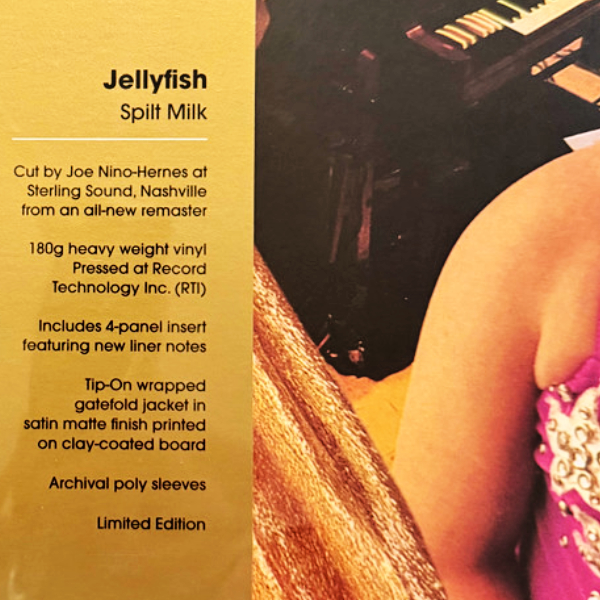
Before we dig down into how fine this Vinylphyle edition of Spilt Milk sounds, let’s explore the underlying nitty-gritty DNA that went into its making. Curiously enough, this is the first Vinylphyle album I’ve come across that has been made from a digital remaster — in this case, one that has been engineered by Justin Perkins of Mystery Room Mastering.
Now, all you analog purists shouldn’t freak out just yet, as there may have been very good reason for this process (which I’ll discuss in a moment). UMe’s Vinylphyle online information indicates this new edition was created in an ADA (analog-digital-analog) process made from the original 1993 Ocean Way Mixdown Tapes, newly transferred to digital, and remastered in 2025 at 24-bit/96kHz. The album lacquers were cut in a special three-sided form by Joe Nino-Hernes at Sterling Sound in Nashville, and, as we’ve come to expect from entries in the Vinylphyle series, the album was made at RTI, one of the most esteemed pressing plants in the world.
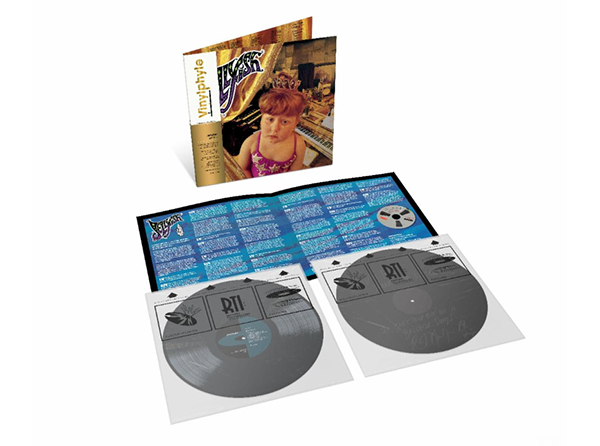
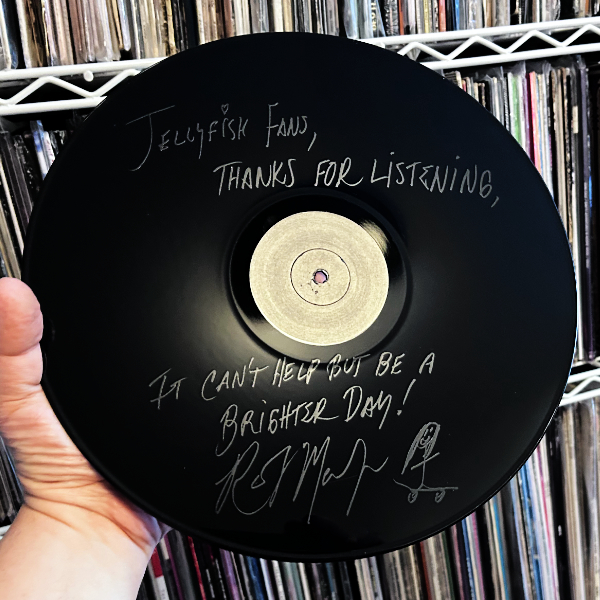
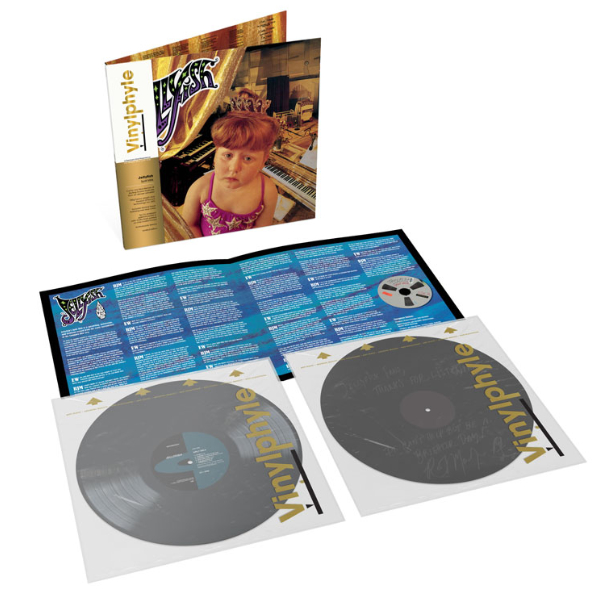
The Vinylphyle edition of Spilt Milk comes with a four-panel insert featuring new liner notes that include an interview conducted by project manager Elon Wertman with key bandmember and multi-instrumentalist Roger Joseph Manning Jr. The LPs come housed in an incredible-looking tip-on-wrapped gatefold jacket, which features a beautiful satin matte finish. As I briefly mentioned earlier, this 2LP set sports three sides of music, and the fourth side features a charming message handwritten and signed by Manning to (and for) the fans — as seen below!
Each LP comes housed in its own audiophile-grade, Vinylphyle-branded, archival-quality plastic-lined inner sleeve. The overall package comes wrapped in a high-quality, resealable polybag, and we also get the expected Vinylphyle series OBI strip. The 2LPs in my copy of Spilt Milk came on dark black 180g vinyl that was quiet and well-centered, so I thankfully had no problems in that regard to report.
I do admit that I had some concerns going into this review, in that there might have been some compelling circumstances impacting the overall sound of the album as it appears on vinyl. I have owned Spilt Milk on CD for ages, and I also have Omnivore’s 2011 single-LP green vinyl reissue that was, ultimately, somewhat disappointing (an assessment AP editor Mettler also shares). And thus, I wondered about the impact of the timeframe in which the album was initially made in the early 1990s, coupled with the challenges of capturing the sheer bravado-intensity of the recording on an LP (or rather, 2LPs).
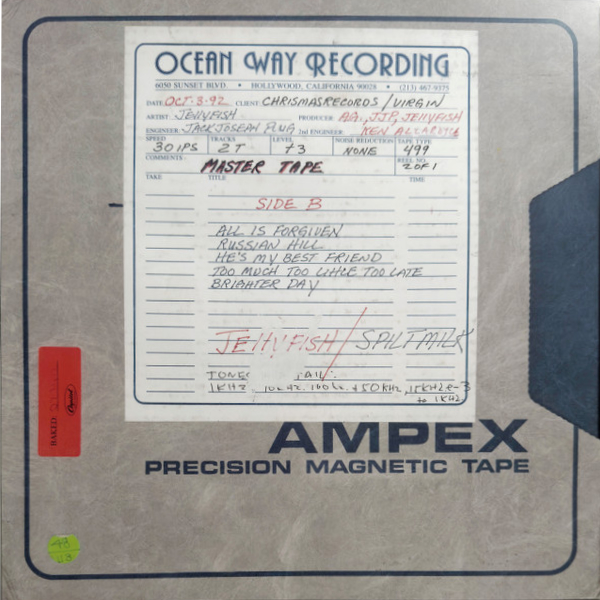
While Spilt Milk was apparently recorded originally on analog tape, the 1990s were already a time when digital processors were coming into use. Upon reading the liners, I found that it seems that digital samplers used on the demos may have also come into play, adding to the potential for edgier textures to creep into the mix. And despite the master tape clearly having the Ocean Way Recording branding (as shown above, and on the four-panel insert), from online sources, it seems the album was recorded in multiple locations that might have contributed to some of the mixing/mastering challenges underlying Spilt Milk.
Commentary from the aforementioned project manager and reissue producer Elon Wertman in the new liners underscores this: “Its forty-six-minute length is remarkably tricky to make fit on a single LP. Side length aside: the huge dynamics, in-your-face vocal sibilance, and sheer quantity of harmonic content make translating this record to vinyl feel like a high-wire balancing act. For this reissue, we opted to split the record onto three sides: maximizing punch and fidelity, while minimizing the amount of record flipping interruptions.”
This explains so much. While many people commonly refer to Jellyfish music as so-called “power pop classic,” the reality is the music found on Spilt Milk is very complex, and it has much more in common with vintage progressive rock than many might initially think. I’ll put it this way: if I were relaunching this band today and writing their press releases, I would not try to pigeonhole their music as “just” power pop. It is so much more: Spilt Milk is an incredibly ambitious album that feels both out of its time, and timeless all at once.
Spilt Milk also contains more than a big nod to The Beatles’ most complex masterpieces like September 1969’s Abbey Road, as well as June 1967’s Sgt. Pepper’s Lonely Hearts Club Band and November 1967’s Magical Mystery Tour. Astute listeners will realize that Jellyfish were not just casual fans of The Beach Boys’ music either, as you can hear references to Brian Wilson’s then-unreleased/uncompleted 1966 SMiLE project, a series of recordings eventually released in 2004 that featured wildly shifting musical palettes (think “Good Vibrations,” and numerous albums by Wilson’s mid-’60s and later-in-life collaborator Van Dyke Parks). Heck, I even hear elements of mid-’70s, James William Guercio-produced Chicago, and Richard Perry’s brilliant production for Nilsson’s November 1971 release Nilsson Schmilsson happening on Spilt Milk as well!
At points, the more expansive, late-’80s productions of XTC — who, in fact, had recorded February 1989’s bright-sounding Oranges & Lemons at Ocean Way — also come to mind. Overall, the production aesthetic here on Spilt Milk has far more in common with progressive bands like Yes (especially their ’80s MTV-era hits), Supertramp, and, of course, Queen than most power pop bands did, or do. (Mettler tells me that he also hears traces of 10cc in the Jellyfish bouillabaisse.)
For listeners new to the Jellyfish experience, don’t come into the Spilt Milk universe expecting the relatively simpler rock structures of pop-oriented hitmakers like The Knack, The Cars, or even The Archies — or, for that matter, Jellyfish’s own excellent but relatively more straightforward July 1990 Charisma debut, Bellybutton.
Spilt Milk is bigger. Much bigger.
To that notion, the idea of spreading Spilt Milk across three album sides instead of two was a smart production decision, as it gives the music more room to breathe in the grooves. Additionally, as I have found with some of XTC’s expansive, CD-era recordings like October 1986’s Skylarking, breaking out this music into mini-suites for each album side of its latter-day vinyl presentation gives your brain a moment’s rest to take in all you’ve been hearing. That brief break in the playlist allows your mind to reset.
I’m loving this Vinylphyle edition of Spilt Milk on so many levels. Indeed, while the vocal and instrumentation are still very upfront and sunshine bright, I’m finding it a much more enjoyable listen. I can’t say its 100% “gone,” but the aforementioned sibilance on the vocals appears far more under control here. I would not be surprised if that was one of the primary reasons why the reissue producers opted for a complete remastering effort in the digital realm at high-rez. This would allow more focused and forensic curtailing of offending frequencies, harsh edges which could be problematic when cutting a dynamic disc lacquer. Finding a sweet spot for a punchy vinyl cut, while staying true to the feel of the album, was a key move.
The highs, mids, and low-end are quite full and round, and the bass is especially more prominent and distinct overall. I am hearing a better sense of instrumentation here, individual elements popping out of the mix with more clarity and definition than the blurry wall-of-sound heard on earlier vinyl incarnations. Compared to the 2011 Omnivore LP, the Vinylphyle edition of Spilt Milk is a night-and-day listening experience. On that earlier edition, the music easily gets muddy-sounding as the arrangements become more dense. (AP editor Mettler, who also has that green 2011 LP, tells me he fully concurs here.)
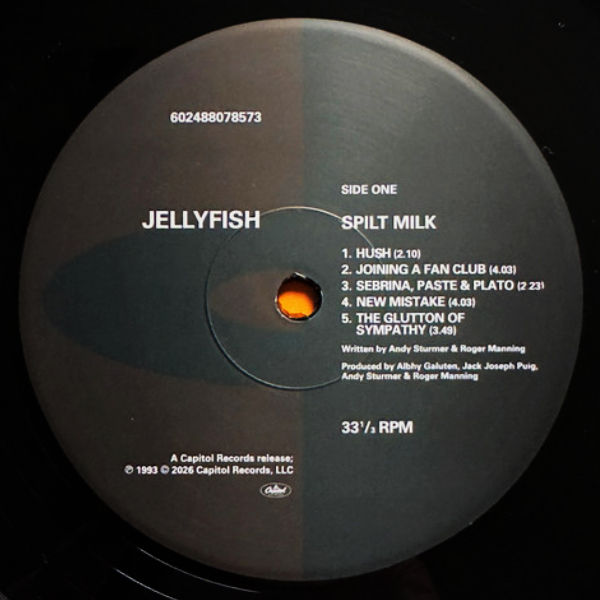
On “Joining a Fan Club” (LP1, Side 1, Track 2), the Vinylphyle improvement is immediately audible. Even when the song gets super-complex, you can still hear all the instruments. The bass is rounder and tighter, the high-end more open and crisper, and the mids are raw and rocking when those crunchy overdriven electric guitars kick in.
As noted earlier, the vocal sibilance is more under control overall, and it’s especially notable when bandmembers sing the phrase “so serene” on “Sebrina, Paste & Plato” (LP1, Side One, Track 3). I love how distinctive the kick drum is on the shoulda-been-a-big-hit-single “New Mistake” (LP1, Side One, Track 4), where now you can get a sense of the room in which it was recorded. The stereo soundstage is super-distinct, and appealing.
The Brian Wilson/SMiLE homage on “The Ghost of Number One” (LP1, Side Two, Track 1) is certainly in the fullest effect on this Vinylphyle pressing, as you can feel those massive tympani hits at the end as the banjo plucks away, while the little theremin moment at the fadeout is more apparent. All those Partridge Family-like harpsichord arpeggios punch through the mix now, and the orchestral strings at the bridge feel much more realistic.
On the aforementioned 2011 Omnivore LP, “Ghost” is closer to the center of that disc, so the whole track is no doubt more compressed, making the crashing noise before the chorus appear more like a little twinkle. On the more-opened-up Vinylphile edition, listeners can now more fully love this sound of breaking glass in living stereo. This version just rocks so much harder on so many levels that there is no contest.
And for any power pop purists cringing at my (ahem) recategorization of Jellyfish as more of a progressive rock band, (re)consider “All Is Forgiven” (LP1, Side Two, Track 3), with those thunderous rolling drums, dramatic cuts to silence, and soaring-feedback electric guitar! The stacked harmony stabs recall Queen and Gentle Giant in the same breath. And when the arrangement elements collide together in the final sequence, the whole production becomes a genuine prog epic.
If I have one word of advice when listening to this new Vinylphile edition of Jellyfish’s Spilt Milk, it is this: PLAY LOUD! (Okay, so that’s two all-caps words, but you get the idea!)

I could go on, but I think by now, you get the idea that Capitol/UMe’s 180g 2LP Vinylphyle edition of Jellyfish’s Spilt Milk is a clear winner. Ratings-wise, I have no problem giving this album a solid 10 for Music, as it is a rich listening experience that only grows with repeated listens. For Sound, I’ll give it a 9.5, given that it is such an improvement over the prior 2011 vinyl edition I have, but leaving a little wiggle room in the event that a future, uber-audiophile DSS 45rpm 2LP edition of it comes to pass. (AP editor Mettler tells me he concurs that Spilt Milk Music rates a 10, but he ramps up the Vinylphyle Sound rating to a nice, round 10.)
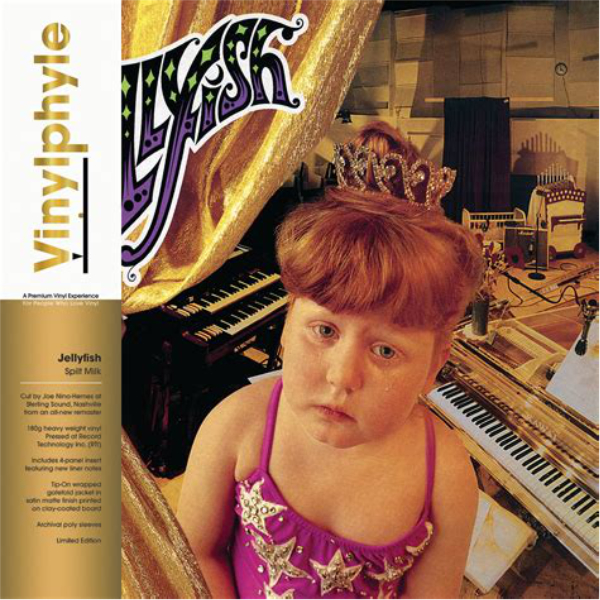
In closing, I offer a reminder that these Vinylphyle releases are limited editions, so definitely get yourself a copy of this one sooner than later. Otherwise, you may be feeling like the little girl on the cover, crying over (wait for it) Spilt Milk.
Now, can we have a Vinylphyle edition of Jellyfish’s 1990 debut opus, Bellybutton, please? Fingers crossed.
Author bio: Mark Smotroff is an avid vinyl collector who has also worked in marketing communications for decades. He has reviewed music for eCoustics, among others, and you can see more of his impressive C.V. at LinkedIn.
JELLYFISH
SPILT MILK
180g 2LP (Capitol/UMe)
MUSIC: 10
SOUND: 9.5
Original album produced by Albhy Galuten, Jack Joseph Puig, Andy Sturmer, Roger Manning
Vinylphyle reissue produced by Elon Wertman
Vinylphyle remaster engineered by Justin Perkins, Mystery Room Mastering
Vinylphyle lacquers cut by Joe Nino-Hernes at Sterling Sound, Nashville
Vinylphyle vinyl pressed at RTI
LP1, Side One
1. Hush
2. Joining A Fan Club
3. Sebrina, Paste & Plato
4. New Mistake
5. The Glutton Of Sympathy
LP1, Side Two
1. Ghost At Number One
2. Bye, Bye, Bye
3. All Is Forgiven
4. Russian Hill
LP2, Side Three
1. He’s My Best Friend
2. Too Much, Too Little, Too Late
3. Brighter Day
LP2, Side Four
*no music; engraved handwritten message from Roger Joseph Manning, Jr.




















 |
Equipment Reviews | |
The Gruvy Awards | |
Blogs Analog Tips | Columns Music | |
Show Reports | |
News Resources |
 © 2026 AnalogPlanet
AVTech Media Americas Inc.
All rights reserved