


The Rhino High Fidelity Series Kicks Off Their John Coltrane Centennial Celebration With AAA Mono Versions of Six of Trane’s Seminal Atlantic-Era Albums in New 180g 6LP 1960–1964 Mono Box Set

For many music enthusiasts just getting into jazz, the arguable best way to discover the work of the legendary saxophonist John Coltrane is to, in fact, listen to his seminal recordings made for the Atlantic label in the early 1960s. Contrary to common recommendations I hear all the time, I actually don’t think you should start with his January 1965 Impulse! masterpiece A Love Supreme, or even his earlier Prestige material from the 1950s — as great as those LPs all are.
Instead, I recommend this from personal experience: I in fact began my Coltrane journey hearing some of his breakthrough LPs on Atlantic, most notably the early-1960-released juggernaut Giant Steps (an album one of my older brothers had). Giant Steps was even eventually inducted into the Grammy Hall of Fame in 2001, underscoring its place as one of the most influential albums in jazz history.
Followed by 1961’s triple-play of Coltrane Jazz, My Favorite Things, and Olé Coltrane, 1962’s Coltrane Plays The Blues, and 1964’s Coltrane’s Sound, these are arguably the recordings that made Trane an international superstar, setting the stage for even more challenging, conceptual masterworks ahead — like the aforementioned A Love Supreme.

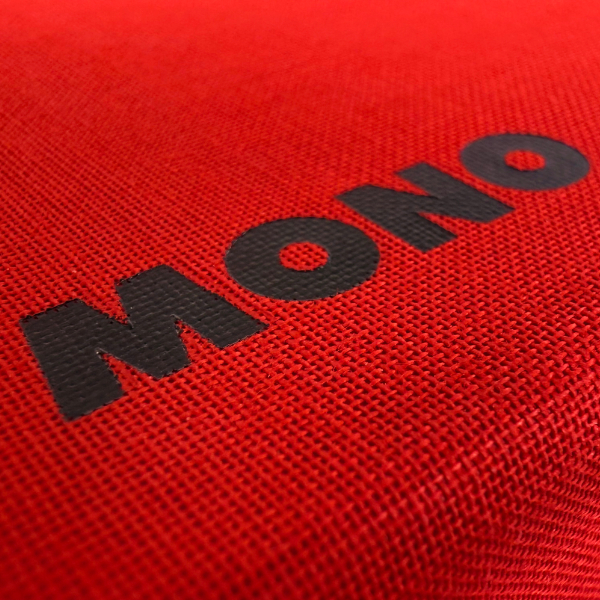
Some audiophile-leaning music collectors will attest that the best way to hear Coltrane’s music — and, frankly, most any music produced during that timeframe — is in mono, and not stereo. And thus, that leads us directly to today’s review subject, 1960–1964 Mono, a 180g 6LP box set released via Rhino’s most excellent High Fidelity Series back in late November 2025 as the ostensible kickoff celebration for this year’s Coltrane Centennial. (The late, great Trane was born in September 1926.)

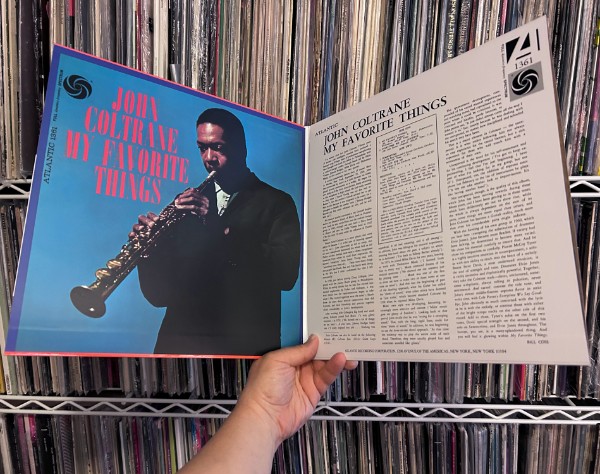
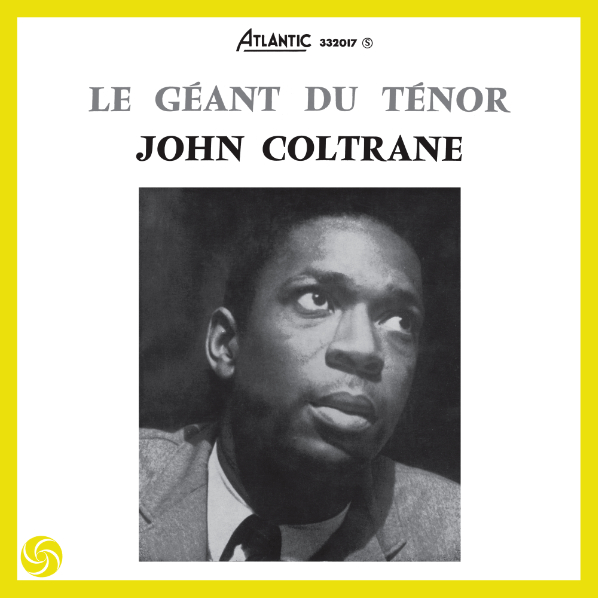
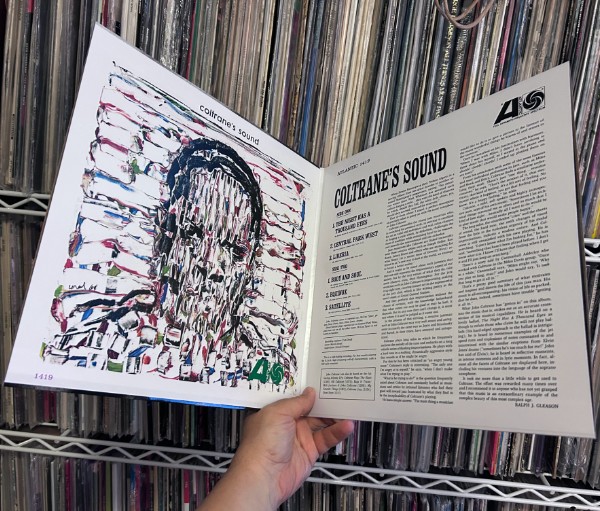
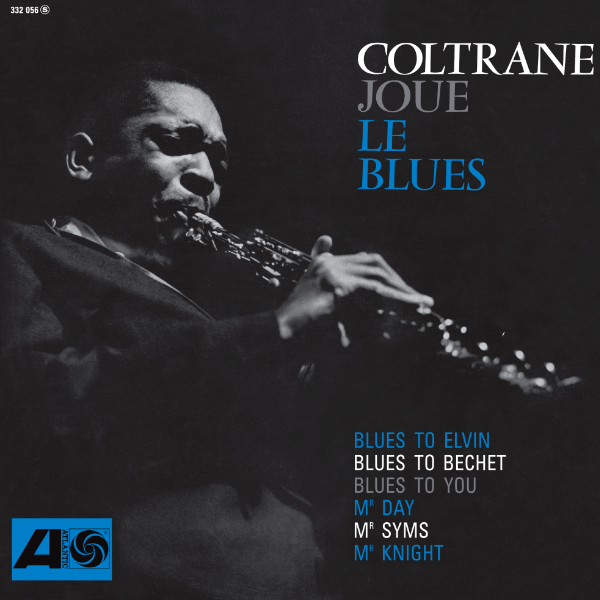
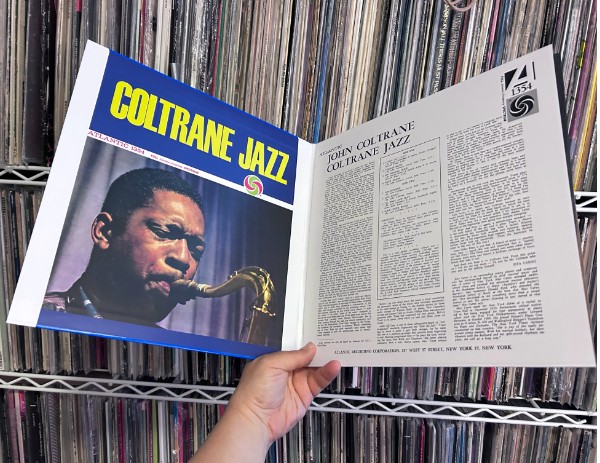
First, however, let’s break out the essential DNA underlying the six new LPs in 1960–1964 Mono. From official press materials we learn, “Each album is AAA cut from the original analog mono master tapes by Kevin Gray [at Cohearant Audio] and pressed on 180-gram heavyweight vinyl at Optimal [in Germany]. The records are presented in glossy gatefold jackets with the alternate French cover art and the original U.S. cover art inside the gatefolds, and exclusive new liner notes by music writer Syd Schwartz.”
The covers, by the way, are made of high-quality, super-sturdy, old-school brown cardboard in the tip-on style akin to what you would find on Blue Note Tone Poet or Verve Acoustic Sounds series reissues. Each LP in the 1960–1964 Mono box set comes housed in its own audiophile-grade, Rhino Hi-Fi Series foil-red-branded black-paper plastic-lined inner sleeve. Overall, I found every album in my copy of this 6LP set to have been pressed on dark black vinyl that was dead-quiet and perfectly centered — hence, no problems there! (AP editor Mike Mettler tells me he experienced no issues with any of the LPs in his copy of the box set either.)

The John Coltrane 1960–1964 Mono 180g 6LP hardbound box set is limited to 2,000 individually numbered copies, with an SRP of $249.98. At present, the box is exclusively available at Rhino’s official site store here, in addition to select international WMG stores.
As a longtime John Coltrane fan and fairly serious collector, I can tell you not only of my interest in getting these mono mixes on vinyl, but also the challenges in trying to track down good condition copies of the original LPs because, these days, clean original Trane mono pressings are near unicorns!
One of the reasons why is that Coltrane’s records were extremely popular when they were released, and were often played at parties and other social functions back in the day so often that, when you do find original pressings, the discs show the wear and tear of lives (and sides!) well-lived. Many of those LPs are, frankly, genuinely trashed beyond basic enjoyment. They were played hard on poor quality audio gear back then, so I would categorize some of those LPs as being “well-loved” — albeit albums that still have some life left in them, that is, if you don’t mind an occasional tick or pop from surface scuffing and such. I have upgraded my own copies of those well-loved LPs numerous times over the years, as I have been able to find better copies in the wilds of collecting. Even so, genuinely good condition original 1950s and early ’60s pressings of Coltrane’s music in mono and stereo are generally rare, and thus pricey.
Okay, okay, by now, I can hear some of you up in the balcony asking, “But what’s the big difference with the mono mixes?” In short: the music sounds better than the stereo mixes! It helps to consider that stereo was still a very new, nascent technology when these John Coltrane albums were created, as stereo was first introduced commercially to the marketplace in 1958.
Yes, some labels with particularly deep pockets and heavy investment in their own state-of-the-art studios were able to develop great-sounding stereo mixes early on in the initial hi-fi era — notably Columbia, who had issued a trio of landmark releases in 1959 alone, including Miles Davis’ Kind of Blue, Charles Mingus’ Mingus Ah Um, and The Dave Brubeck Quartet’s Time Out. It took a number of years for other labels/artists to create truly great-sounding, well-balanced stereophonic recordings.
All that said, in general, the mono presentation of John Coltrane’s 1960–1964 Mono Atlantic LPs delivers the music with more punch, leading to a more balanced listening experience overall. Coltrane’s saxophone is always front and center in the mono mix, with the drums, bass, and piano balanced behind him.
The stereo mixes didn’t always serve the music’s best interests, by the way. For example, my 1970s stereo pressings of Giant Steps have Trane’s sax fairly hard-panned to one side — which I suppose is perfectly fine, if that is all you know about this music. However, when I heard it in mono, I immediately found the music on Giant Stepssounding richer, rounder, and ultimately more engaging.
As far as my experience listening to all six of these new Rhino Hi-Fi Series 1960–1964 Mono reissue LPs, I’ve been very happy. I only have a few of these albums in their original mono pressings thus far to compare and contrast with per se, but in general, these new LPs are very much representative of “that” mono sound — yet, in many ways, these pressings do sound much better, delivering a more dynamic, less compressed soundstage.
The high end is sweetly crisp, yet there is plenty of nice midrange sensibility atop the distinctive low end. Of the three originals that I have in mono — Coltrane Jazz (1961), My Favorite Things (1961), and Coltrane Plays The Blues (1962) — I only noticed one minor problem relative to one of the new reissues. On Coltrane Plays The Blues, there was a brief but noticeable drop out moment on “Blues to Bechet” (Side 1, Track 2), something I did not hear on my original pressing.
However, that is not any sort of a dealbreaker for me, and it is a factor that can be expected from 60-plus-year-old magnetic tape recordings. Since the time when these recordings were made, there have been many reissues and remasters over the years, so it is inevitable that the original tapes would show some wear and tear — from things like tape wrinkles, rips, and splices to loss of magnetic particles, all possible causation for drop-out moments.
This is also one of the downsides of the full, all-analog transfer process, as there is no opportunity to restore and correct for tape anomalies as you can in the digital domain. Every time a magnetic tape is played, it loses some information, and is prone to developing new problems — especially if the tape has been used/accessed repeatedly over the years. All that said, really, don’t freak out here because generally, these reissues sound quite excellent!
Now, in getting back to why you might want to buy these reissues vs. seeking out their original pressings, well, that answer will come down to how much, let’s call it “collector’s fortitude” that you possess, in addition to basic financial wherewithal.
I’ve already explained that many of these albums are simply very hard to find in pristine condition. For reference, I checked out what’s what on Discogs to give us some baseline ideas about what clean original pressings might cost, on average. In no particular order, here is a quick rundown of domestic pricing to consider. To keep our comparison in a mostly “apples-to-apples” frame of mind, I’ve only searched for Mint (M) and Near Mint (NM) copies of the mono LPs, for the most part. In some instances — in turn, underscoring the scarcity of some of these albums — only Very Good Plus (VG+) copies were available.
At the time of this posting, there were just two NM original pressings of My Favorite Things available on Discogs, ranging between $225 and $300 per album. Meanwhile, VG+ copies were asking between $160 and $450! Of the 13 copies of Coltrane Jazz listed, none were in better than VG+ condition, with prices ranging from just under $90 to $300.
The two copies of Olé Coltrane range in price from $108 to $199 (and the latter is a very rare white label promo copy). The one NM copy of Coltrane’s Sound is asking just over $700, while the three VG+ copies range between $85 and $200. Just two copies of Coltrane Plays The Blues are selling for between $290 and $300 in NM condition. But even the VG+ copies range between $460 and $200!
There is one sealed, theoretically M (and possibly a first pressing) copy of Giant Steps seeking a hefty $1,150. VG+ copies range from $300 to $700. And while I’m sure The Electric Recording Company’s 2022 mono reissue of Giant Steps is exemplary, the resale copies available on Discogs range between $500 and $1,000 per album, which is a bit of a mountainous climb for many of us.
So, in taking all of that into account, suddenly that $249.98 SRP for the John Coltrane 1960–1964 Mono 180g 6LP box set doesn’t seem so steep at all. In fact, it feels like a pretty sweet deal, at roughly $42 per disc!
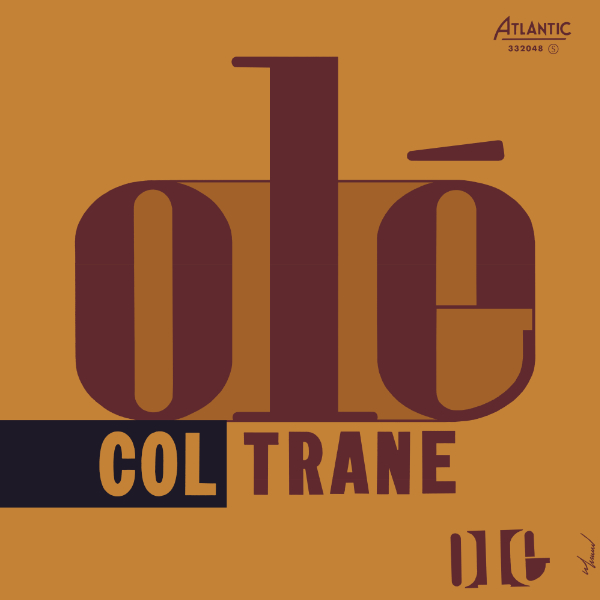
As far as the overall concept of reproducing the aforementioned rare French variant cover art for each LP in this box set, we could speculate as to the reasons the Rhino Hi-Fi team chose to do it this way — but at the end of the day, the bottom line is, it’s a pretty dang cool idea! These alternate cover designs feature unusual photos and artwork we don’t usually get to see here in the States — and the original U.S. covers are on the inner left gatefolds anyway. Personally, I prefer the French cover for Olé Coltrane over the U.S. version, which always felt to me like a poorly executed modernist-homage to Miles Davis’ July 1960 Columbia LP, Sketches of Spain.
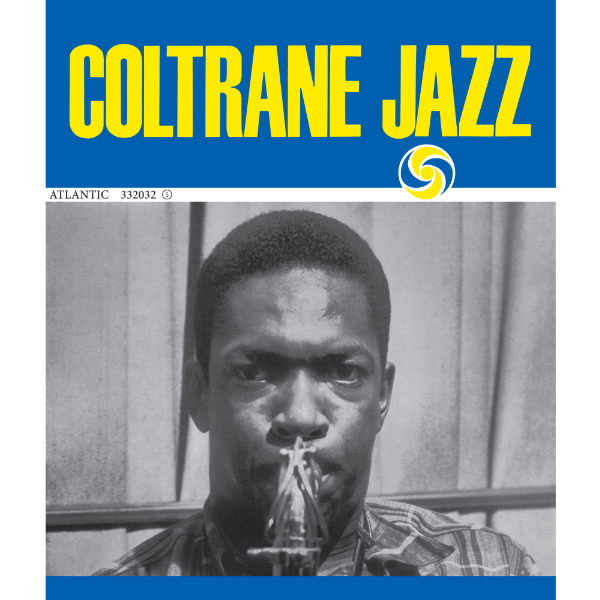
The cover for Coltrane Jazz is kind of curious, because it uses a similar overall design framework akin to the original, but it features a different photo on the cover. As a longtime fan, I find this super-interesting, as it’s another thing that makes this collection of LPs that much more extra-special, and worth owning.
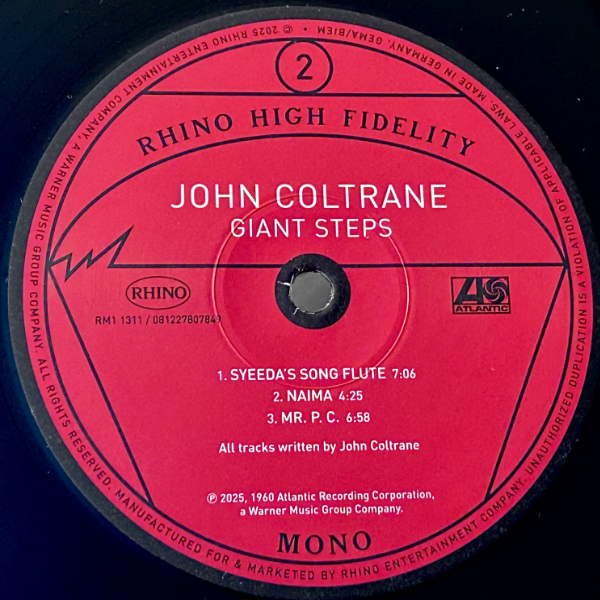
I only have a few minor nits to consider. One is that, for such a high-ticket box set collection, it would have been a good opportunity to reproduce the original — and often quite cool-looking — period-accurate Atlantic labels to go on these particular albums, instead of the standard Rhino Hi-Fi branded design. (It’s a sentiment that AP editor Mike Mettler tells me he’s wholly in agreement with, so there you go.)
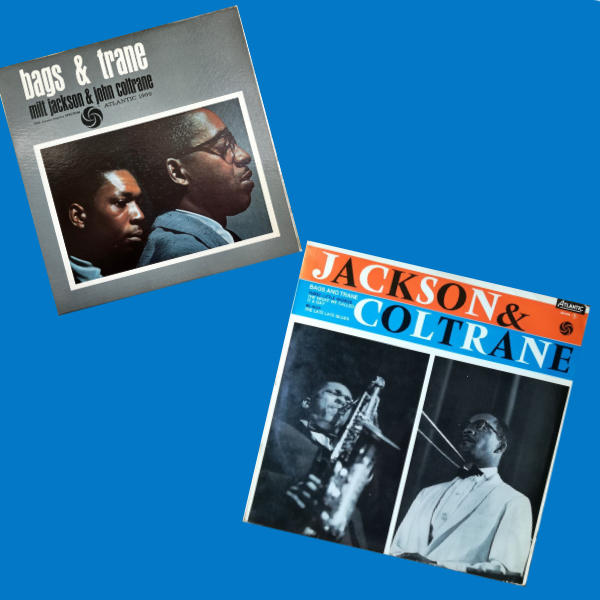
Also, there is at least one album that, in my mind, was conspicuous in its absence from this collection: the classic collaboration between vibraphonist Milt Jackson and John Coltrane released in July 1961, Bags & Trane. Although not easy to find in good condition from its original-pressing era, this LP could have fit in here nicely. Plus, the French cover of Bags & Trane is completely different from the U.S. edition, so it would have easily adhered to the box set’s overall visual concept. As far as I know, most people consider Bags & Trane to be more of a Coltrane record, even though it was technically a 1959 Milt Jackson session that was released two years later, and just a few scant months after Trane’s March 1961 LP that is in this box set, My Favorite Things.
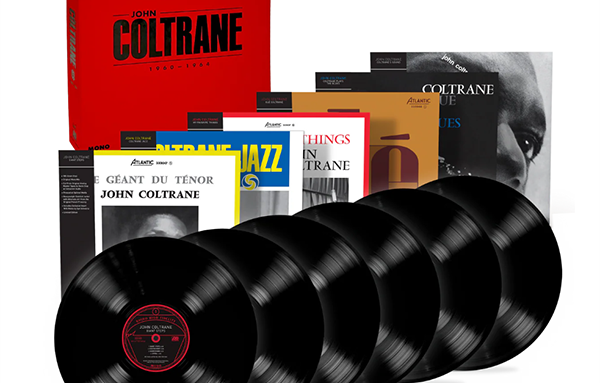
Ultimately, I find John Coltrane’s 1960–1964 Mono 180g 6LP box set a very nicely produced assemblage, with great, full-fidelity monaural sound that is remarkably consistent across all six albums. Thus, as to my ratings, given that some of the albums rate a full or near 11 for music (Giant Steps, My Favorite Things, Coltrane Jazz) while the others are solid 9s, I’m happy to give the overall collection a 10 for Music, and I’m more than pleased to give these recordings a solid 10 for Sound. (AP editor Mike Mettler tells me he also rates the box as a 10 for Music, and a 10 for Sound.) And I’ll even add in a bonus 10 rating for the Packaging, in order to reward the effort put into the design of all those lovely hybrid gatefold covers.
No doubt, a wonderful journey of rich, single-channel sounds and transcontinental sights await you in Rhino Hi-Fi’s John Coltrane 1960–1964 Mono 180g 6LP collection. Consider investing in getting yourself a copy of it as soon as you can.
Author bio: Mark Smotroff is an avid vinyl collector who has also worked in marketing communications for decades. He has reviewed music for eCoustics, among others, and you can see more of his impressive C.V. at LinkedIn.
JOHN COLTRANE
1960–1964 MONO
180g 6LP (Atlantic/Rhino)
MUSIC: 10
SOUND: 10
Original albums supervision by Nesuhi Ertegun
Original albums Recording/Engineering:
Giant Steps, My Favorite Things, and Coltrane Jazz by Tom Dowd & Phile Ieble; Olé Coltrane by Phil Ramone; Coltrane Plays The Blues and Coltrane’s Sound by Tom Dowd
Reissue lacquer mastering by Kevin Gray, Cohearant Audio
Reissue project supervision by Patrick Mulligan
Reissue art direction/design by Rachel Gutek
Reissue vinyl manufactured at Optimal Media, Germany
Giant Steps (1960)
Side 1
1. Giant Steps
2. Cousin Mary
3. Countdown
4. Spiral
Side 2
1. Syeeda’s Song Flute
2. Naima
3. Mr. P.C.
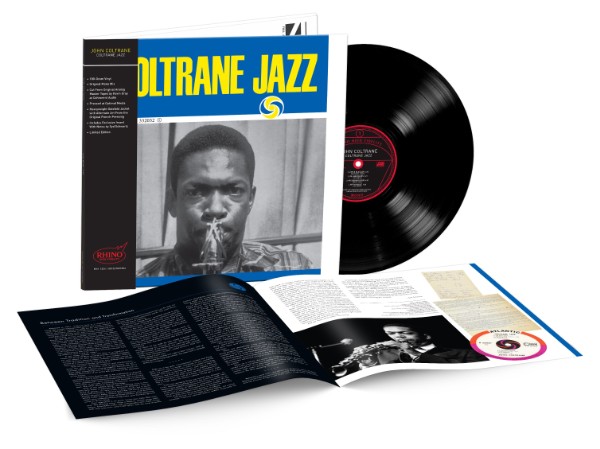
Coltrane Jazz (1961)
Side 1
1. Little Old Lady
2. Village Blu
3. My Shining Hour
4. Fifth House”
Side 2
1. Harmonique
2. Like Sonny
3, I’ll Wait And Pray
4. Some Other Blues
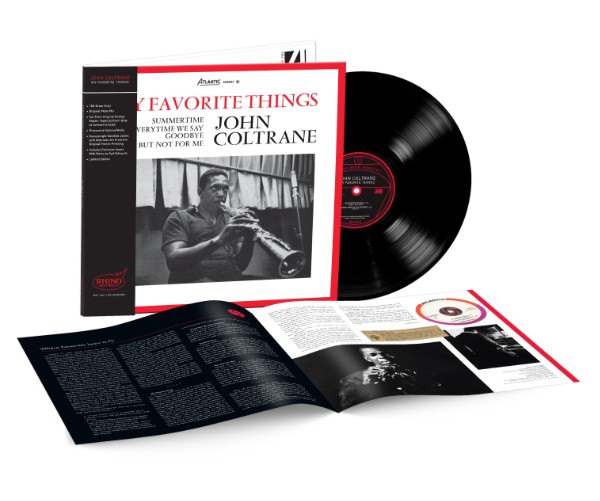
My Favorite Things (1961)
Side 1
1. My Favorite Things
2. Everytime We Say Goodbye
Side 2
1. Summertime
2. But Not For Me
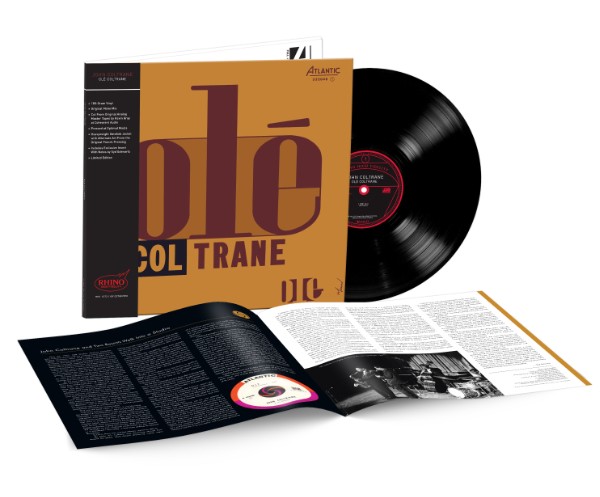
Olé Coltrane (1961)
Side 1
1. Olé
Side 2
1. Dahomey Dance
2. Aisha
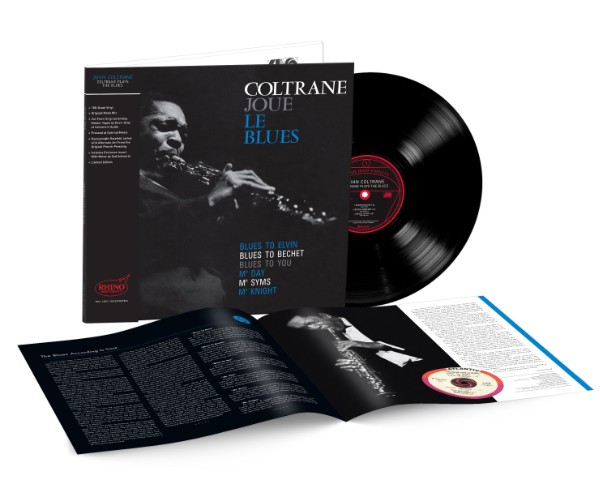
Coltrane Plays The Blues (1962)
Side 1
1. Blues To Elvin
2. Blues To Bechet
3. Blues To You
Side 2
1. Mr. Day
2. Mr. Syms
3. Mr. Knight
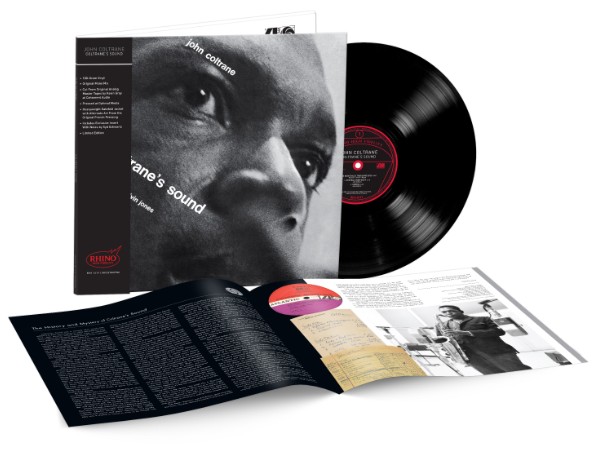
Coltrane’s Sound (1964)
Side 1
1. The Night Has A Thousand Eyes
2. Central Park West
3. Liberia
Side 2
1. Body And Soul
2. Equinox
3. Satellite
























 |
Equipment Reviews | |
The Gruvy Awards | |
Blogs Analog Tips | Columns Music | |
Show Reports | |
News Resources |
 © 2026 AnalogPlanet
AVTech Media Americas Inc.
All rights reserved