


Craft Recordings Celebrates Miles Davis’ 100th Birthday With a Quite Prestigious Collection, the Miles 56: The Prestige Recordings 180g 4LP Box Set
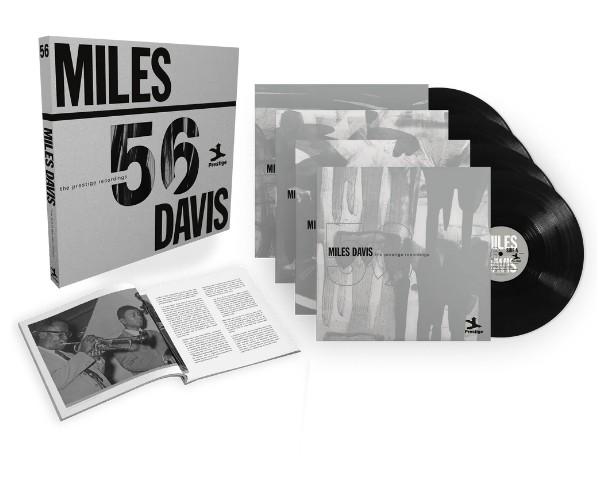
In August 2025, I reviewed a fine 180g 3LP box set called Miles 55: The Prestige Recordings that focused on the recordings Miles Davis made that year for the Prestige label (and you can read it right here). As that box followed the previous year’s 180g 4LP Miles 54: The Prestige Recordings collection, it only seemed logical that we would get the next one in the series this year — and Craft Recordings has made sure of it by releasing the Miles 56: The Prestige Recordings 180g 4LP box set today, June 19, 2026.
Needless to say, Miles 56 is a markedly improved sequel companion set focusing on that year’s recordings Davis made with what is now known as his “first great quintet.” Prestige’s label president reportedly held this particular band configuration in very high esteem, anointing them with appropriately high praise as “the Louis Armstrong Hot Five of the modern era.”
This now obviously all-star cast included saxophonist John Coltrane, pianist Red Garland, bassist Paul Chambers, and drummer “Philly” Joe Jones alongside the trumpet maestro Miles himself. Back in 1956, they were still ascending stars-to-be, and these recordings were released over some five years in a series of albums ascribed to The Miles Davis Quintet with one word “action” titles: Cookin’ (1957), Relaxin’ (1958), Workin’ (1959), and Steamin’ (1961).
I have been considering the amazing recordings on Miles 56, and hope to spell out a number of reasons why this box set may be the ideal value for new fans of Miles Davis’ music as well as for those seeking improved sonics at a very fair price point.
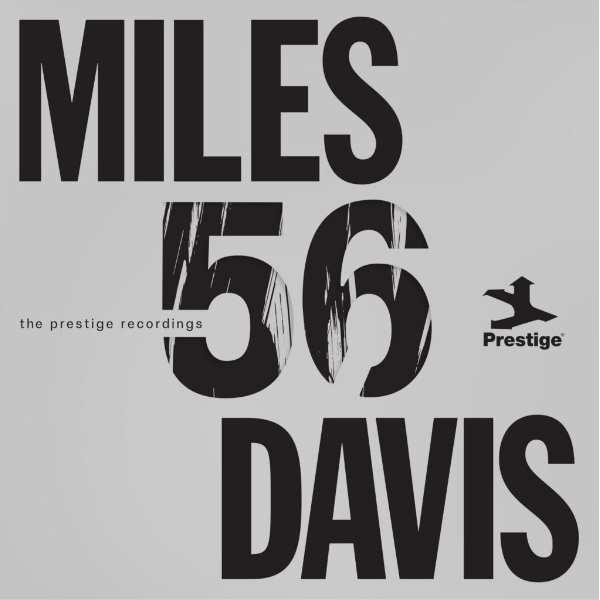
Breaking out the essential recording DNA for Miles 56, we know that the original sessions supervised by Bob Weinstock of Prestige were engineered by the legendary Rudy Van Gelder at his own Van Gelder Studio in Hackensack, New Jersey. From the original pressings I own, I know from the deadwax that the original disc mastering/lacquer cutting was also handled by Van Gelder — as indicated by his RVG initials having been stamped/etched into the runout grooves back in the day.
Miles 56 was produced by Nick Philips and supervised for Craft Recordings by Mason Williams. Analog tape transfers and audio restoration was handled by Jamie Howarth and John Chester at Plangent Processes. The restored audio was remastered by Paul Blakemore at CMG Mastering, and the subsequent vinyl LP lacquers/disc mastering handled by Kevin Gray at Cohearant Audio.
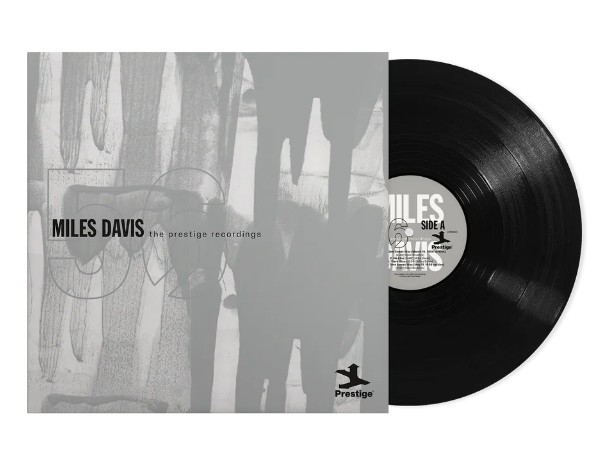
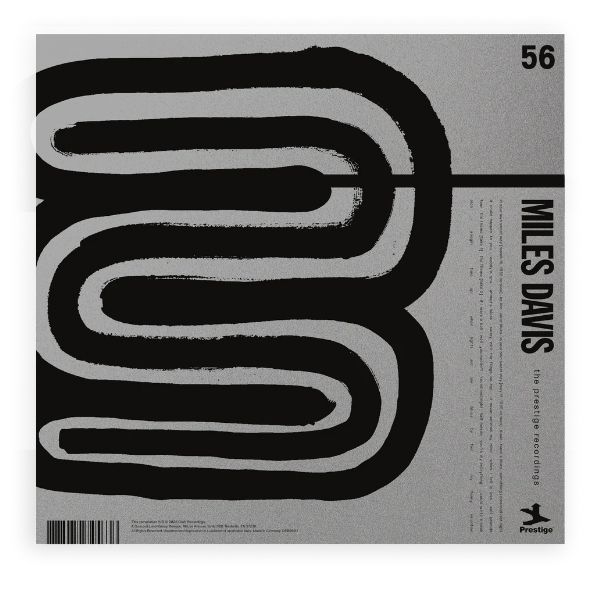
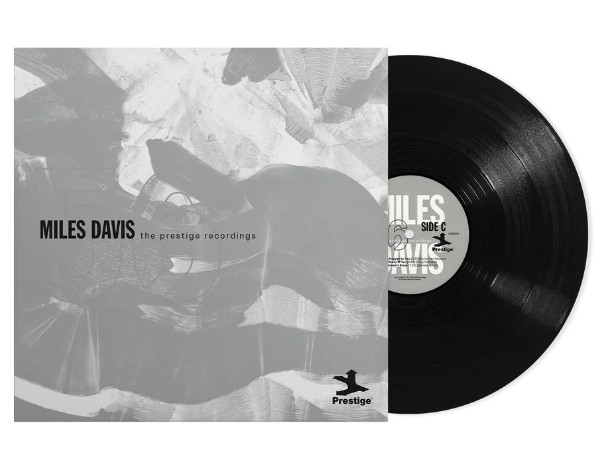
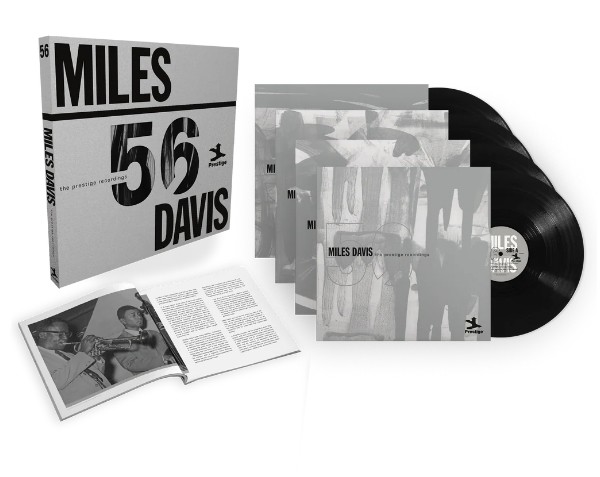
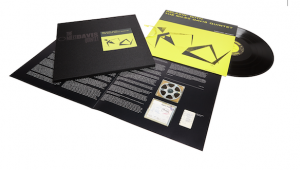
The deep black, perfectly centered 180g vinyl pressings that comprise Miles 56 were manufactured in Germany (probably at Optimal), per the small white sticker on the back of the box. Each of the 4LPs in this box comes housed in a spiffy, black paper, plastic-lined audiophile-grade inner sleeve. The whole set is housed in a sturdy outer shell box with a stylish artful modern silver design. (For comparison, Miles 54 comes with a white box design, while Miles 55 sports a black box design.)
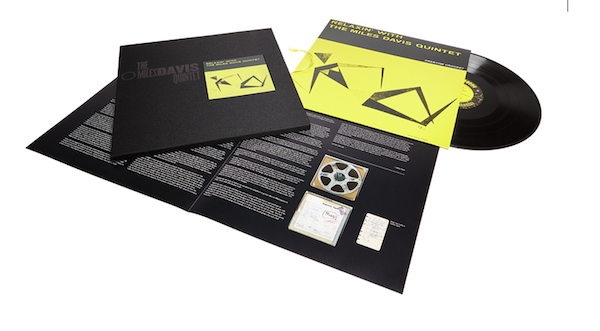
Miles 56 includes an insightful new essay by Grammy-winning writer Ashley Kahn, offering the remarkable back story behind the recording of all this music. Even after Davis formally left Prestige and started recording for Columbia, the rare cooperative deal between the two labels helped catapult Davis into global jazz royalty. Additional, detailed session liners by the late (and also Grammy-winning) Dan Morgenstern are reproduced from a 1987 Miles Davis 8CD box set, Chronicle: The Complete Prestige Recordings 1951-1956.
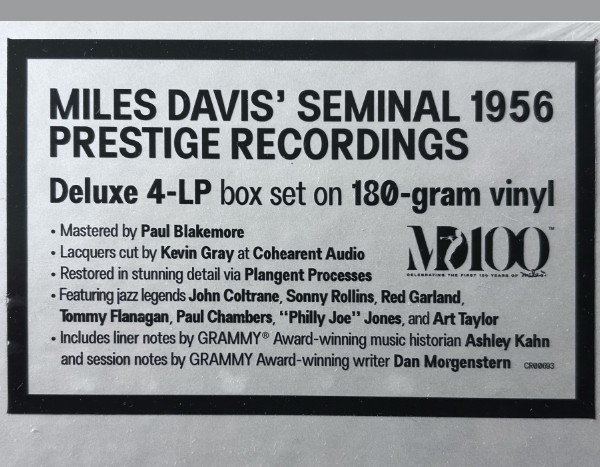
The Miles 56 180 4LP box set has an SRP of $139.99, and you can buy it from Music Direct here, and/or via the MD graphic ahead of the tracklisting section. (If MD happens to be sold out whenever you click to order yours, you can also find it via Craft’s official site store here.)
If you wanted to purchase the individual albums (which many of us Miles fans ultimately do!) in recent audiophile editions, it would cost you around $130 to obtain the current, all-analog-mastered editions as part of Craft’s Original Jazz Classic (a.k.a. OJC) series — though note that none of them have gone through the Plangent process.

For additional perspective, if you tried to obtain NM or M original 1950s Prestige LPs for what’s in the Miles 56 box, that prospect is a much more heady endeavor. For example (as of this posting), on Discogs, an original 1957 pressing of Cookin’ ranges from about $375 to $800 in only VG-plus condition (and there are only six copies of it available at the moment). Workin’ ranges from $200 to $375 (again, with only six copies available, in, at best, VG-plus shape). Meanwhile, there are three NM copies of 1958’s Relaxin’ available from $120 to $375, while the five NM copies of 1961’s Steamin’ run $550 to $1,500.
I could further catalog later-issued audiophile variants of those four titles, but I think you get the point that these LPs are not always super-accessible at affordable prices in their original form. Averaging the above prices, the four individual albums in best possible condition could easily run you upwards of $2,000-$3,000 when purchased from the collector’s marketplace, so dropping $140 for a pristine, remastered, and restored collection of all this prime Miles Davis music from 1956 in one place seems like a total bargain!
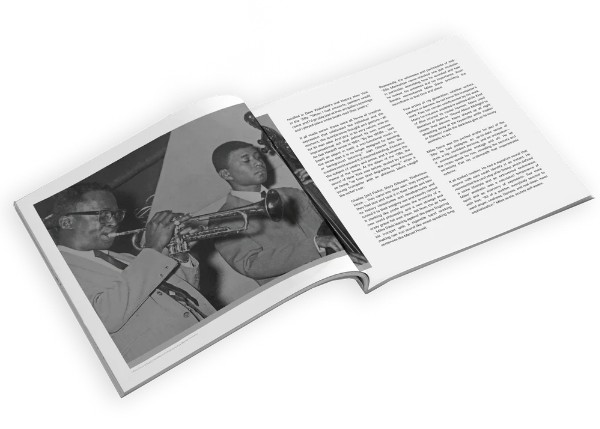
And now, to the music — and the music on Miles 56 is fascinating indeed, as the balance of it was recorded mostly in just two intensive sessions. The band had been touring, and by the time they got to Van Gelder Studios on May 11, 1956 (and later on October 26), they were a well-oiled performing machine. While there, they laid down effectively live sets brimming with the energy and cohesiveness that can only be achieved from months on the road playing before rapt audiences — and, I should add, these recordings are almost all first takes!
Curiously, keeping the 1956 theme cohesive, three tracks from a March 16 session — featuring an earlier/alternate all-star styled configuration of Davis’ quintet — are also included. While bassist Paul Chambers is present, the rest of the band is different including recently departed saxophone legend Sonny Rollins (RIP), pianist Tommy Flanagan, and drummer Art Taylor. These recordings open Miles 56: a lovely, early take of Dave Brubeck’s “In Your Own Sweet Way” followed by two Davis compositions, “No Line” and “Vierd Blues” (LP1, Side A, Tracks 1-3, respectively).
Interestingly, and spine-tinglingly (if you will), Davis re-recorded the Brubeck tune above with the new Quintet, which is included at the end of the first side of Miles 56’s first disc (LP1, Side A, Track 4) — and the difference in performance is palpable. Garland’s piano playing against Coltrane’s saxophone offers an amazing pre-echo — perhaps later to Davis’ chagrin — of the saxophonist’s commanding style that would come into full flower when he emerged as a leader himself in the late 1950s/early ’60s.
These three outlier tracks were only issued back in the day on the December 1956 Prestige compilation called Collectors’ Items. Perhaps not surprisingly, listening to my well-loved Prestige original as compared to the tracks on the new edition certainly put the latter in the lead, not only for the instrumental presence — it’s crisper, has a more open high end, and has a less-compressed feel on Rollins’ sax — but also a subtle but significant sense of more consistent tempo. Much of this is likely due to the Plangent Processes’ restoration that is renowned for its ability to reduce wow, flutter, and overall pitch instabilities and other degradation inherent in vintage source material. (Footnote 1)
Incredible detailing highlights “Trane’s Blues” (LP1, Side B, Track 2), where drummer “Philly” Joe Jones switches from hi-hat at the start of the tune to a ride cymbal. You can really feel the nuance as Jones plays different parts of the cymbal, periodically centering on the bell vs. the outer portion of the cymbal. (I went back to listen to both a well-loved 1956 original pressing and Craft’s 2023 OJC reissue for reference.)
The original LP actually sounded better than I remembered, with nice detailing on the cymbals and presence for Coltrane’s sax, though Chambers’ bass felt a bit subdued. For the OJC (Footnote 2), the overall sound is fine and quite similar to my original edition, but the bass is again quite distant. I also detected a dropout or two a minute or so into the tune, an inevitable reality for a 70-year-old recording without the benefit of any restoration work. And while Chambers’ bass is still very much in the background on the new Plangent edition found on Miles 56, it does appear more present and audible, with more apparent low end and even when the band is in full flower.
Another favorite track is “It Never Entered My Mind” (LP2, Side D, Track 2), with Jones’ haunting, hushed brushwork on the snare leaving space for Garland’s spectacularly intimate piano, all in perfect synergy with bassist Chambers. (This feels almost like a template for certain types of pieces Vince Guaraldi would write years later for the Peanuts TV specials.)
Fortunately, on this track, RVG (recorded during the same May 11, 1956, session) seems to have rectified the bass issue, perhaps out of necessity due to the crucial interplay between Chambers and Garland. While the high and low end on my original pressing is solid, the feel of Garland’s piano here on Miles 56 is a bit boxy (an issue I have felt with other Van Gelder recordings, notably with some Bill Evans albums). Still, there is nice sustain on many of Garland’s tastefully placed notes, while the brushes are a bit pushed back on the original. Of course, Davis’ horn is super upfront and round.
On the OJC edition, there seems to be some tape-speed issues happening, and some small dropouts as well. Those were not in evidence on the new Miles 56 version, and even when Davis hits an intentional blue note, it sounds right. Chambers’ bass feels more natural to the point where you can feel some studio presence. Garland’s piano, while still a bit constrained — I wonder if they had the lid to the piano closed? — feels richer and more fluid.
Finally, since I have both a quite clean original and Craft’s premium “Small Batch” edition of Relaxin’, I had to spot-check some of its tracks to hear how the new edition holds up. The good news is: pretty well!
Starting with “It Could Happen to You” on the Small Batch LP (Side 2, Track 2), I was taken with how alive the music sounded on the original pressing, offering a great sense of vibrancy around Coltrane’s saxophone in particular and, once again, Jones’ immaculate cymbal and snare drum interplay. Chambers’ bass is more present in this mix, and Garland’s piano feels somehow fresher (was the piano lid opened a bit more this time?). On this Small Batch edition, the disc mastering is a bit quieter, so I had to turn up the volume, which led to the music opening up even more. While there were some dropouts apparent at points, this pressing remains hot, edgy and vibrant. That aforementioned presence around Trane’s sax feels even more airy and alive here.
On the Miles 56 edition, “It Could Happen to You” (LP2, Side C, Track 1) sounds very good indeed, the cymbal work appearing lighter and cleaner. No dropouts were present on this version, and once again, Coltrane’s sax steals the soundstage limelight with plenty of studio presence. Chambers’ bass feels more grounded in the mix here somehow, offering that low-end pulse but not disappearing as much when he goes up to higher notes.
I imagine RVG had some special engineering challenges on Jones’ especially intense propulsive ride cymbal work that in many ways drives “Woody ’n You,” yet on the OJC LP (Side 2, Track 3), it sounds remarkably clear and crisp. (Clearly, this tune is a bit of a Jones showcase, including numerous drum breaks.) The Small Batch edition of “Woody” is just that extra bit more alive, with (again) the ride-cymbal work more or less defining the pace and feel of the tune. But this time, when Jones switches cymbals mid-tune (where it sounds like he’s playing the ride rhythm on a smaller crash cymbal) that transition is far more apparent. At the solo break, the ambiance feels more natural, the tom-toms resonating and flexing as he makes the rounds on his drum kit.
On the Miles 56 box set, “Woody ’n You” (LP2, Side C, Track 2) fares very well comparatively, a tight crisp presentation with drums that may be the most alive sounding of the trio of versions contrasted here.
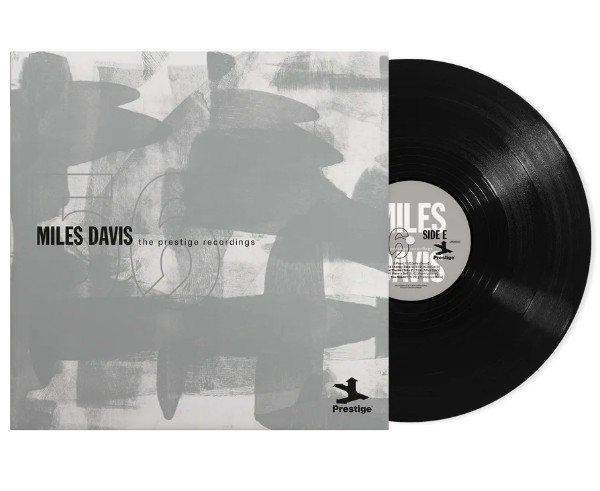
I could go on splitting more fine hairs like this side-for-side, but I think by now you get the idea that the new Miles 56 180g 4LP overview of Miles Davis’ work with his esteemed quintet in 1956 for Prestige is a very musical affair worthy of the attention of audiophiles and newer fans seeking a deep dive immersion into the artist.
As to the ratings, for the Music, Miles 56 gets an easy 10. As for Sound. I have no problem giving Miles 56 a solid 9, given that it has corrected timing/recording-speed issues and has also eliminated the blemishes of age that are magnetic tape dropouts. I did hear a bit of surface noise between some tracks (keeping me from going up to a 9.5), but that was not a dealbreaker for me. (AP editor Mike Mettler tells me he agrees with the 10 rating for the Music, but gives the Sound a 9.5, as none of the eight sides in his Miles 56 box displayed any surface-noise issues.)
Dollar for dollar, the Miles 56: The Prestige Recordings 180g 4LP box set is a great way to get terrific-sounding versions of Miles Davis’ music from this early career peak all in one place. If you don’t feel a particular need to hear all the tracks presented in the same running order as the original albums, and you don’t particularly care about owning the physical OG album covers, Miles 56 is also simply a great way to just immerse yourself in the heart of one of Miles Davis’ most important and productive musical years at a quite reasonable box-set price level.
Author bio: Mark Smotroff is an avid vinyl collector who has also worked in marketing communications for decades. He has reviewed music for eCoustics, among others, and you can see more of his impressive C.V. at LinkedIn.

Footnote 1: For more about Plangent Processes and the work of its Grammy-winning creator Jamie Howarth, go here, and then scroll down a bit to read Mark Smotroff’s more expansive discussion about it on this Grateful Dead 180g 5LP Boston 5.7.77 box set review that posted May 12, 2023.
Footnote 2: For Mark Smotroff’s review of the OJC version of Workin’, go here, and scroll about halfway down into this multi-release Short Cuts review that posted July 20, 2023.
MILES DAVIS
MILES 56: THE PRESTIGE RECORDINGS
180g 4LP (Craft Recordings)
MUSIC: 10
SOUND: 9
Original recordings sessions supervisor: Bob Weinstock, Prestige Records
Original recordings engineer: Rudy Van Gelder, Van Gelder Studio, Hackensack, New Jersey
Original disc mastering (lacquers): Rudy Van Gelder
Compilation producer: Nick Philips
Project supervision for Craft Recordings: Mason Williams
Tape transfers and audio restoration: Jamie Howarth and John Chester, Plangent Processes
Audio remastering: Paul Blakemore, CMG Mastering
Vinyl LP lacquers/disc mastering: Kevin Gray, Cohearant Audio
Vinyl manufactured in Germany
LP1, Side A
1. In Your Own Sweet Way (March 16, 1956 version)
2. No Line
3. Vierd Blues
4. In Your Own Sweet Way (May 11, 1956 version)
LP1, Side B
1. Diane
2. Trane’s Blues
3. Something I Dreamed Last Night
LP2, Side C
1. It Could Happen to You
2. Woody ’N You
3. Ahmad’s Blues
LP2, Side D
1. Surrey With The Fringe On Top
2. It Never Entered My Mind
3. When I Fall In Love
4. Salt Peanuts
LP3, Side E
1. Four
2. The Theme (Take 1)
3. The Theme (Take 2)
4. If I Were A Bell
5. Well, You Needn’t
LP3, Side F
1. ’Round Midnight
2. Half Nelson
3. You’re My Everything
4. I Could Write Book
LP4, Side G
1. Oleo
2. Airegin
3. Tune Up
4. When Lights Are Low
LP4, Side H
1. Blues By Five
2. My Funny Valentine






















 |
Equipment Reviews | |
The Gruvy Awards | |
Blogs Analog Tips | Columns Music | |
Show Reports | |
News Resources |
 © 2026 AnalogPlanet
AVTech Media Americas Inc.
All rights reserved